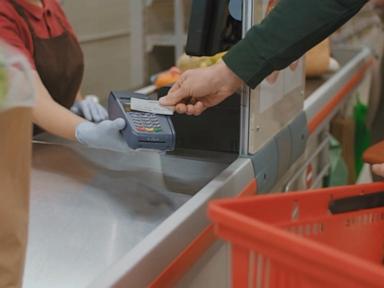
Cash is not dying at the speed digital payment advocates claim, because payment adoption is governed by infrastructure economics, privacy preferences, and resilience requirements rather than convenience alone. Headlines asking whether physical currency is becoming obsolete conflate declining transaction share at point-of-sale terminals with the elimination of cash utility. A rigorous analysis of cash usage separates payment volume from store-of-value demand, maps the hidden cost structure of electronic rails, and shows why merchants and consumers keep physical notes in circulation even as contactless taps surge. This article establishes a structural framework for evaluating the future of cash, examines the friction points of cashless commerce, and details how operators and policymakers can manage hybrid payment systems without assuming a total disappearance of banknotes.
Because no external text or URL was supplied for the reference piece, this analysis treats the question directly on its underlying economic and operational mechanics rather than guessing unverified claims. Where exact transaction shares or regional figures vary by market and measurement method, the focus here is on observable mechanisms, institutional incentives, and structural trade-offs.
Separating Transaction Share from Monetary Function
Measuring the future of cash requires distinguishing between medium of exchange usage at checkout and store of value or contingency demand held outside daily registers. A consumer can pay for groceries with a smartphone ninety-five percent of the time while still keeping physical bills in a home safe for emergencies, gifting, or budgeting. Confusing point-of-sale card share with the extinction of cash misreads how households allocate liquidity across different risk horizons.
Three distinct forces sustain physical currency even in digitally mature economies:
- Zero-latency settlement: Physical cash settles immediately upon transfer without network authorization, batch clearing, or intermediary approval.
- Privacy without surveillance: Cash transactions do not generate behavioral telemetry, merchant-level spending graphs, or credit-file footprints unless converted through an account.
- Systemic redundancy: Banknotes continue to function during power outages, fiber cuts, point-of-sale software failures, and cyber incidents that freeze card and mobile rails.
The first tension appears when payment processors treat low checkout frequency as proof that cash costs can be ignored. A merchant whose cash sales drop from forty percent of revenue to twelve percent still faces fixed handling requirements: counting drawers, reconciling variances, arranging armored pickups or bank deposits, and maintaining change floats. Fixed operational overhead does not shrink linearly with transaction volume.
The Cost Function of Cash Versus Electronic Rails
Every payment method carries a cost function distributed unevenly across consumers, merchants, card networks, issuing banks, and central banks. Cash looks "free" to a shopper handing over a twenty-dollar bill, yet it imposes labor, security, shrinkage, and liquidity costs on retailers and financial institutions. Electronic payments look effortless at the terminal, yet they embed interchange fees, gateway charges, chargeback exposure, and hardware maintenance into merchant margins.
Consider a small independent cafe operating on thin net margins. If a customer buys a five-dollar coffee with a credit card, percentage-based merchant discount fees plus per-transaction components take a noticeable bite out of a low-ticket item. If the cafe refuses cash, it may speed up counter throughput during rush hour, but it also turns away walk-in customers who carry bills, lack a functioning card, or prefer not to leave a digital trail for small discretionary spending.
The second structural constraint involves merchant acceptance asymmetry. Large chains with automated cash recyclers, high average order values, and negotiated processing rates can optimize electronic routing easily. Small businesses with lower volumes face higher effective processing percentages and less bargaining power, making cash a practical hedge against rising payment fees and account holds.
Why Cashless Mandates Trigger Friction
Proposals to ban cash at retail counters run into immediate distributional friction. Unbanked and underbanked households, older adults, seasonal workers, and people experiencing temporary card replacement or fraud freezes rely disproportionately on physical currency. When a jurisdiction or venue goes cashless, it shifts transaction access from universal legal tender acceptance to account-gated participation.
This shift creates a second-order compliance and reputational risk for businesses. Several municipalities and states have debated or enacted restrictions on cashless retail stores specifically to prevent consumer exclusion. A business that eliminates cash to shave seconds off checkout times can invite regulatory pushback or customer backlash that outweighs the marginal efficiency gain.
Network Effects, Behavioral Habits, and Psychological Friction
Payment habits are sticky because they sit inside routine micro-decisions where cognitive load matters. Paying by tap-to-pay or mobile wallet reduces friction for recurring, predictable purchases like transit fares, subscriptions, and chain retail. Once a habit locks into a device or card on file, switching back to physical cash requires deliberate effort: visiting an ATM, planning ahead, and managing physical change.
Yet cash exerts a distinct psychological friction that digital payments often smooth away. Spending physical banknotes makes outflow tangible because the wallet visibly empties. Digital taps, one-click checkouts, and buy-now-pay-later prompts separate the moment of consumption from the felt loss of funds, which can raise spending velocity while making budget tracking harder for cash-strapped households.
The third mechanism driving divergence is use-case segmentation. Consumers rarely pick a payment rail in the abstract; they match the rail to the context:
- High-speed, low-value repeat transactions: Contactless cards and mobile wallets dominate due to speed and convenience.
- Peer-to-peer and informal exchanges: Instant bank transfers, mobile payment apps, and cash compete based on convenience, trust, and fee avoidance.
- Tipping, small services, and discretionary treats: Cash persists where social norms, split bills, or vendor preferences favor immediate physical exchange.
- Precautionary reserves and offline contingencies: Physical currency holds an advantage whenever connectivity is unreliable or households want assets outside bank balance sheets.
Infrastructure Risk and the Myth of Pure Digital Uptime
Digital payment systems depend on an intricate stack of electricity grids, telecom networks, cloud servers, payment gateways, and banking ledgers. Most of the time, this stack works quietly in the background, creating an illusion of permanence. When a regional power outage hits, a payment processor suffers an outage, or a point-of-sale terminal freezes during peak hours, that invisible dependency becomes glaringly obvious.
A purely digital checkout environment has a single broad failure mode: loss of power or network connectivity halts sales. A dual-rail environment that accepts both electronic payments and cash degrades gracefully rather than stopping completely. Even basic manual arithmetic with a cash box allows a store to keep serving customers when card readers go dark.
Resilience in payments comes from architectural diversity, not from betting everything on the fastest digital rail.
This distinction is an educated hypothesis informed by operational continuity principles rather than a guarantee that cash solves every crisis. During severe physical disruptions, supply chains and staffing shortages can still limit store openings regardless of payment methods. Still, physical currency remains the only retail payment instrument that requires zero electronic infrastructure at the moment of exchange.
What Central Bank Digital Currencies Change—and What They Do Not
Debates over the end of cash frequently invoke central bank digital currencies (CBDCs), account-based wallets, and real-time instant payment networks. Faster bank-to-bank transfers reduce settlement lag and can lower merchant acceptance costs compared to legacy card rails. However, replacing physical banknotes with a purely digital instrument changes privacy dynamics, offline usability, and institutional trust in ways that are still being tested across jurisdictions.
Even where real-time digital payments achieve near-universal retail reach, cash demand does not automatically drop to zero. Markets with high instant-payment adoption still exhibit pockets of cash preference driven by informality, gifting customs, travel, and desire for sovereign physical liquidity. Digital convenience compresses routine cash use far faster than it erases every motive to hold or spend notes.
The fourth analytical trap is assuming that technological superiority guarantees total displacement. Historically, new payment technologies layer onto existing ones rather than wiping them out immediately. Checks coexisted with cash and cards for decades; credit cards coexisted with debit; mobile wallets sit on top of underlying card and bank accounts. Displacement happens unevenly across sectors and demographics, leaving a long tail of hybrid behavior.
Tactical Playbook for Merchants and Payment Strategists
Businesses and financial strategists do not need to guess whether cash will hit zero next year to make sound operational decisions today. Instead, they should manage payment mix as a controllable cost and resilience variable.
Step-by-Step Operational Assessment
- Audit true payment costs by channel: Track not only card processing fees and cash deposit charges, but also staff time spent counting cash, shrinkage/errors, chargeback losses, and lost sales from payment friction.
- Segment customers by transaction profile: Identify which customer groups and ticket sizes generate high card fee drag versus high cash handling overhead.
- Design fallback procedures for outages: Establish clear rules for offline card queuing (where permitted and risk-managed) alongside cash handling protocols so checkout does not stall during network drops.
- Avoid rigid all-or-nothing policies: Test cash acceptance or electronic incentives carefully rather than imposing abrupt cashless rules without measuring customer pushback and compliance exposure.
Limitations and Trade-Offs to Watch
No payment strategy is a silver bullet. Keeping cash acceptance open introduces physical security risks, counterfeit exposure, reconciliation errors, and cash-in-transit expenses, especially for high-volume stores or late-night operations. Conversely, going strictly cashless can lower cash-handling costs and theft exposure inside the register, but it creates vulnerability to payment outages, alienates cash-reliant shoppers, and may conflict with local consumer-protection rules.
Data limitations also shape decision-making. Public statistics often track ATM withdrawals, currency in circulation, or card network volumes, none of which alone capture every cash hand-off or every digital wallet transfer. Analysts should treat single-metric headlines with skepticism and triangulate multiple indicators before claiming a structural shift.
Strategic Action for Payment Leaders
Stop framing the future of cash as a binary contest between "cash" and "digital" and start engineering dual-rail payment resilience calibrated to your actual cost structure and customer base. Leaders who optimize card routing, real-time account payments, and smart cash management simultaneously will capture digital efficiency without sacrificing continuity when networks fail or customers reach for physical bills.