For decades, South Korean parents poured their life savings into an educational meat grinder. The ultimate prize was a golden ticket: an acceptance letter to a prestigious Seoul university, followed by a white-collar desk job at a sprawling chaebol conglomerate like Samsung or SK hynix. That obsession built an economic miracle, but it also created a catastrophic mismatch between what universities produced and what the global semiconductor supply chain actually required. Today, that entire cultural architecture is cracking under the weight of the artificial intelligence hardware boom.
The frantic global scramble for advanced microchips has forced an abrupt reckoning. South Korea is bypassing traditional higher education entirely, rewiring its talent pipeline straight from high school classrooms and specialized corporate contract programs onto the cleanroom floor. You might also find this similar coverage insightful: SpaceX Texas Land Swap Legal Mechanics and Wildlife Refuge Tradeoffs.
The Breaking of the Academic Monoculture
The cracks in the traditional university system did not appear overnight. For years, thousands of humanities and generic engineering graduates emerged from four-year institutions with pristine GPAs but zero practical understanding of how to operate photolithography tools or troubleshoot wafer fabrication defects. They joined a massive pool of overqualified, under-experienced applicants while high-tech fabrication plants faced chronic labor shortages.
Enter the vocational shift. Specialized institutions such as Chungbuk Semiconductor High School and Seoul Semiconductor High School have transformed from vocational backups into hyper-competitive academies. Admissions data reveals that premier technical high schools now draw multi-fold application surges, with competition ratios climbing past four-to-one. Teenagers are rejecting the traditional four-year university track because they realize a stark economic truth: a specialized technical diploma paired with an immediate corporate placement beats a generic bachelor degree and years of unemployment. As extensively documented in latest articles by The Wall Street Journal, the effects are widespread.
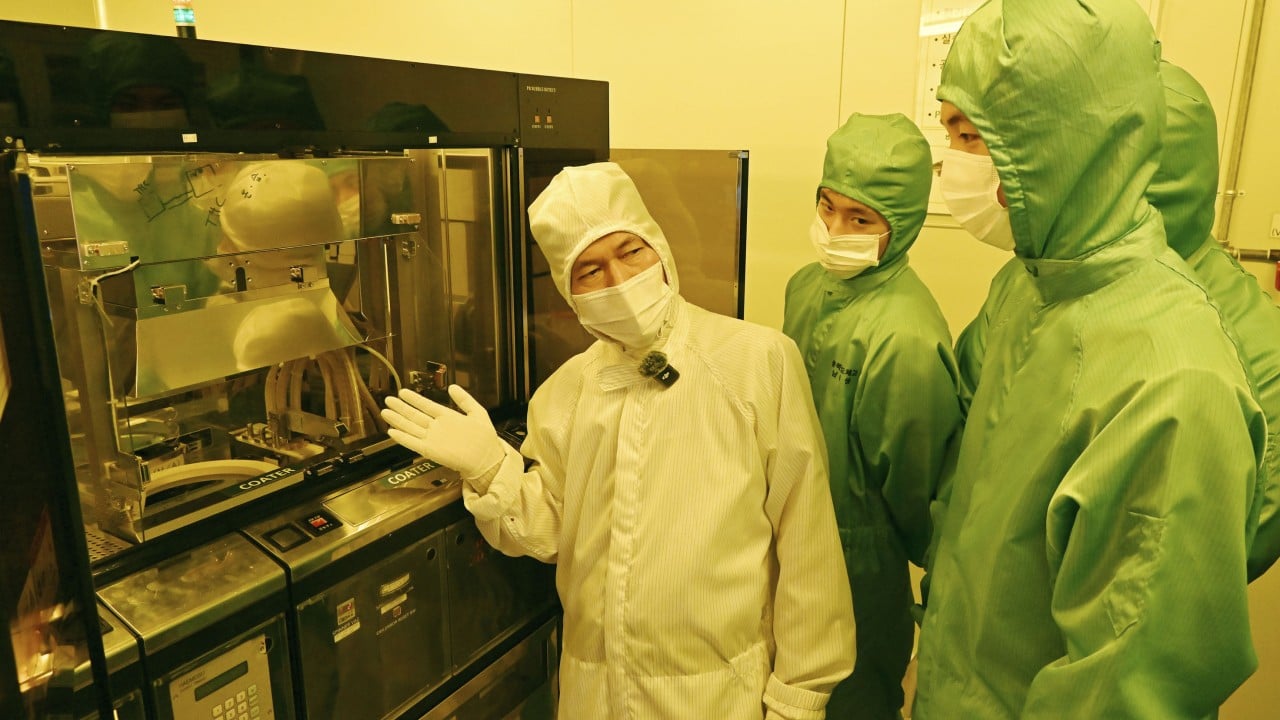
The corporate logic driving this pivot is ruthless efficiency. Samsung Electronics and SK hynix require operators and technicians who can step directly into high-stakes cleanrooms without requiring extensive corporate retraining. By partnering directly with secondary vocational schools and funding dedicated university contract departments—where early-admission competition ratios have spiked dramatically, with tracks at institutions like Sogang University seeing staggering multiple-hundred-to-one spikes in specific testing windows—conglomerates are exerting direct control over educational curricula. Students in these contract departments study custom syllabi designed entirely around corporate manufacturing needs, backed by guaranteed job placement upon graduation.
Inside the Corporate Pipeline
This is not a casual partnership between academia and industry. It is a total institutional integration. University departments tied directly to SK hynix and Samsung operate as minor corporate outposts. Students receive targeted scholarships, hands-on exposure to proprietary manufacturing processes, and mentorship from active industry engineers.
Consider a hypothetical example to illustrate the structural shift. A traditional mechanical engineering graduate spends four years studying abstract thermodynamics and fluid dynamics, followed by months attending civil service or corporate civil exams, entering the workforce near age twenty-six. Conversely, a graduate from a specialized semiconductor Meister school enters the workforce at age eighteen or nineteen, completes mandatory technical certifications on the job, and manages production lines by their mid-twenties. By the time their university-educated peers write their first corporate memos, these technical graduates are already seasoned section chiefs directing floor operations.
The economic incentives are clear. Entry-level hiring within South Korea's semiconductor sector has surged substantially, fueled by an insatiable global appetite for advanced memory and AI accelerators. Companies cannot afford to wait for four-year institutions to modernize outdated physics departments. They are cultivating talent at the secondary level, effectively cutting out the academic middleman.
The Structural Vulnerability Beneath the Boom
Yet, this rapid pivot introduces deep systemic risks that industry boosters rarely acknowledge. Tying secondary and tertiary education pipelines directly to the capital expenditure cycles of two dominant conglomerates creates severe structural vulnerability. When the semiconductor cycle inevitably turns downward—as memory markets cycle through oversupply and price crashes—the over-specialization of young workers could backfire.
A workforce trained exclusively to fabricate specific nodes of dynamic random-access memory or high-bandwidth memory for two dominant corporate giants possesses limited professional elasticity. If global demand shifts toward different computing architectures or if geopolitical supply chains fracture further, these specialized workers face a narrower professional safety net than general engineering graduates who possess foundational theoretical knowledge.
Furthermore, elite universities are scrambling to protect their relevance by establishing these exact corporate contract tracks, creating a two-tier caste system within higher education itself. Traditional majors face institutional starvation while semiconductor-aligned departments absorb disproportionate funding, prestige, and administrative focus. This creates an internal academic conflict that Korean universities are ill-equipped to manage long-term.
The cultural obsession with university credentials is far from dead, but it has sustained a permanent fracture. The prestige of a generic liberal arts degree from a secondary Seoul university now holds less economic value than a cleanroom certification earned before the age of twenty. South Korea's chip boom has forced society to confront an uncomfortable reality. Silicon does not care about university prestige, and the global race for hardware dominance rewards execution speed above all else.
As new specialized institutions continue breaking ground in Yongin and Seoul to feed the relentless expansion of the national technology cluster, the traditional ivory tower is being systematically dismantled from the inside out.
South Korea's AI boom drives demand for semiconductor factory jobs
This reporting explores how specialized technical training centers and manufacturing pipelines are altering career trajectories for a new generation of South Korean students.