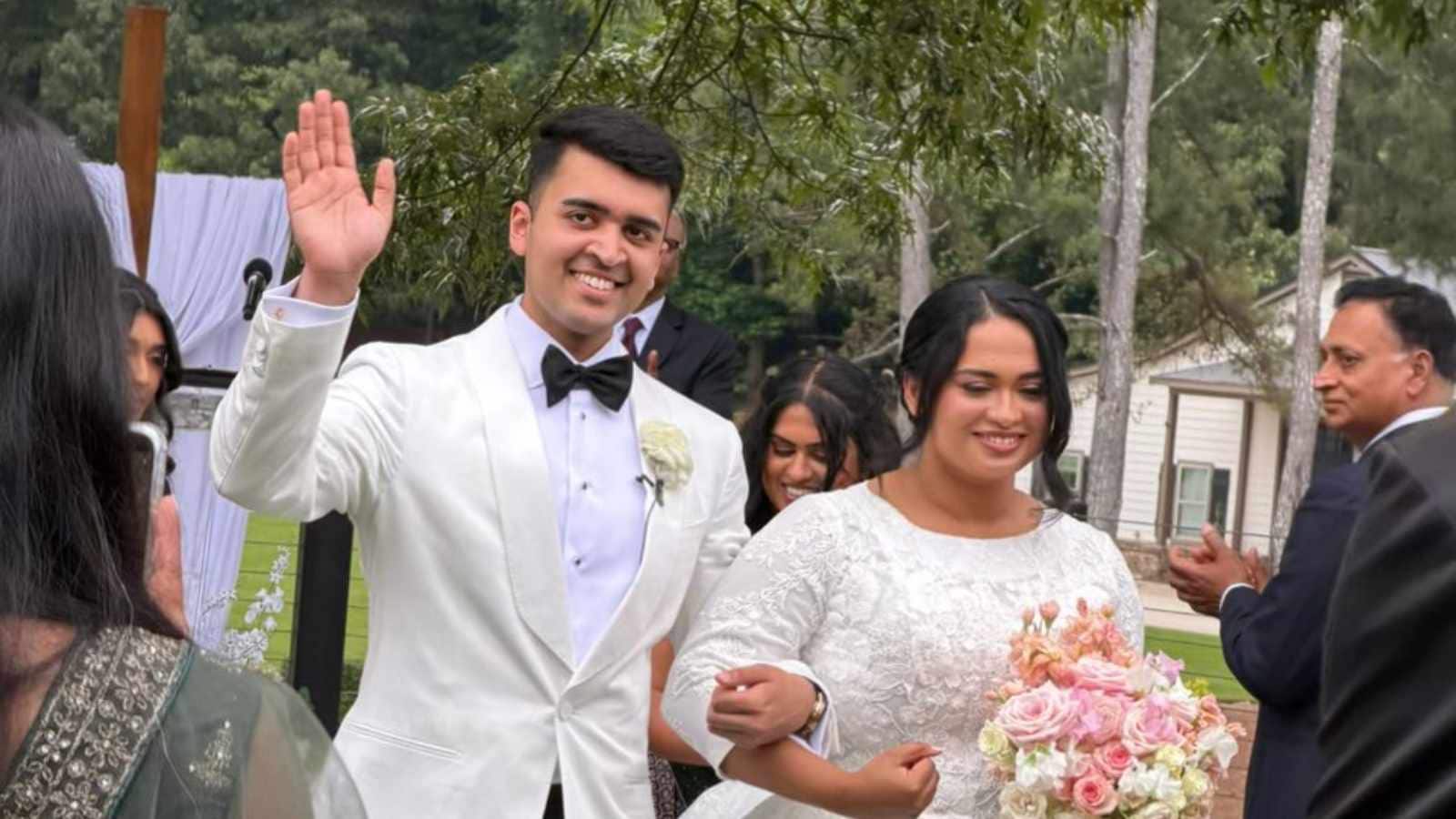
A perfect wedding day shouldn't end in a heavily wooded wreckage. Yet, that's exactly what happened in Dawsonville, Georgia, when a celebration turned into a nightmare. Dave Fiji, a 26-year-old first officer for Delta Air Lines, married his longtime partner, Jesni, in front of 400 guests at a venue called The Revere. Hours later, he was dead.
The tragedy raises massive questions about aviation safety, grand departures, and the pressure to execute a flawless event even when nature signals danger. It isn't just a heartbreaking story. It's a stark reminder that professional expertise should never be overridden by ceremonial timelines.
The Illusion of the Flawless Exit
Everyone loves a grand exit. Modern weddings are no longer just ceremonies; they're theatrical productions. Couples want the sparklers, the vintage cars, or in this case, a Robinson R66 helicopter. The ride was supposed to be a spectacular farewell as the newlyweds headed to DeKalb-Peachtree Airport for their honeymoon.
Instead, the aircraft went down shortly after takeoff.
Dave Fiji wasn't just a passenger clueless about the skies. He knew exactly what he was looking at when he checked the weather. As a commercial airline pilot, his training was rooted in strict risk assessment. He explicitly pointed out the deteriorating conditions before boarding.
He warned the charter pilot about the zero-visibility conditions. He told him flat out that you don't fly in that kind of weather.
The charter pilot brushed it off. He promised they would just fly at a higher altitude to avoid the mess. That choice proved fatal. It highlights a dangerous reality in private aviation where the pressure to please a client sometimes supersedes basic survival protocols.
The Fatal Decision and the Timeline of a Disaster
We need to look closely at the timeline of May 29 to understand how this unfolded. The reception was a massive, joyful gathering of Atlanta's Malayali community. Family members recall how happy Dave was. His father, George Fiji, remembers standing there just watching his son, thinking how handsome he looked.
Then came the departure.
The weather had deteriorated significantly by the late-night departure time. Visibility was scraping zero. In the aviation world, zero visibility requires strict instrument flight rules (IFR), and even then, low-altitude helicopter flights in wooded terrains become incredibly hazardous.
- The Warning: Dave Fiji questioned the safety of the flight, citing professional aviation protocols.
- The Reassurance: The unnamed charter pilot assured the couple that climbing higher would mitigate the risk.
- The Crash: Shortly after lifting off into the dark, foggy night, the Robinson R66 lost altitude and crashed into a dense forest near the venue.
- The Aftermath: The impact killed Dave Fiji and the charter pilot instantly. Jesni, a 25-year-old nurse, survived but was trapped in the mangled wreckage for six agonizing hours.
When Jesni regained consciousness in the pitch black, she found her husband leaning on her. She felt for signs of life. Because of her medical training, she knew immediately that his body was completely cold and he was gone. She managed to contact emergency services despite her injuries, but the dense terrain meant it took hours for rescuers to find the site.
What Private Aviation Can Learn From Commercial Protocols
There's a massive cultural gap between commercial airline safety and private charter operations. Commercial aviation thrives on a concept called Crew Resource Management. It's a system where anyone, regardless of rank, can challenge a safety decision. If a first officer tells a captain the weather is too bad to fly, the flight doesn't happen.
Private charters operate under a different kind of pressure.
Clients pay thousands of dollars for a specific experience at a specific time. Saying "no" means ruining a high-profile moment. It means losing money. But as this accident shows, saying "yes" to unsafe conditions can cost lives.
The National Transportation Safety Board and the Federal Aviation Administration are deeply involved in investigating this specific crash. They're examining the mechanical history of the Robinson R66 and the specific weather metrics at the time of departure. But honestly, the core issue seems to be human factors and decision-making under pressure.
Moving Forward From Empty Celebrations
This shouldn't happen to anyone. Families are left to lean on faith to process a loss that makes absolutely no sense. George Fiji noted that without his Christian faith, the question of "why" would be too heavy to bear. The family has deep roots in Kerala, with a long history of community involvement, making the shock wave travel globally.
If you're planning an event, stop prioritizing the aesthetic over basic safety. If a professional pilot, even if he's the groom, says the weather looks bad, you cancel the flight. You take an Uber. You stay at the venue. No grand exit is worth a life.
The next steps for the aviation community involve tightening restrictions on night-time private charters during low-visibility events. For consumers, the takeaway is simpler. Trust your gut, respect the weather, and never let the momentum of a party push you into a dangerous situation. Jesni is recovering from cuts and bruises in a metro Atlanta hospital, but the emotional scars will take a lifetime to heal.