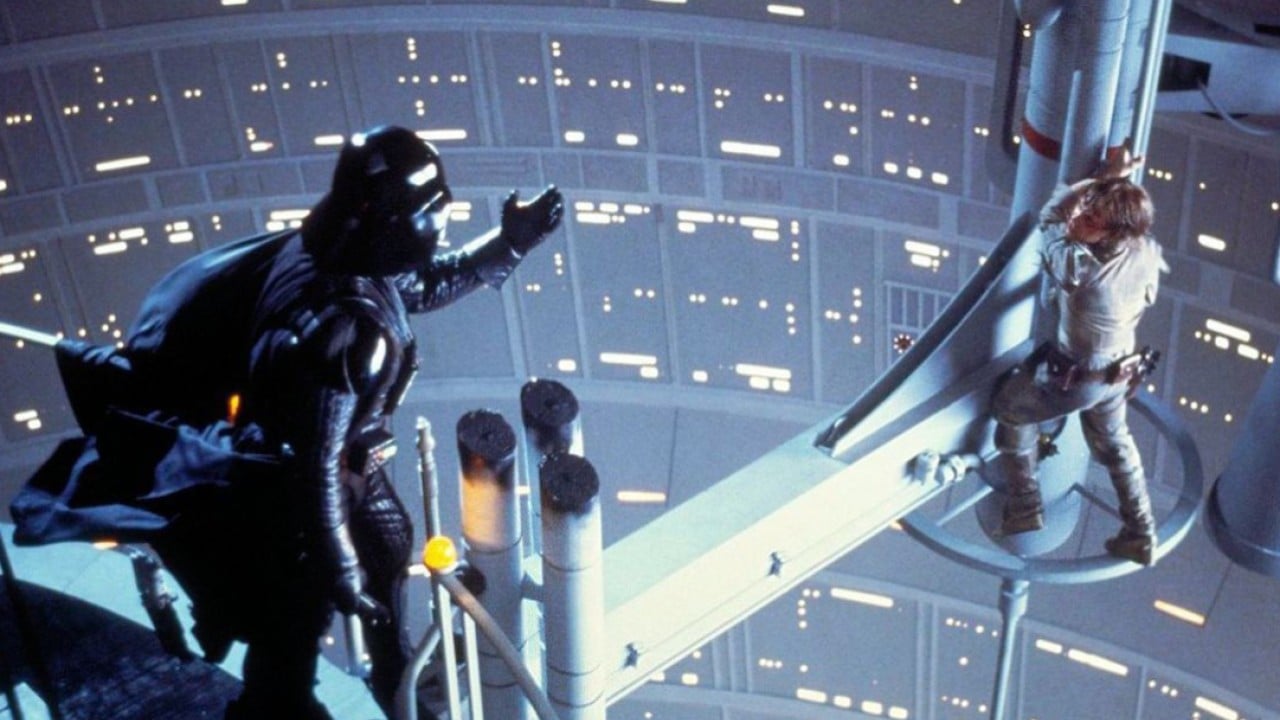
Someone in Dallas just paid $4,875,000 for a 12.5-inch tube of modified 1950s camera parts.
Not a mansion. Not a rare Ferrari. A battered movie prop without a blade that doesn't even light up. On November 12, 2026, Darth Vader’s screen-matched hero dueling lightsaber from The Empire Strikes Back and Return of the Jedi went under the hammer at Heritage Auctions, obliterated its pre-sale estimate, and became the single most expensive Star Wars collectible ever sold.
If you think that price tag sounds completely unhinged, you aren't alone. Most casual observers look at Hollywood memorabilia sales and assume rich nerds have simply lost their minds. They're wrong. When you look closely at what this specific prop actually is—and how fast blue-chip cinema artifacts are appreciating—the math starts making a lot more sense.
What Makes This Darth Vader Lightsaber Worth Nearly $5 Million
To understand the $4.875 million price tag, you first have to understand how movie props work. Studios don't just make one lightsaber for a film. They make dozens.
There are "stunt" sabers cast out of lightweight resin or rubber so actors don't break each other's knuckles during fast choreography. There are "belt hangers" built strictly to dangle from a costume hip while a character walks across a soundstage. And then there are "hero" dueling props—the heavy-duty metal versions built to survive real physical clashes on camera while holding up to extreme close-ups.
This prop is the real deal. Heritage Auctions cataloged it as the screen-matched hero dueling lightsaber wielded by both David Prowse (the actor inside the Vader suit) and Bob Anderson (the Olympic fencer who performed Vader's complex sword fights) during the legendary Cloud City showdown in The Empire Strikes Back. That's the exact duel where Vader slices off Luke Skywalker's right hand and drops the most famous plot twist in cinema history.
Better yet, Lucasfilm's prop department recycled it three years later for the Death Star II throne room duel in Return of the Jedi. You get two of the greatest lightsaber battles ever filmed in a single piece of hardware.
Built From Vintage Camera Scrap
Here's the part I love most about original trilogy prop history. Nothing was custom-machined in a high-tech aerospace lab. Prop masters in the late 1970s and early 1980s raided surplus bins and camera shops.
Vader’s hilt started life as a 1950s British Micro Precision Products Microflash camera flash gun. Set dressers bolted on T-track rubber grips, wiring, and small greeblies until a vintage photography attachment looked like an instrument of galactic terror. Because it was actually swung in anger on set, the hilt carries real battle scars—scratches along the metal, a crack, and a partially broken grip.
Collectors don't view that damage as a flaw. They treat it like a fingerprint.
How Experts Prove It Was Actually on Screen
In the high-end prop world, paperwork alone isn't enough. Certificates of authenticity get forged or lost all the time. If you're asking a buyer to wire nearly five million dollars, you need forensic proof.
Authenticators call this process screen-matching. Specialists examine high-resolution stills and frame-by-frame film scans to match microscopic dings, paint chips, and manufacturing quirks on the physical object to what appears on screen. For this saber, researchers matched the specific curve of its belt D-ring to a production still from The Empire Strikes Back, then matched a distinct dent on the lower endcap to a close-up shot in Return of the Jedi.
Nobody can replicate that kind of wear pattern accidentally. Once a prop achieves verified screen-matched status from an iconic scene, its value detaches from normal market logic.
Why the Pre-Sale Estimate Missed by Millions
Before the November 12 auction in Dallas, Heritage Auctions publicly estimated the saber would sell for north of $1 million. Some early coverage noted wildly conservative baseline expectations. Brian Chanes, Heritage's senior director of Hollywood and entertainment, openly called the piece "like the Holy Grail" for Star Wars collectors.
Still, watching a lot rocket past $4.8 million surprised plenty of people watching the live stream. Why did the bidding war get so aggressive?
Look at the recent trajectory of top-tier Star Wars artifacts:
- Luke Skywalker's lightsaber and severed hand: Sold earlier in 2026 for $3.75 million, setting the previous benchmark for screen-used props from that exact Cloud City scene.
- Tom Jung's original A New Hope poster painting: Previously held the all-time Star Wars collectible record at $3.875 million.
- This exact Darth Vader lightsaber: Sold roughly 14 months earlier for $3.654 million before returning to the block and jumping 33%—an extra $1.22 million in just over a year.
Read that last bullet again. The exact same object traded hands twice in 14 months and gained more than a million dollars in value. That kind of rapid turnaround almost never happens at the ultra-high end of movie memorabilia, and it proves demand at the top isn't cooling off.
Inside the Nearly $8 Million Dallas Auction
Vader’s hilt didn't sell in a vacuum. It anchored a massive two-session event titled "The Ultimate Star Wars Auction" that pulled in nearly $8 million total—roughly $7.34 million in the main session and another $606,000 in the follow-up—setting a world record for the highest-grossing standalone Star Wars auction in history.
Heritage assembled 28 lightsabers spanning all nine Skywalker Saga films alongside spin-off series, blasters, production artwork, and early script drafts.
The price gap between original trilogy hero props and prequel items tells you everything about where collector psychology lives right now. During the same sale, lightsabers wielded by Ray Park as Darth Maul in The Phantom Menace and Hayden Christensen as Anakin Skywalker in Revenge of the Sith each hammered at $162,500. Those are serious numbers by any normal standard, yet Vader's 1980 hilt sold for 30 times as much.
Why the massive gap? Scarcity and nostalgia. Prequel productions used far more CGI and produced larger batches of standardized stunt hilts. Original trilogy props were handmade, battered on physical sets, and rarely survived intact. And the generation of fans who watched The Empire Strikes Back in theaters as kids in 1980 are now in their fifties and sixties—peak wealth-accumulation years.
Common Myths About Screen-Used Lightsaber Props
Whenever a sale like this hits mainstream news, the comment sections fill up with the exact same misconceptions. Let's clear up three of the biggest ones.
Myth 1 It Makes Sounds and Lights Up
It doesn't. Not even a little bit.
On set during the original trilogy, hero dueling props had wooden dowels or aluminum rods covered in reflective Scotchlite tape attached to the emitter so camera lights would bounce back toward the lens. Visual effects artists at Industrial Light & Magic then hand-rotoscoped the glowing red and blue blades frame by frame in post-production. The sound effects—that iconic Ben Burtt hum and clash—were mixed months later. What sold in Dallas is strictly the 12.5-inch metal hilt.
Myth 2 George Lucas Bought It Back
Whenever an anonymous bidder drops nearly $5 million on Star Wars history, internet sleuths immediately claim George Lucas bought it for his museum in Los Angeles.
Heritage Auctions hasn't disclosed the buyer's identity, which is standard practice for seven-figure private transactions. While institutional buyers occasionally bid at major auctions, Lucas already owns an enormous private archive of original Lucasfilm props. Most record-shattering memorabilia sales go to ultra-high-net-worth private collectors who treat iconic pop culture artifacts the exact same way previous generations treated Impressionist paintings or rare Patek Philippe watches.
Myth 3 Your Old Toys Just Doubled in Value
If you have a shoebox of loose 1980s Kenner action figures in your parents' basement, don't quit your day job just yet.
A $4.875 million headline creates a halo effect that brings fresh attention to vintage Star Wars collecting, sure. People start digging through closets and searching auction sites. But mass-produced retail toys operate in a completely separate universe from one-of-a-kind screen-matched film props. A loose vintage Vader figure with a worn cape is still worth twenty bucks, not twenty thousand.
What Smart Collectors Should Do Right Now
You probably don't have five million dollars burning a hole in your pocket for a Cloud City dueling hilt. Even so, record sales like this offer clear lessons if you buy, sell, or insure pop culture collectibles.
- Audit your homeowners or collectibles insurance. Insurance analysts immediately flagged this sale as a wake-up call for collectors. If an item can jump $1.2 million in value over 14 months, standard homeowner policies with low sub-limits won't cover a fraction of your collection after a fire or flood. Get high-value pieces appraised regularly and carry dedicated specialty coverage.
- Document provenance obsessively. The entire reason Vader’s hilt commanded nearly $5 million comes down to undeniable visual proof tying it to specific scenes. If you own vintage toys, posters, autographs, or production crew items, save original receipts, old photographs, call sheets, and letters of provenance. Paperwork turns a questionable item into an investment-grade asset.
- Check completed auction results, never asking prices. Online marketplaces are full of delusional sellers listing common items for absurd numbers. Before buying or selling anything, filter strictly for verified sold prices from reputable houses like Heritage Auctions, Propstore, or Sotheby's to see what real buyers actually pay.
- Buy condition and completeness over quantity. Instead of buying ten beat-up items, put your budget toward one clean, complete piece with original accessories or high-grade authentication. The top 1% of any collecting category always appreciates fastest and holds value best when markets tighten.
Cinema props have officially graduated from niche hobbyist curiosities into legitimate alternative asset classes. Fifty years ago, studio crews threw used props into dumpsters once filming wrapped. Today, a scarred piece of 1950s camera flash equipment commands nearly $5 million because millions of people still feel a chill every time that red blade ignites on Cloud City.