Cuba is running out of artists. Walk past the grand, 2,000-seat National Theater of Cuba in Havana these days, and you won't hear the usual thrum of rehearsals or the buzz of opening-night crowds. The stages are dark. Production budgets have vanished into thin air.
Instead, the real creative pulse of the island has moved to the crumbling sidewalks of the Marianao district.
This isn't a romantic choice. It's a survival strategy. Amidst the worst economic crisis the island has seen in decades, Cuba's state-sponsored cultural sector is collapsing. The affordable, state-run creative spaces that defined the island's post-revolution identity have deteriorated completely. This leaves performers with a brutal choice: pack your bags and leave the country, or take your art directly to the gravel and the asphalt.
The Death of the Grand Stage
For nearly thirty years, Juan Miguel Mas was a towering figure in Havana's elite dance community. He didn't just participate in the scene; he fundamentally changed it. Trained under Laura Alonso and Ramiro Guerra, the undisputed father of contemporary dance in Cuba, the 60-year-old choreographer broke every industry mold.
In 1996, Mas founded Danza Voluminosa. It was a groundbreaking contemporary troupe comprised entirely of larger-bodied dancers. His performers defied traditional aesthetic norms and regularly packed major venues. They became international symbols of Cuban creative innovation, even starring in a prominent Canadian documentary.
Then the economic floor dropped out.
By 2024, Danza Voluminosa was forced to halt operations. Recently, the National Theater officially suspended Mas's teaching contract. His story isn't unique. It reflects a systemic shutdown.
Essays and reports from local arts journalists like Michel Hernández paint a bleak picture. The historic venues are broke. Blackouts knock out theater lighting for days on end. Water outages mean facilities can't operate, and a total lack of public transportation prevents audiences from attending evening shows.
If you want to perform in a proper venue in Havana today, you generally have to lease expensive private spaces. For local creators earning state wages, that's a financial impossibility.
The Great Cultural Drain
When the infrastructure broke, the talent walked away. Cuba is currently experiencing a historic mass exodus. Nearly a fifth of the island's total population has fled since 2021, driven by hyperinflation, food scarcity, and a lack of basic utility services.
The cultural sector has been hit particularly hard. For decades, Cuban creators held out hope, protected by a system that at least prioritized world-class arts education and subsidized performances. That compromise has officially ended.
Prominent figures are leaving in waves. Acclaimed singers like Haydée Milanés, popular performers like Laritza Bacallao, and legendary bandleaders like Lazarito Valdés have all relocated to creative hubs like Miami and Madrid. Humanitarian aid specialists note that creators are typically the last demographic to abandon the island. They stay because their entire identity is tied to the local culture. When they leave en masse, it signifies that the system has hit a point of absolute collapse.
Mas's own family reflects this reality. Last year, his sister and teenage nephew moved to Spain. He now lives entirely alone in Havana, navigating the daily grind without a family safety net.
Yet, despite losing his theater contract and his family to emigration, Mas refuses to board a flight. He notes that leaving Cuba means losing direct contact with the exact flavor of "Cubanness" that fuels his work. He wants the audience next door, even if that audience no longer has a theater seat.
Surviving on Recycled Clothes and Street Corners
To understand how a master choreographer survives in Havana today, you have to look at his weekends. Art doesn't pay the bills anymore, so Mas has pivoted to micro-entrepreneurship.
He leases out a small section of his home to local private businesses. On Saturdays and Sundays, he runs garage sales from his property. He sells curated recycled clothing, old tableware, and random household goods just to secure basic food from the farmers' market two blocks away. He relies on a state-run pharmacy across the street for subsidized medications. It's a precarious, hyper-local existence.
But his real work happens six blocks away in the Marianao neighborhood.
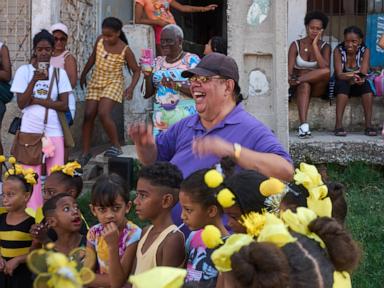
Without a theater, Mas has turned a vibrant street corner into an open-air classroom. On any given morning, you'll find him walking through the intense Havana heat, water bottle in hand, to meet a crowd of thirty local children and their mothers.
For 90 minutes, the concrete becomes a stage. Children dress up as colorful characters and bees, practicing routines and learning the fundamentals of rhythm and contemporary movement over portable speakers.
This isn't just an after-school program. It's a deliberate shield against a harsh environment. Mas views these street workshops as a vital tool to lift children out of a daily reality heavily defined by community conflict, poverty, and structural neglect. The art has been stripped of its elite status, its fancy lighting cues, and its plush velvet seats. What's left is pure community utility.
How to Support Grassroots Cuban Creators
If you're watching the collapse of Cuba's formal art scene from abroad, you don't have to just watch. You can directly impact the creators who are choosing to stay and preserve their local culture.
- Support Independent Cuban Media: Read and share platforms that feature independent journalism from writers still on the ground in Havana. They provide the visibility these street projects desperately need.
- Fund Grassroots Initiatives Directly: Look for crowdfunding campaigns and verified non-governmental initiatives that supply portable audio equipment, dance shoes, and basic art supplies directly to community workshops in neighborhoods like Marianao.
- Engage with Independent Art Spaces: When traveling to the island, bypass the crumbling state-run institutions. Seek out private, independent galleries, community street performances, and neighborhood studios where your money goes directly into the hands of working artists rather than state bureaucracies.
The grand theaters of Havana might be fading into historical footnotes, but the dance itself isn't dead. It's just waiting on the corner of the next block.