The marble floors of Clarence House do not usually echo with the low, anxious hum of silicon valley anxieties. They are meant for quieter sounds. The scuff of polished leather, the rustle of morning papers, the distant chime of grandfather clocks keeping time by an older, more predictable standard. Yet, on a crisp London morning, a very different kind of timer is being set.
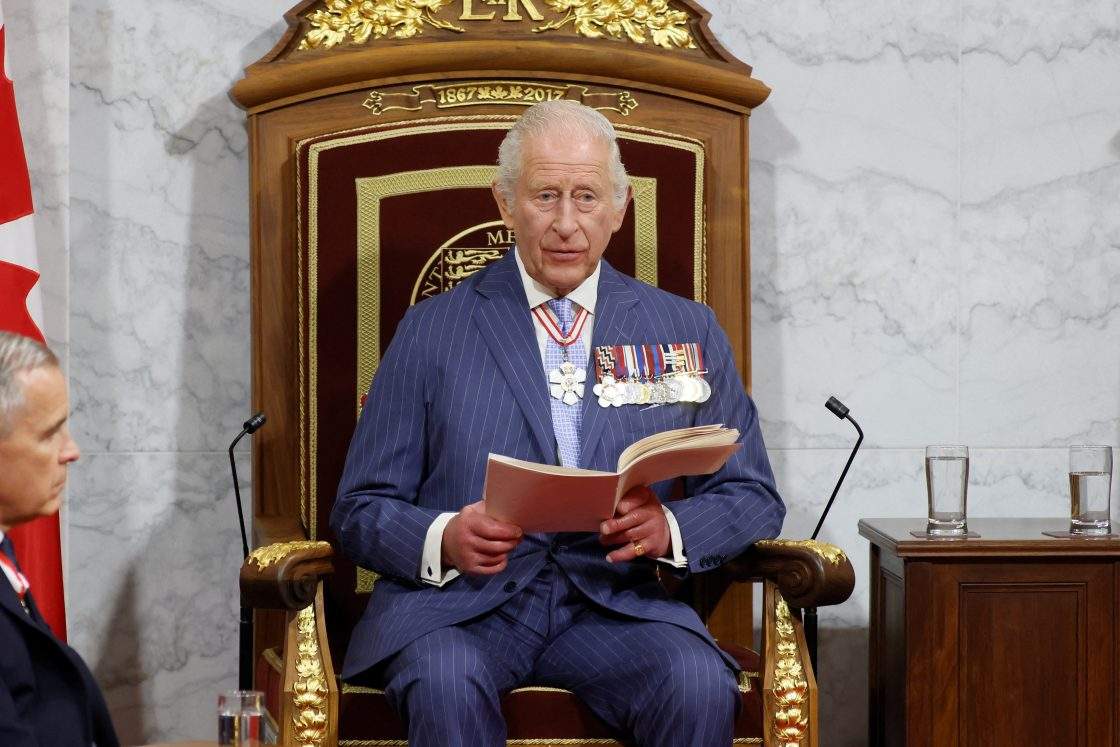
King Charles III is preparing to sit down with technology executives. Discover more on a similar issue: this related article.
The agenda is not polite small talk about the weather or the state of modern horticulture. It is about fear. Or, more precisely, it is about that specific brand of dread that arrives when human beings realize they have built something faster, smarter, and infinitely more unaccountable than themselves.
We have been here before. Every industrial revolution begins with a collective gasp, followed by a rush to harvest the gold, followed much later by the bill for the cleanup. But artificial intelligence wears a different face. It does not smoke from a chimney or foul a river with chemical sludge. It lives in air-conditioned data centers humming quietly in rural counties, invisible, weightless, and ravenous. Further analysis by USA Today delves into similar perspectives on this issue.
Consider a hypothetical worker named Sarah. She sits in a high-rise office overlooking Manchester, her fingers resting lightly on a keyboard. For twelve years, her value lay in her judgment—the subtle, hard-won ability to parse ambiguous data, weigh the emotional subtext of a corporate contract, and make a call when the spreadsheets flatly contradicted one another. Today, a model trained on billions of parameters does the same job in four-tenths of a second. It does not get tired. It does not have a sick child at home. It does not doubt its own conclusions.
Sarah is not alone in her quiet panic. Across the globe, boardrooms are gripped by a strange paralysis. Executives are terrified of missing the wave, and equally terrified of drowning in it.
This is where the monarch enters the frame.
It is a curious historical reflex, turning to a king when the future accelerates too violently. Monarchy, by its very nature, is an artifact of deep time. It deals in centuries, lineages, and obligations that outlive financial quarters. When the modern world fractures under the weight of technological acceleration, people look upward—not just for answers, but for a sense of ballast. They want someone whose authority does not depend on market capitalization or algorithmic engagement metrics to look the architects of automation in the eye and ask: To what end?
The discussions behind closed doors in London touch on threats that sound like science fiction until you read the memos of the engineers who wrote them. Unregulated synthetic media capable of rewriting truth in real-time. Autonomous systems optimizing decisions beyond the comprehension of their creators. The quiet erosion of human agency, traded away piecemeal for convenience and efficiency.
The executives arriving at these meetings are brilliant, highly specialized, and frequently blind to the human friction their products generate. They speak fluently in terms of parameters, latency, and scaling laws. They look at society as a system to be optimized.
Charles listens. He has spent decades worrying about the soil, about traditional crafts, about the fragile architectures of human community that vanish when we move too fast. He understands, perhaps better than most heads of state, that efficiency is not the same thing as wisdom.
A machine can generate a million words of prose in the blink of an eye, but it cannot know the weight of a dying language, or the sorrow inherent in a ruined landscape, or the quiet dignity of work done by human hands.
The tension in the room is palpable. On one side sits the relentless drive of technological determinism—the belief that if something can be built, it must be built, and whatever comes after us is simply the next iteration of evolution. On the other sits a profound, almost desperate conservatism—the insistence that human beings matter, that our flaws are inseparable from our value, and that progress without a moral anchor is simply sophisticated wreckage.
What happens next will not be decided by royal decree. Kings do not command the servers. Parliaments struggle to draft laws for software that rewrites itself overnight.
The true battleground is not in the boardroom or the palace. It is in the quiet spaces of our daily lives, where we decide what we are willing to outsource to a machine and what we refuse to surrender. Every time we let an algorithm choose our grief, our joy, or our truth, we tilt the scales.
The crown can host the conversation. It can lend moral weight to the warnings of whistleblowers and ethicists who have spent years shouting into the digital void. But the guardrails, if we are to have any, will be forged by a public that finally wakes up to what is being traded away.
The machines will keep learning. They will get faster, quieter, and more persuasive.
The real question is whether we will remember how to speak for ourselves when the noise of the system finally drowns out everything else.