Marcus slept on a flattened cardboard box outside a venue in Manhattan, watching the sunrise bleed through the smog, just to have ninety seconds to explain why his life mattered. He was one of thousands. They had camped out across New York and Los Angeles, clutching government IDs and transparent plastic bags, waiting to audition for a dream that didn't exist a decade ago.
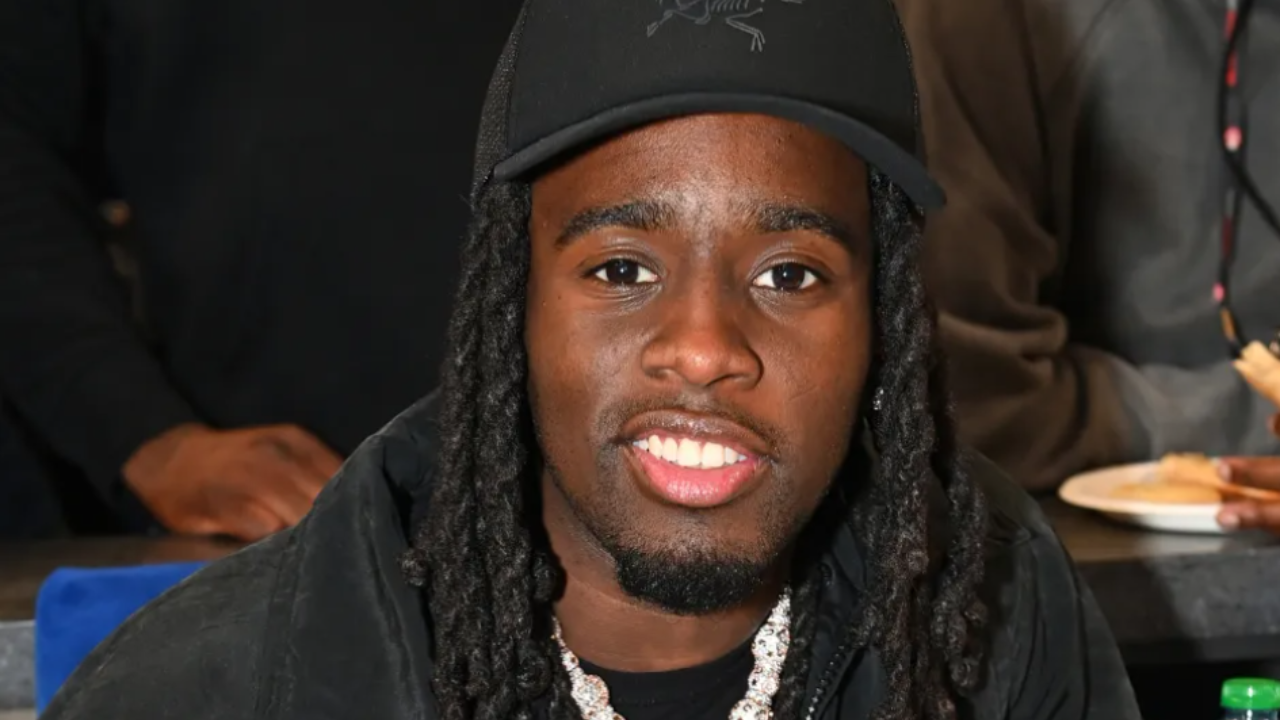
They were trying to get into college. Not Harvard, and not Georgia Tech. They were trying to get into Streamer University, an all-expenses-paid, highly competitive bootcamp run by Kai Cenat, the most dominant force in modern livestreaming.
The program is free. The stakes are everything. To a generation that watches traditional media collapse in real time, a spot in Cenat’s class of 120 students represents the ultimate golden ticket: validation, visibility, and a direct pipeline to digital sustainability.
But on June 16, 2026, the machine ground to a sudden halt.
Atlanta was supposed to be the grand finale. The final stop of the in-person application tour was booked for the Georgia State Stadium. Thousands of hopeful creators had already arrived in the city, checking into cheap motels or preparing to camp on the asphalt. Then, the notification dropped on Instagram.
Stay home. Do not travel. The event was frozen.
The official statement from Cenat’s team blamed logistics and capacity. They explained that as the sheer scale of the expected crowd became clear, multiple venue operators panicked and pulled the plug at the final hour. On paper, it looks like a standard corporate planning oversight.
The reality is much heavier. It is the story of what happens when the massive, uncontainable energy of the internet collides head-first with the rigid structures of the physical world.
The Gravity of Pure Attention
To understand why a building owner would suddenly lock their doors to a peaceful crowd of aspiring entertainers, you have to look at what happened in New York just days prior.
The internet is built on friction-free scale. A streamer can go from ten viewers to one hundred thousand in a matter of months without ever leaving their bedroom. The digital infrastructure scales automatically to accommodate the eyeballs. Servers spin up; chat rooms expand.
Brick and mortar does not work that way.
When the Streamer University tour hit the Northeast, the digital crowd materialized in the physical world. The lines stretched for blocks. People fought for placement. When the sun went down and the doors finally closed, the sidewalk was buried under mountains of trash, discarded blankets, and leftover food.
Consider the perspective of a traditional venue manager in Atlanta. They look at those images from New York. They see the police presence, the overnight encampments, and the liability of thousands of hyper-focused teenagers occupying a city block. They realize that their insurance policies were written for standard concerts and football games, not for the unpredictable, volatile gravity of internet fame.
So, they back out. One after another.
This isn't just a failure to secure a building. It is a recurring cultural roadblock. We saw it in 2023 when Cenat’s PlayStation giveaway turned Union Square into a chaotic sea of humanity. The physical world simply lacks the bandwidth to process the raw, unfiltered conversion of digital attention into physical presence.
The Economy of a Closed Door
The desperation of the kids waiting in those lines is entirely rational. The modern creator economy is a brutal, top-heavy ecosystem.
On Twitch and YouTube, a fraction of a percent of creators take home the vast majority of the revenue. The rest grind in near-total obscurity, talking to empty chat rooms, buying expensive cameras they can't afford, and praying that the algorithm throws them a bone.
Streamer University represents a shortcut through the dark. During the 2025 session in Akron, Ohio, the event pulled in over 27 million hours of watch time. Netflix and Amazon tried to buy the rights to it. Cenat refused, keeping it independent on Twitch because he wanted to maintain creative control. For a smaller creator, getting selected for that program means instantly inheriting a slice of that massive audience. It means going from a ghost town to a crowded stadium overnight.
That is why people camp out. That is why they panic when an event is delayed.
When Atlanta canceled, it wasn't just a scheduling hiccup for the applicants. It was a crushing psychological blow. For someone who poured their savings into a plane ticket to Georgia, hoping to stand before Cenat and prove their worth, a venue cancellation feels like the door to their future being slammed and locked from the inside.
The Search for a Bigger Container
Cenat’s team insists that Atlanta is still the final destination. They are currently hunting for a space massive enough, and resilient enough, to handle the weight of the crowd.
But the lesson of the Atlanta shutdown extends far beyond a single weekend or a single creator. It exposes the fundamental fragility of our new cultural landscape. We have built an entertainment empire entirely in the cloud, driven by individuals who possess more cultural influence than major television networks. Yet, we are still trying to fit that influence into the old architecture.
We are trying to host digital revolutions in standard sports arenas and convention centers designed for trade shows.
Until the infrastructure changes, the physical world will keep pushing back. Turnouts will be too massive. Venues will keep backing out. Security teams will continue to be overwhelmed.
For now, thousands of young creators are sitting in hotel rooms and suburban bedrooms across Atlanta, staring at their phones, waiting for an address to be posted. They are holding their breath, ready to run toward the next line the moment it forms, desperate to find out if the physical world will finally find a room big enough to hold them.