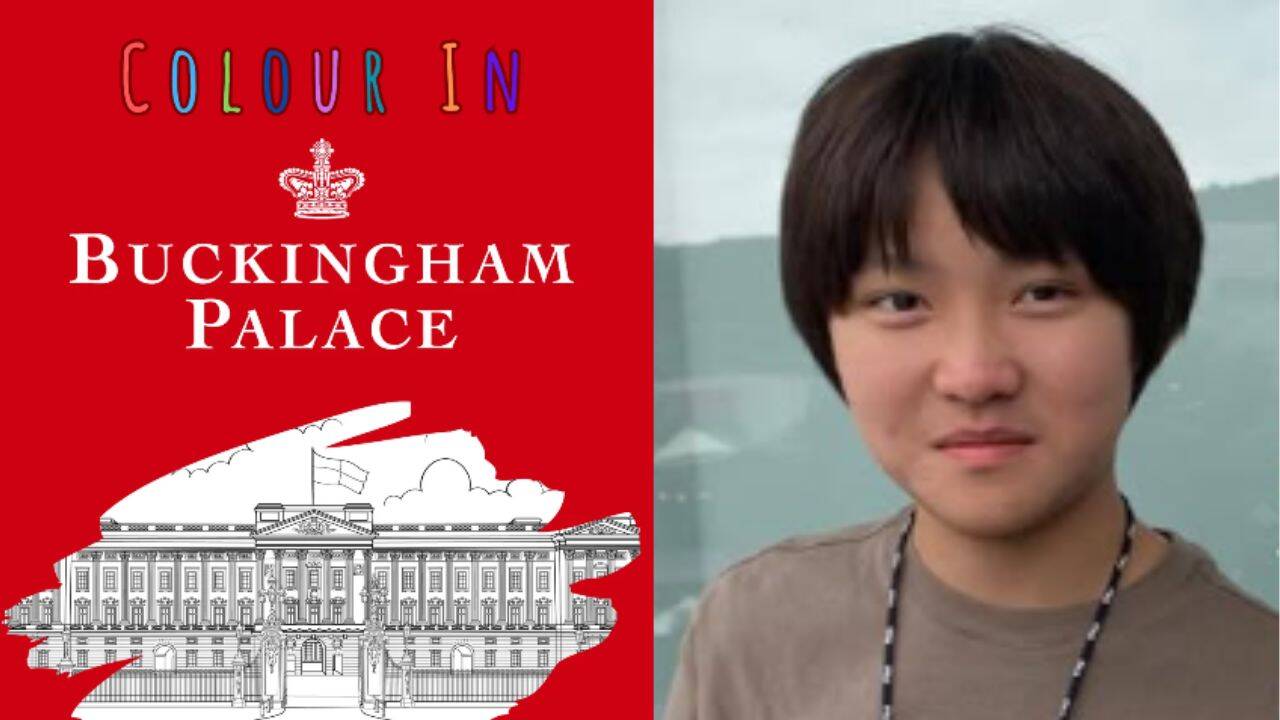
The inclusion of artwork by 16-year-old South Korean illustrator Leo Park in a United Kingdom colouring book is not a human-interest anomaly; it is a case study in cross-border supply chain efficiency and low-friction intellectual property licensing. Standard media coverage frames adolescent commercial art deals through the lens of precocious talent, ignoring the structural market forces that enable a minor in Seoul to supply visual assets to a publisher in London. Understanding how this transaction occurs requires stripping away biographical romanticism and examining the unit economics of modern print publishing, digital portfolio distribution, and the rising commercial value of authentic, non-algorithmic line art.
The Structural Economics of Print Colouring Books
To understand why a UK publisher sources line art from a 16-year-old freelancer in South Korea, one must first analyze the cost structure and margin pressures of the adult and juvenile colouring book sector. Unlike narrative fiction or high-end art monographs, colouring books operate as high-volume, margin-sensitive print commodities. The primary financial variables are paper stock weight, binding durability, print run volume, and customer acquisition cost. Because physical manufacturing costs are relatively fixed and subject to global pulp pricing, publishers protect their gross margins by aggressively compressing upfront editorial and illustration expenses.
Traditional commissioning models—hiring established UK-based illustrators through literary or commercial art agencies—introduce significant friction and capital outlay. An agency-represented illustrator typically commands an advance against royalties, plus an agency commission ranging from 15% to 25%. For a niche or seasonal colouring book title, paying a £5,000 to £10,000 advance creates a high break-even threshold before a single unit ships to retail or clears Amazon's fulfillment fees.
Sourcing directly from independent, early-career creators bypasses this legacy cost structure entirely. A 16-year-old artist operating outside the Western agency system presents a radically different risk profile for an acquisitions editor:
- Zero Agency Overhead: Direct digital communication eliminates middleman fees, compressing the total cost of asset acquisition.
- Flat-Fee Licensing: Young, unrepresented creators overwhelmingly accept flat-fee buyouts or low-tier non-exclusive licenses rather than demanding complex royalty accounting and escalating advances.
- Rapid Iteration Cycles: Independent digital artists working on tablets (such as iPad Pro with Procreate or desktop Wacom setups) deliver print-ready vector or high-DPI raster files without the administrative delays common in traditional studio pipelines.
This dynamic represents classic geographic and demographic arbitrage. The publisher acquires high-skill labor—refined through South Korea’s notoriously rigorous visual arts training culture—at an entry-level price point, while monetizing the final physical product in a high-purchasing-power Western retail market (the UK).
The Three Pillars of Discovery in Decentralized Art Markets
A critical failure in standard profiles of young creators is the assumption that discovery happens by accident. In reality, a UK commissioning editor finding a teenager in South Korea is the predictable output of algorithmic sorting and visual metadata optimization. When an editor searches for specific aesthetic styles—such as intricate architectural line work, botanical patterns, or stylized character design—they rely on centralized visual repositories rather than traditional trade shows.
1. Portfolio Standardization via Social Platforms
Platforms like Instagram, Behance, and Pixiv function as real-time, searchable databases of commercial art styles. For a young artist, maintaining a cohesive visual grid acts as an automated proof-of-concept. Unlike a traditional PDF portfolio sent via email, a public social feed provides immediate social proof through engagement metrics. When an editor evaluates a 16-year-old’s profile, the comment section and share ratios serve as a zero-cost focus group, validating that the aesthetic appeals to an existing audience before the publisher commits capital to print runs.
2. Technical Readiness for Print Production
Aesthetic appeal is insufficient for print publishing; line art must meet strict technical specifications to survive the offset or digital printing process. Many amateur illustrators fail commercial vetting because their work relies on muddy grayscale shading, low-resolution canvases, or unclosed vector paths that bleed ink on uncoated paper stock. Creators who break into international print markets at an early age invariably demonstrate mastery over clean, closed-contour line weight and high-contrast monochrome separation (minimum 300 DPI, true black CMYK profiles). This technical competence reduces pre-press labor for the publisher's internal design team, making the artist immediately plug-and-play.
3. Aesthetic Neutrality and Cultural Translation
Visual assets in the colouring book market require high cross-cultural legibility. Text-heavy illustrations or deeply localized cultural idioms restrict a book's addressable market to a single domestic territory. Line art rooted in universal visual motifs—flora, fauna, geometric abstraction, or globally recognized urban aesthetics—travels across borders without translation costs. South Korean youth visual culture, heavily influenced by both East Asian webtoon precision and Western editorial illustration, naturally produces a hybrid aesthetic that resonates immediately with UK consumers.
The Human-Origin Premium in an Era of Synthetic Media
The timing of a human teenager securing a print illustration credit carries specific strategic weight given the proliferation of generative AI image tools. Over the past several years, low-tier publishers flooded online marketplaces with algorithmically generated colouring books. This supply shock initially drove down production costs to near zero, yet it simultaneously triggered a severe quality degradation and consumer backlash.
Algorithmic line art suffers from predictable structural defects: hallucinated geometry, lines that merge incoherently, microscopic artifacts that cannot be physically coloured with standard pencils or markers, and a pervasive lack of intentional composition. Retail platforms and discerning buyers quickly learned to identify and penalize synthetic slop through negative reviews and high return rates.
Consequently, mid-tier and reputable UK publishers face an acute differentiation problem. To justify retail price points between £8.99 and £14.99 in brick-and-mortar bookstores or curated online storefronts, publishers must prove human authorship. Featuring a 16-year-old artist provides an indisputable provenance guarantee. The creator’s age and biographical reality serve as a marketing asset—a verifiable signal of human craft that insulates the product from consumer skepticism regarding synthetic media. In this framework, the artist is not merely a vendor of line drawings; their identity functions as a trust badge on the book's cover and promotional copy.
The Operational Mechanics of Cross-Border Minor Contracting
Executing a commercial publishing contract between a UK corporate entity and a 16-year-old South Korean national introduces distinct legal and operational variables that standard human-interest reporting completely overlooks. While the transaction appears frictionless on the surface, it requires navigating two distinct jurisdictions regarding age of majority, intellectual property transfer, and cross-border tax compliance.
Under the laws of England and Wales, individuals under 18 generally lack full legal capacity to enter into binding commercial contracts, with narrow exceptions for contracts of service or necessaries. Simultaneously, under South Korean Civil Act standards, the age of majority is 19. A minor in South Korea cannot independently execute a binding commercial assignment of copyright without the explicit consent or representation of a legal guardian.
To prevent future title defects—which would render the book uninsurable and block distribution through major UK wholesalers—the publisher's legal counsel must execute a tripartite agreement:
- Guardian Co-Execution: The parents or legal guardians must co-sign the publishing agreement, waiving the minor’s statutory right to void the contract upon reaching the age of majority.
- Moral Rights Waivers: Under UK copyright law (Copyright, Designs and Patents Act 1988), creators retain moral rights—such as the right to be identified as the author and the right to object to derogatory treatment of the work—unless explicitly waived. South Korean copyright law similarly protects author's moral rights (jeojakja ingyeokgwon), which are strictly non-transferable under Korean statute. A competent international contract must bridge this conflict by securing broad commercial exploitation licenses alongside explicit acknowledgments regarding how the artwork may be cropped, resized, or formatted for print layout.
- Tax Withholding and Remittance: Cross-border payments from a UK company to a South Korean resident trigger bilateral tax treaty protocols (the UK-Republic of Korea Double Taxation Convention). Without proper residency certification, the payer risks mandatory withholding tax deductions, eroding the net payout to the creator.
Strategic Limitations and Career Trajectory Risks
While securing an international publishing credit at age 16 generates immediate prestige and portfolio validation, the underlying business model carries structural limitations that can trap young creators if left unmanaged.
The primary vulnerability is asymmetric value capture. In a typical flat-fee work-for-hire or all-rights buyout arrangement, the creator trades permanent commercial control of their intellectual property for a modest upfront sum. If the UK colouring book scales into a multi-edition bestseller, undergoes foreign language translations, or spawns derivative merchandise (such as stationery, calendars, or digital app assets), the teenage illustrator participates in zero percent of the upside. The publisher captures the entire long-tail annuity of the intellectual property.
The second limitation is stylistic commoditization. Colouring book production requires strict adherence to commercial formatting—specifically, uniform line weights and repetitive compositional density designed to maximize user colouring time. Spending formative developmental years optimizing purely for commercial colouring templates can stunt an artist's broader conceptual range, pigeonholing them as a decorative technician rather than an autonomous visual storyteller capable of commanding higher-margin editorial, animation, or gallery rates.
The third constraint involves platform dependency and algorithmic volatility. Creators who rely exclusively on inbound discovery via social media platforms remain exposed to sudden reach compression. When platform algorithms shift priority toward short-form video or paid promotion, static line-art portfolios lose organic visibility overnight, halting the inbound pipeline of international editorial inquiries.
Transitioning from Vendor to Equity Holder
For an early-career illustrator like Leo Park, and for independent creators operating within similar cross-border dynamics, the initial UK publishing credit must be treated strictly as a customer acquisition cost for higher-margin business models, not as a sustainable career endpoint. Repeating flat-fee service work for foreign publishers yields linear income capped by physical drawing hours.
To convert early international validation into durable commercial leverage, the operational strategy must shift across three specific vectors:
- Retain Underlying IP via Limited Licensing: Future publishing agreements must be structured as territory-specific, format-limited licenses (e.g., UK print rights only, 5-year term) rather than global, perpetual buyouts. This preserves the artist's ability to re-license the exact same visual assets to Korean, North American, or European publishers independently.
- Capture Direct-to-Consumer Margins: Instead of relying solely on wholesale publisher advances, use the credibility of the UK print credit to drive audience traffic to owned digital storefronts (such as Gumroad, Etsy, or a dedicated Shopify portal). Selling high-resolution digital colouring packs directly to consumers eliminates printing, warehousing, and distributor fees, shifting gross margins from single-digit royalties to over 90% net revenue per transaction.
- Establish Direct B2B Art Direction Relationships: Bypass public social media discovery algorithms by systematically pitching the published UK book directly to senior art directors in adjacent, higher-margin sectors—specifically packaging design, tabletop gaming, and editorial magazines. A physical, commercially distributed international book serves as an indisputable risk-reduction credential, enabling the creator to transition from entry-level flat fees to institutional day rates before reaching legal adulthood.