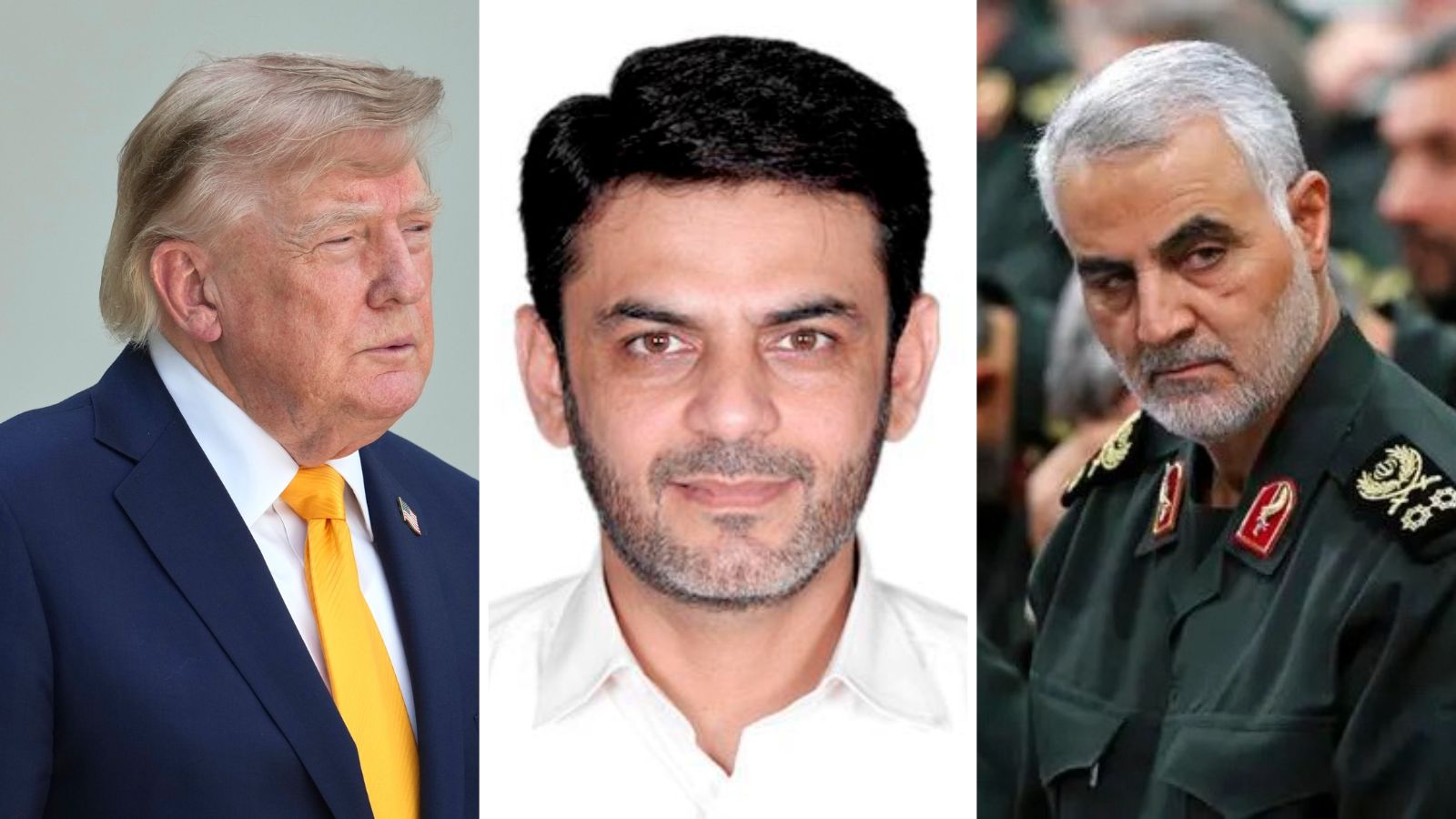
Twenty-seven years in a U.S. federal prison isn't just a long sentence. It's a stark warning about how modern proxy warfare actually works on American soil.
When federal prosecutors secured that 27-year sentence against Asif Merchant, the Pakistani national tied to an Iran-backed plot to assassinate Donald Trump and other U.S. officials, most headlines treated it like a standard spy thriller. It wasn't. Looking closely at the Department of Justice filings, the case exposes a messy, surprisingly amateurish operational model that Tehran increasingly relies on when targeting high-profile figures abroad.
If you only read the breaking news alerts, you missed the real story. You didn't see how easily an intelligence asset walked into an FBI trap, or why Iran's Islamic Revolutionary Guard Corps (IRGC) keeps outsourcing sensitive hits to cutouts who have zero formal tradecraft training.
How the Plot Actually Unfolded in New York
Let's strip away the sensationalism and look at the timeline documented by federal investigators.
Asif Merchant, a 46-year-old Pakistani citizen who had spent time in Iran before flying to the United States in April 2024, wasn't a James Bond figure. He was a former banker with business ties that stretched across Pakistan and Iran. According to court documents unsealed by the Eastern District of New York, Merchant arrived in the U.S. with a clear objective: recruit hitmen to carry out political assassinations.
He didn't target just one person. Prosecutors established that Trump was a primary target, alongside other prominent American politicians and government officials. The motive traced straight back to January 2020, when a U.S. drone strike ordered during Trump's presidency killed Qasem Soleimani, the powerful commander of the IRGC's Quds Force.
Here's where things get weird.
Instead of operating through a hardened network of sleeper agents, Merchant reached out to someone he thought could connect him with local muscle in New York. That contact didn't help him. That contact went straight to law enforcement and became a confidential source.
By June 2024, Merchant was sitting in a New York hotel room laying out the details of the operation. He literally used a napkin to sketch out the logistics of a rally shooting. He discussed needing three distinct teams:
- Individuals to conduct surveillance on the targets.
- Gunmen to carry out the actual shooting.
- Someone to steal documents or USB drives from a target's home.
- Protestors to create a diversion at the scene so the shooters could escape.
The "hitmen" he met with in mid-June to finalize the deal? Undercover FBI agents. Merchant handed them $5,000 in cash as an advance payment—money he had arranged to get wired from overseas—and told them he would send instructions on whom to kill once he left the country.
He didn't make it out. Federal agents arrested him on July 12, 2024, just as he was preparing to board a flight out of the United States.
Why Iran Uses Cutouts Like Asif Merchant
If you've followed counterintelligence cases over the past decade, a pattern jumps right off the page. Iran's intelligence apparatus—specifically the IRGC—rarely sends its own elite officers to pull triggers in Western capitals anymore.
Why? Plausible deniability. And cost.
When you use a non-Iranian national like Merchant, Tehran creates a buffer. If the plot fails, Iranian officials can shrug and claim they have no direct link to a Pakistani businessman acting on his own. It's a classic intelligence tactic, though it comes with a massive trade-off in competence.
Think about the operational security failures in this case. Merchant flew into the U.S. after spending weeks in Iran, immediately raising red flags on intelligence watchlists. He solicited help from an acquaintance who had no loyalty to him. He paid undercover federal agents in cash inside a bugged hotel room.
Honestly, it was sloppy.
Yet that sloppiness is precisely what makes these plots so dangerous for U.S. security agencies. You can track trained intelligence officers because they follow predictable patterns and communicate through known channels. A random businessman using encrypted messaging apps and cash drops is much harder to spot before he makes contact with someone on the ground.
In July 2024, just days after Merchant's arrest, the Secret Service and local law enforcement faced a completely unrelated assassination attempt against Trump in Butler, Pennsylvania. While federal officials confirmed there was no connection between Thomas Matthew Crooks and the Iranian plot, the timing forced the Secret Service to drastically overhaul Trump's security detail. They knew a foreign state actor was actively hunting him at the exact same moment domestic threats were peaking.
The Legal Reality Behind the 27-Year Sentence
A lot of people wonder why Merchant got 27 years instead of life without parole, or why he wasn't tried for treason.
First, treason only applies to U.S. citizens or those owing allegiance to the United States. As a Pakistani national, Merchant was charged under federal murder-for-hire statutes and terrorism-related conspiracy laws. Specifically, prosecutors hit him with attempting to commit an act of terrorism transcending national boundaries.
Second, nobody was actually killed or injured because the FBI intercepted the plot in its planning stages. In the federal sentencing guidelines, a completed assassination carries a mandatory life sentence or the death penalty. An attempted conspiracy where the "hitmen" were federal agents from day one gives judges a different sentencing range, even with terrorism enhancements applied.
Twenty-seven years in a high-security federal facility—likely somewhere like ADX Florence or a Communications Management Unit—is effectively a life sentence for a man in his late forties. Under federal law, there is no parole. Even with the maximum possible good-time credit (which caps out at roughly 15% of a sentence), Merchant won't see the outside of a prison wall until he is well into his seventies.
What Most People Get Wrong About Foreign Assassination Plots
When news like this breaks, cable news panels immediately start debating whether this means an imminent war with Iran. That's the wrong way to look at it.
Teran has been running these kinds of operations for years, and they're rarely designed to trigger a full-scale military conflict. Instead, they are part of a broader campaign of asymmetric retaliation. Since Soleimani's death in 2020, the DOJ has unsealed multiple indictments targeting former Trump administration officials, including former National Security Advisor John Bolton and former Secretary of State Mike Pompeo.
In 2022, federal prosecutors charged Shahram Poursafi, an IRGC member, with trying to pay $300,000 to have Bolton killed in Washington, D.C., or Maryland. Just like Merchant, Poursafi tried to hire people online who turned out to be FBI informants.
Notice the trend? Iran keeps trying, and the FBI keeps catching them using the exact same playbook.
Another common misconception is that these plots stop when administrations change. They don't. Intelligence operations run on multi-year timelines driven by institutional grudges inside the IRGC, not American election cycles. Whether a target is in the White House, running a campaign, or writing a memoir in retirement, the threat assessment stays active for decades.
How Federal Counterintelligence Actually Stops These Threats
You might wonder how the FBI manages to get inside these plots before a single shot is fired. It comes down to three specific mechanisms that rarely get credit when things go right.
1. Human intelligence on the margins.
The FBI doesn't need a mole inside Tehran to stop a plot in Brooklyn. They rely heavily on local informants—people in diaspora communities, gray-market financial networks, and criminal circles who know that reporting a foreign solicitation to federal agents can wipe away their own legal troubles or yield significant financial rewards.
2. Financial chokepoints.
Moving money across borders to fund an assassination is the hardest part of the job. Every time an operative wires cash from Dubai, Istanbul, or Karachi into a U.S. bank account, it leaves a digital trail. The Treasury Department's Office of Foreign Assets Control (OFAC) and the FBI's counterintelligence division monitor these corridors relentlessly. Merchant's $5,000 advance payment wasn't just evidence; it was the tripwire that proved intent beyond a reasonable doubt.
3. Proactive surveillance on travel patterns.
Anyone traveling to the U.S. after spending time in Iran—especially without a clear, verifiable academic or diplomatic reason—gets flagged by Customs and Border Protection (CBP). Merchant's travel history put him under a microscope the second his passport was scanned at the port of entry.
Where This Leaves U.S. National Security
If you want to understand how foreign threats impact domestic politics right now, stop looking at diplomatic statements from the United Nations and start reading DOJ indictments. Those court filings are the clearest window we have into what foreign adversaries are actually trying to do inside the United States.
For everyday observers, the biggest takeaway from the Asif Merchant conviction is simple: verify the primary sources before buying into political spin. When major national security arrests happen, partisan commentators immediately try to twist the narrative to fit their own talking points. You can avoid the noise by reading the unsealed criminal complaints directly on the Department of Justice website. They're written in plain English, lay out the exact evidence—down to the text messages and bank transfers—and show you precisely where the facts end and speculation begins.