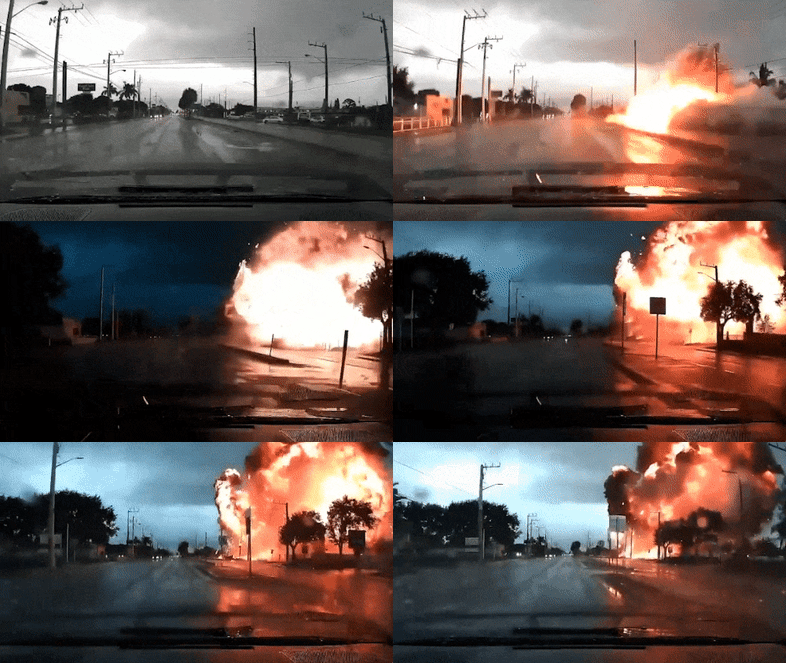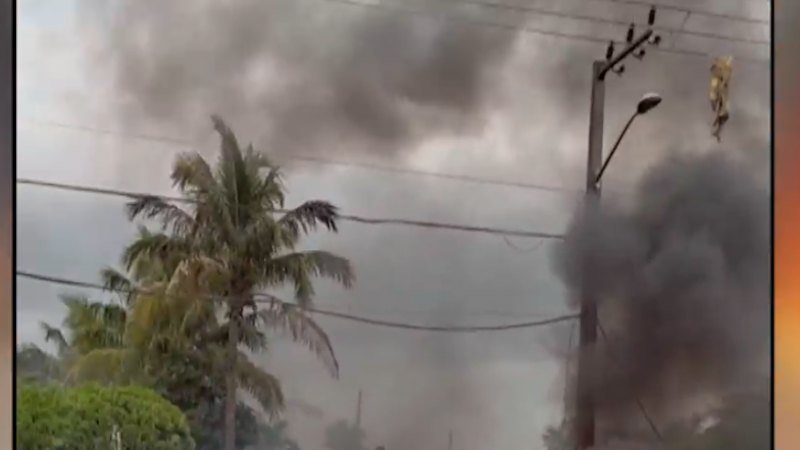
When news breaks that a business jet with nine people on board crashes in Florida, the first wave of headlines tells you almost nothing useful. You get the tail number, a grainy photo of smoke from a highway overpass, and a generic statement from local law enforcement saying the FAA is on the way. That's fine for a push notification. It's terrible if you actually want to understand what happened, why Florida sees so many of these incidents, or how aviation investigators piece together the truth when a twin-engine turbine aircraft goes down.
I've spent years following general and business aviation safety reports, reading through dry National Transportation Safety Board dockets so normal people don't have to. And here is the honest truth about private jet accidents in the Sunshine State: the initial news cycle gets the drama right and the mechanics completely wrong.
Why Florida Is a Magnet for Business Aviation Traffic
Florida isn't just a vacation spot. It's arguably the busiest corridor for private and corporate aviation in the United States. Between Miami-Opa Locka Executive, Teterboro-to-Palm Beach shuttles, Naples, Fort Lauderdale Executive, and Orlando, the airspace over the peninsula is packed year-round with light jets, super-midsize cabins, and turboprops.
More flights mean more exposure. Simple math.
Yet volume alone doesn't explain everything. Florida's weather changes faster than almost anywhere else in the country. A clear morning approach into Naples or Boca Raton can turn into a wall of convective thunderstorms with violent wind shear in twenty minutes flat. Add flat terrain surrounded by water, dense coastal development right up to airport perimeter fences, and high-net-worth passengers pushing tight schedules, and you have a recipe where small mistakes compound fast.
When a business jet carrying nine people runs into trouble here, the passenger count immediately signals what class of aircraft we're talking about. Nine souls on board—typically two pilots and seven passengers, or one pilot and eight passengers depending on the airframe certification—puts the plane squarely in the light-to-midsize business jet category. Think Bombardier Challenger 600 series, Cessna Citation Excel or Sovereign, Embraer Phenom 300, Hawker 800XP, or a Gulfstream G150. These aren't tiny piston puddle-jumpers. They're complex, high-performance turbine machines capable of flying above 40,000 feet at nearly the speed of sound.
The First 48 Hours After a Crash Nobody Explains Properly
If you're watching breaking news coverage, you'll hear reporters repeat the same two acronyms: the FAA (Federal Aviation Administration) and the NTSB (National Transportation Safety Board). Most articles treat them like interchangeable government agencies. They aren't.
Here is how the handoff actually works on the ground:
- Local fire, rescue, and county sheriff deputies secure the scene, suppress fuel fires, and handle immediate medical transport or recovery.
- FAA inspectors usually arrive first because they have regional Flight Standards District Offices (FSDOs) scattered across Florida—in Miramar, Orlando, and Tampa. Their immediate job isn't to assign blame; it's to check pilot certificates, aircraft maintenance logs, and airworthiness records.
- The NTSB takes over as the lead investigative agency. An Investigator-in-Charge flies in from Washington, D.C., or a regional hub, and immediately locks down access to the wreckage.
One massive misconception in early reporting is expecting an answer within a day or two. You won't get one. The NTSB releases a preliminary report roughly two to three weeks after an accident. That document contains zero conclusions. It simply lays out the bare facts: weather observations, flight plan filing, radar track data, and what witnesses saw. The final probable cause report takes anywhere from 12 to 24 months. Anyone claiming they know why a business jet crashed 12 hours after impact is guessing.
What Investigators Look at First on a Nine-Passenger Jet
Because a nine-person business jet operates under either Part 91 (private/corporate non-commercial flying) or Part 135 (charter operations), the regulatory rules governing that flight matter enormously. Charter operators under Part 135 face stricter rest requirements, mandatory weather minimums, and tighter maintenance oversight than a private owner flying their own jet under Part 91.
Once investigators get past the paperwork, they zero in on four specific areas.
Cockpit Voice and Flight Data Recorders
Unlike commercial airliners, not every business jet is legally required to carry both a Cockpit Voice Recorder (CVR) and a Flight Data Recorder (FDR). Under federal rules, multi-engine turbine aircraft configured for six or more passenger seats and requiring two pilots must have a CVR. Flight data recorders kick in at ten or more passenger seats. That means a jet with nine people on board—say, two pilots and seven passengers—might have a voice recorder capturing the last two hours of cockpit audio, while lacking a full parameter data recorder. Investigators then have to reconstruct altitude, airspeed, and heading from FAA ADS-B transponder data and non-volatile memory chips inside the avionics suite.
Engine Indicating and Crew Alerting Systems
Modern business jets are flying computer networks. Even if a plane burns on impact, manufacturers like Honeywell, Collins Aerospace, and Garmin can often pull fault codes from hardened memory modules inside the engine controls (FADEC). Those chips record millisecond-by-millisecond data on turbine temperature, fuel flow, and compressor speed right up to power loss.
Approach and Landing Profiles
Statistically, the overwhelming majority of fatal business jet accidents happen during the final approach and landing phase, or right after takeoff. Why? Because the aircraft is low, slow, and close to the ground with almost zero margin for error. Investigators look closely at whether the crew flew a stabilized approach. If a jet comes in too high and too fast, pilots sometimes try to salvage the landing instead of executing a missed approach and going around. In Florida, where runways at executive airports can be shorter than major commercial strips—often 5,000 to 6,000 feet instead of 10,000—touching down a thousand feet past the threshold leaves very little asphalt to stop.
Fuel Contamination and Dual-Engine Flameouts
When a twin-engine jet loses power entirely, eyebrows go up immediately. Modern turbofans are absurdly reliable; having both fail independently on the same flight is nearly unheard of unless there's a common cause. Investigators immediately test fuel samples from the airport's FBO (Fixed Base Operator) trucks and underground tanks for water or jet-fuel-icing inhibitor issues, and they check fuel selector valve positions in the cockpit wreckage.
Reading Between the Lines of Breaking Aviation News
You don't need an airline transport pilot license to spot solid reporting versus clickbait when a Florida aviation crash hits your feed. Next time you read a breaking story, check three things right away.
First, look up the tail number (the N-number) on the FAA's public N-Number Inquiry database or tracking platforms like FlightAware and ADS-B Exchange. Within minutes, you can see the exact make, model, year of manufacture, registered owner (often an LLC or trust), and the flight's altitude and groundspeed graph right up until signal loss. If the altitude drops rapidly while groundspeed stays high, you're looking at a very different scenario than a gradual glide toward a highway or golf course.
Second, pay attention to whether the flight was operating under IFR (Instrument Flight Rules) or VFR (Visual Flight Rules). Virtually all business jets fly IFR, meaning air traffic control is tracking them continuously and assigning altitudes and headings. LiveATC archives often preserve the exact radio transmissions between the pilots and Miami Center or local approach control, giving an unfiltered look at whether the crew declared an emergency before impact.
Third, ignore early eyewitness descriptions of "the engine exploded in midair" or "it was spinning out of control." Non-pilots on the ground routinely misinterpret normal aerodynamic stalls, thrust reverser deployment, or the sound of a turbine compressor stall—which sounds like a shotgun blast—as midair explosions. Wait for the NTSB preliminary docket, check the official aviation databases directly, and judge the story by verifiable flight data rather than speculation.