When President Donald Trump took the stage at McMorran Place Arena in Port Huron, Michigan, on October 25, 2026, nobody expected the night's biggest headlines to link Oslo's Nobel Committee with the Pink Friday rapper. Yet within hours, cable news and social media were dissecting a single, chaotic evening where Trump branded Norway a "shithouse country" and publicly praised Nicki Minaj's body in front of thousands of midterm voters.
Most quick-hit news summaries treated those two moments as random rally noise. They weren't. Looking closely at what actually happened inside that Port Huron arena reveals a deliberate political playbook—one mixing grievance diplomacy, celebrity spectacle, and a very calculated push ahead of the November 3 midterm elections.
Why Donald Trump Unleashed a Tirade at Norway in Michigan
If you only read the viral clip, Trump's attack on Norway looks like an unprovoked outburst. It wasn't. His anger traces directly back to the Norwegian Nobel Committee's decision earlier in October 2026 to award the Nobel Peace Prize to Navi Pillay, the former international criminal court judge.
Trump didn't hold back in Port Huron. "Frankly, Norway sucks. Norway has become a shithouse country, actually," he told the crowd, recycling the same derogatory phrasing he previously directed at nations like Haiti, Libya, Somalia, and Yemen. He went even further on immigration, declaring that while he welcomes migrants from certain countries, Norwegians weren't welcome in the United States "because I didn't get the Nobel Prize".
Earlier that same month, Trump had already labeled the Nobel Committee's selection of Pillay "an indelible stain on the country of Norway", claiming he had never heard of her and insisting the prize was "forever discredited". By bringing that feud to a Michigan rally stage, Trump turned a foreign diplomatic slight into domestic red meat. His message to supporters was simple: global institutions refuse to give him credit, so he refuses to play by their diplomatic rules.
How Norway Responded to the Insult
Rather than firing back with an angry diplomatic protest, Norway's state-run tourism board—Visit Norway—flipped the insult into a viral marketing campaign four days later.
On October 29, Visit Norway published a tongue-in-cheek response showcasing the country's internationally acclaimed public restrooms along 18 scenic routes. "So, we heard some noise about 's... house country,'" the agency posted on social media. "What can we say, we do have some of the world's most beautiful and spectacular toilets".
They weren't exaggerating. Visit Norway highlighted architectural landmarks like:
- Stegastein viewpoint in Aurland, whose minimalist, black-tinted glass restrooms overlook the Sognefjord and earned a spot among DesignCurial's top 10 public toilets worldwide.
- Ureddplassen on the Helgeland coast, a wave-shaped facility frequently cited by international design outlets as the most scenic restroom on the planet.
- Gulldassen on Senja island, a triangular structure nicknamed the "Golden Toilet".
- Tungeneset and Utsikten, solar-powered and northern-lights-facing stops built by leading Nordic architects.
Jens Kjeldsen, a rhetoric professor at the University of Bergen, told Norwegian public broadcaster NRK that Visit Norway's humor hit the exact right note. "It's like the bully in kindergarten," Kjeldsen explained. "If you get too serious, the bully wins". Honestly, it's hard to argue with him. By leaning into literal toilet humor, Oslo completely disarmed the outrage cycle.
Inside Nicki Minaj's Air Force One Trip and Port Huron Speech
While foreign policy grievances drove one half of the news cycle, the 43-year-old Trinidad-born rapper drove the other. Minaj didn't just show up in Michigan as a casual spectator. She flew to the rally aboard Air Force One alongside Trump, even filming a lighthearted backstage video with a presidential aide pretending to interview for White House press secretary.
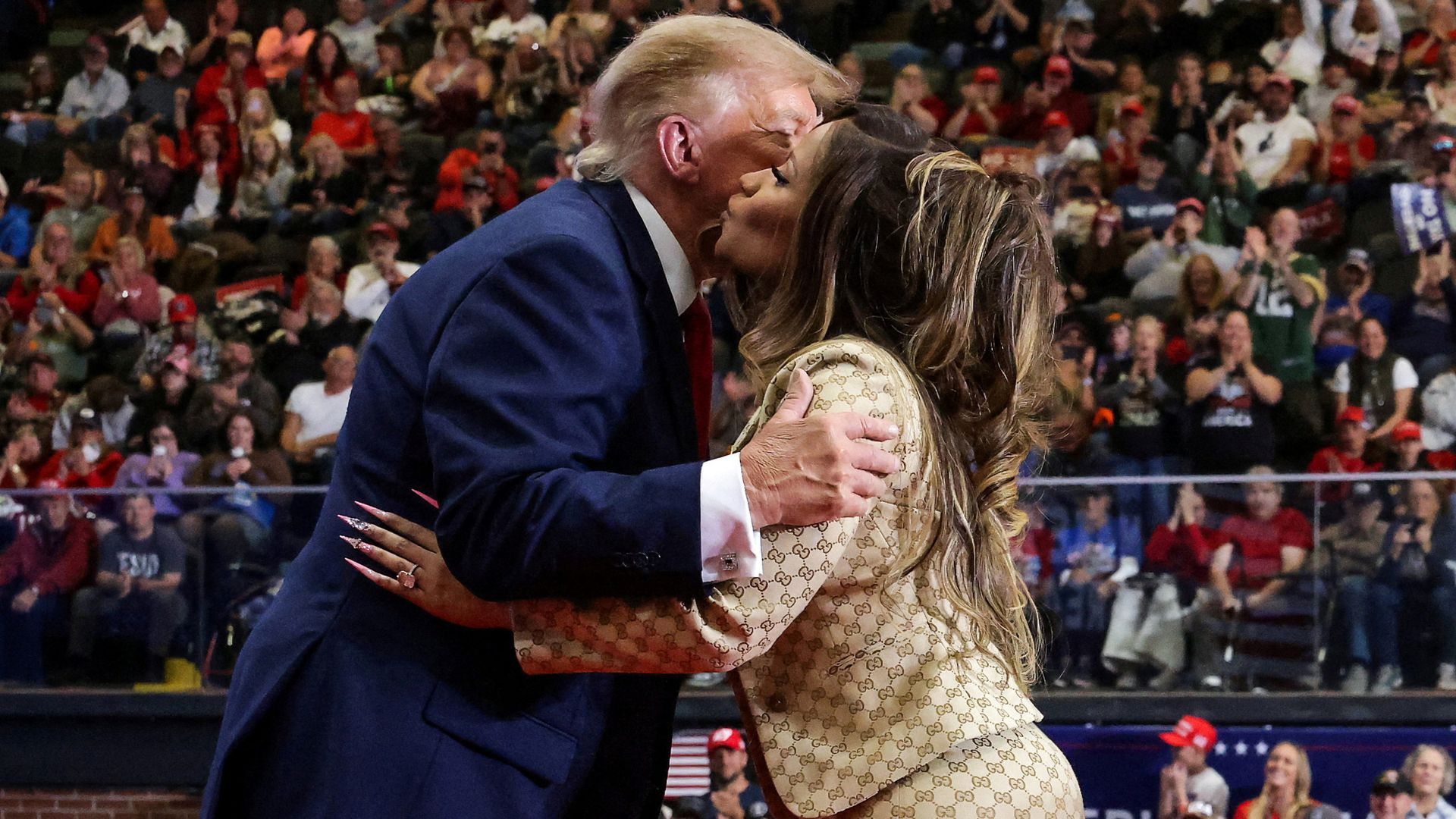
Dressed in a gold Gucci suit, Minaj took the stage after Trump introduced her as the "queen of rap" and praised her for backing him "from day one". She opened by leading the crowd in chants of "We love Trump" before laying out why she supports him.
Her pitch focused heavily on work ethic and cultural issues. Minaj told the Port Huron crowd that Trump wakes up at 4 a.m. and "outworks people that you know are half his age", arguing he could easily "kick his feet up and just, you know, chill out for the rest of his presidency" instead of campaigning for midterm candidates. She also waded directly into culture-war territory, urging voters to leave transgender minors alone and declaring that the upcoming election represented a "major turning point for our country".
Before walking off, she made a promise that grabbed political reporters' attention: "If you run again, I will support you again".
What Trump Actually Said About Minaj Onstage
The moment that dominated entertainment headlines happened before Minaj even reached the podium. Trump had been defending earlier rally jokes he made about Republican Ohio Senator Jon Husted's physique, insisting his comments about examining Husted's rear end were made "in fun" and noting, "Off the record, women? Yes. Men? No".
He immediately pivoted to Minaj in the audience. "By the way, I looked at one hell of a beautiful ass before: Nicki Minaj," Trump said. "That's hard to miss. Stand up! That's hard to miss".
Minaj stood, smiled, and waved to cheering supporters while Trump added, "I hope Nicki wasn't insulted, but we love Nicki". When she exited the stage later, he doubled down on the praise, telling the arena she "never looked more beautiful" and calling her "smart".
Why This Matters for the Michigan Senate Race and Celebrity Politics
If you strip away the shock value, the Port Huron rally was built around one concrete electoral goal: boosting Republican Senate candidate Mike Rogers in his tight Michigan race against Democrat Abdul El-Sayed. Just a day earlier, former President Barack Obama had campaigned with El-Sayed, turning Michigan into the final-stretch battleground for control of Congress.
Trump's team knew a standard stump speech for Mike Rogers wouldn't break through national algorithms nine days before Election Day. Putting Nicki Minaj—who boasts massive reach across pop culture and has previously aligned with Trump on issues like Christian persecution in Nigeria and his proposed "gold card" residency visa—on Air Force One guaranteed wall-to-wall coverage.
Media monitoring confirms how sharply outlets split over the night:
- Entertainment and international outlets like Al Jazeera, Rolling Stone, and The Guardian led with Trump's explicit remarks about Minaj's figure and his profanity toward Norway.
- Conservative and political outlets like Fox News and The Hill highlighted Minaj's pledge to back Trump in a future run and her call to elect Republican midterm candidates.
Both sides got exactly the clip they wanted. Critics saw vulgarity and diplomatic recklessness; supporters saw an unfiltered president flanked by one of music's biggest stars taking on the establishment.
How to Read Viral Rally Coverage Without Getting Played
When a single political event produces both an international diplomatic insult and a viral celebrity soundbite, standard news headlines almost always flatten the story. If you want to separate genuine political impact from engineered distraction the next time a rally blows up your feed, use these checks:
- Trace the local ballot connection first. Ask who was actually on the ballot in that city. In Port Huron, the entire event existed to move turnout for Mike Rogers against Abdul El-Sayed ahead of November 3—everything else was stagecraft designed to earn free airtime.
- Watch how the target reacts. Norway's tourism board proved that a well-timed, self-aware joke neutralizes an insult far better than an outraged press release. Pay attention to whether a target escalates or pivots.
- Compare full transcripts against 15-second clips. Trump's remark about Minaj wasn't an isolated non sequitur—it was a direct callback to his running monologue about Senator Jon Husted. Context doesn't excuse every comment, but it tells you whether a moment was scripted or improvised.
- Track repeat celebrity alignments. Minaj's appearance wasn't a sudden conversion; she had already publicly backed specific Trump administration proposals months earlier. Checking a public figure's prior policy statements tells you whether an endorsement carries real ideological weight or pure publicity value.
Next time a headline mashes together a foreign country, a profanity, and a pop star, look past the shock quote to see whose Senate campaign is sitting quietly in the front row.