The Price of Coastal Overconfidence
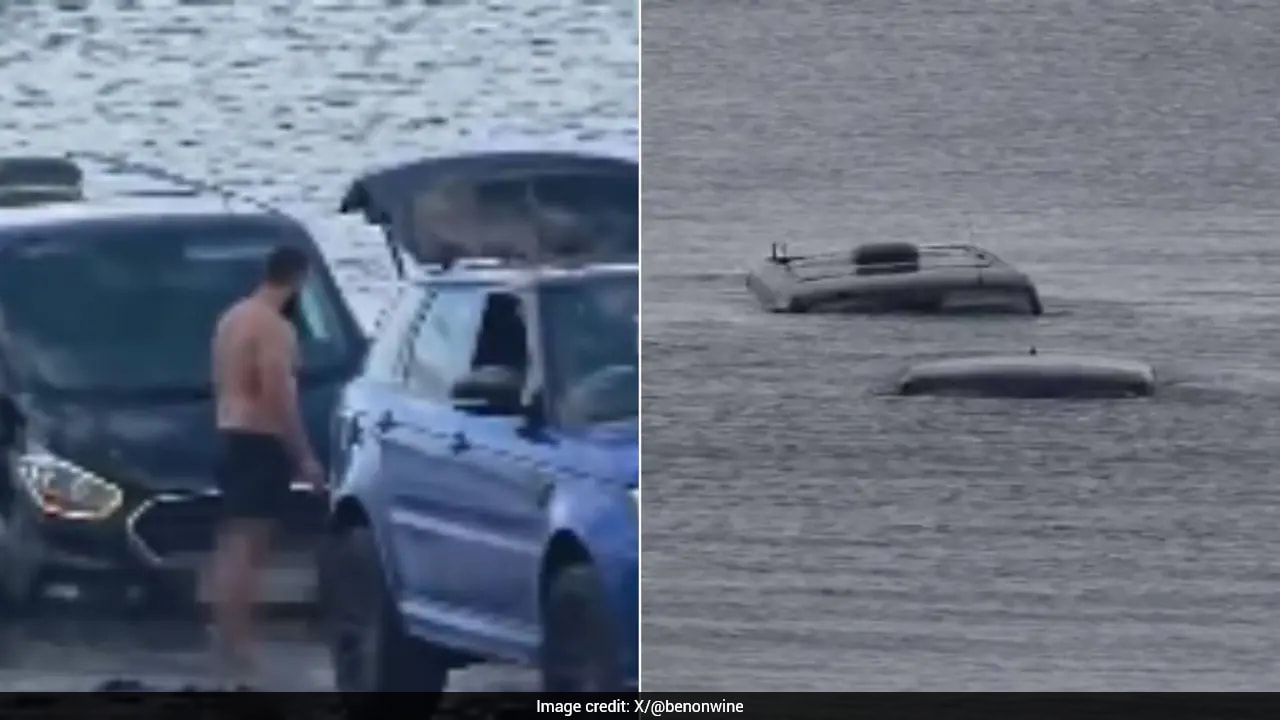
A multi-crore luxury SUV sits stranded on a shifting sandbar as the tide rushes in. Within minutes, a vehicle engineered to conquer mountain passes becomes an expensive anchor, swallowed by the sea during a misguided attempt to rescue a stuck delivery van. This is not a hypothetical engineering simulation. It is a recurring reality on coastlines worldwide where heavy premium vehicles meet the unyielding physics of the intertidal zone. When a heavy vehicle sinks into wet sand, drivers almost always make the same fatal errors. They rely on horsepower instead of ground pressure, and they underestimate the speed of rising water.
The viral incident involving a Range Rover getting claimed by the ocean highlights a critical misunderstanding of vehicle mechanics and coastal geography. Many drivers assume that purchasing an advanced four-wheel-drive system grants immunity from the basic laws of traction. It does not. When thousands of kilograms of metal press down on water-saturated silt, the ground undergoes liquefaction. The tires churn the sand into a slurry, removing all friction.
The Physics of Sinking Luxury
Heavy sport utility vehicles face an immediate disadvantage on coastlines. Modern premium off-road vehicles frequently weigh well over two and a half tons. This immense mass requires sophisticated air suspension and wide tires to maintain ride comfort on tarmac, but it presents severe challenges on unstable ground.
As a heavy vehicle remains stationary on wet sand, its own weight forces water upward around the tires. This process creates a suction effect. The sand particles pack tightly around the rubber while the water pooling beneath the chassis destroys any remaining ground clearance. A vehicle with low ground pressure, such as an old lightweight utility truck with narrow tires, might float over the surface crust. A heavy modern luxury liner will punch right through it.
Once the chassis bottoms out, the vehicle acts like a dam. The incoming tide hits the solid metal underbody, accelerating the erosion of sand underneath the tires on the seaward side. The vehicle lists heavily toward the water. Within a single tidal cycle, a vehicle can bury itself up to the windows without moving an inch forward or backward.
The Rescue Trap
Attempting to use one stuck vehicle to pull out another without proper rigging is a recipe for compounded disaster. In coastal recovery operations, momentum is a double-edged sword. If the towing vehicle lacks a solid anchor point on dry, compacted ground, the resistance of the stuck vehicle simply pulls the rescuer down into the liquefaction zone.
Most civilian recovery straps lack the elasticity needed for kinetic energy recovery. When a vehicle yanks a dead weight using a static rope, the sudden shock load can tear recovery points clean off the frame. Or worse, it digs the towing vehicle into its own deep ruts, doubling the scope of the emergency. Proper recovery requires recovery boards to distribute weight, heavy-duty winches anchored to stable ground, and a deep understanding of the local tide tables.
The Psychology of the Premium Driver
Vehicle manufacturers spend billions marketing an image of absolute dominance over nature. Commercials show luxury vehicles scaling pristine sand dunes and splashing through crystal-clear rivers without a hint of struggle. This imagery creates a false sense of security among owners who rarely venture off the pavement.
They believe the vehicle will do the thinking for them. Modern terrain response systems are marvels of software engineering, capable of modulating braking and throttle responses hundreds of times per second to maximize traction. However, software cannot rewrite the laws of physics. If the coefficient of friction drops to near zero because the sand has turned to liquid mud, no amount of electronic intervention will generate forward movement.
- Weight distribution becomes a hazard rather than an asset when the ground cannot support the load.
- Tire pressure is rarely lowered by amateur drivers before they drive onto soft surfaces, keeping the contact patch small and deep.
- Time management fails completely because people do not realize how quickly a changing tide alters the structural integrity of the beach.
The Environmental Cost of Recovery Failures
When a luxury vehicle is submerged in saltwater, the damage extends far beyond the owner's bank account. Fluid contamination begins almost immediately. Engine oil, transmission fluid, and fuel escape through breathers and seals, creating an immediate localized environmental hazard in fragile coastal ecosystems.
The corrosive nature of saltwater destroys the intricate electrical networks that manage modern premium vehicles. Every sensor, control module, and wiring harness becomes instantly compromised. Even if a vehicle is pulled from the surf before being completely submerged, the long-term prognosis is grim. Salt crusts form inside frame rails and body panels, initiating rapid structural rot that effectively writes off the vehicle as a total financial loss.
Insurance companies view these incidents with extreme scrutiny. Standard automotive policies frequently contain exclusions for intentional off-road use or operation in known hazardous environments like tidal zones. An owner facing the loss of a crore-level asset may find themselves entirely uncovered if investigators determine the risk was taken willfully and without reasonable caution.
Rethinking Recovery Protocols
Conquering difficult terrain requires preparation, humility, and specialized equipment rather than raw power or a high price tag. Before attempting to assist another stranded motorist on a beach, an operator must evaluate the surface stability and calculate the time remaining before the next high tide.
Rushing into a rescue operation without an exit strategy guarantees a second stranded vehicle. The weight of the vehicle must be spread across a wider surface area using specialized tracks or heavy matting. Tire pressures must be dropped significantly to allow the rubber to spread out, creating a wider footprint that mimics the tracks of a crawler tractor. Without these fundamental adjustments, even the most expensive four-wheel-drive system on the market is nothing more than a very heavy luxury box waiting for the waves.