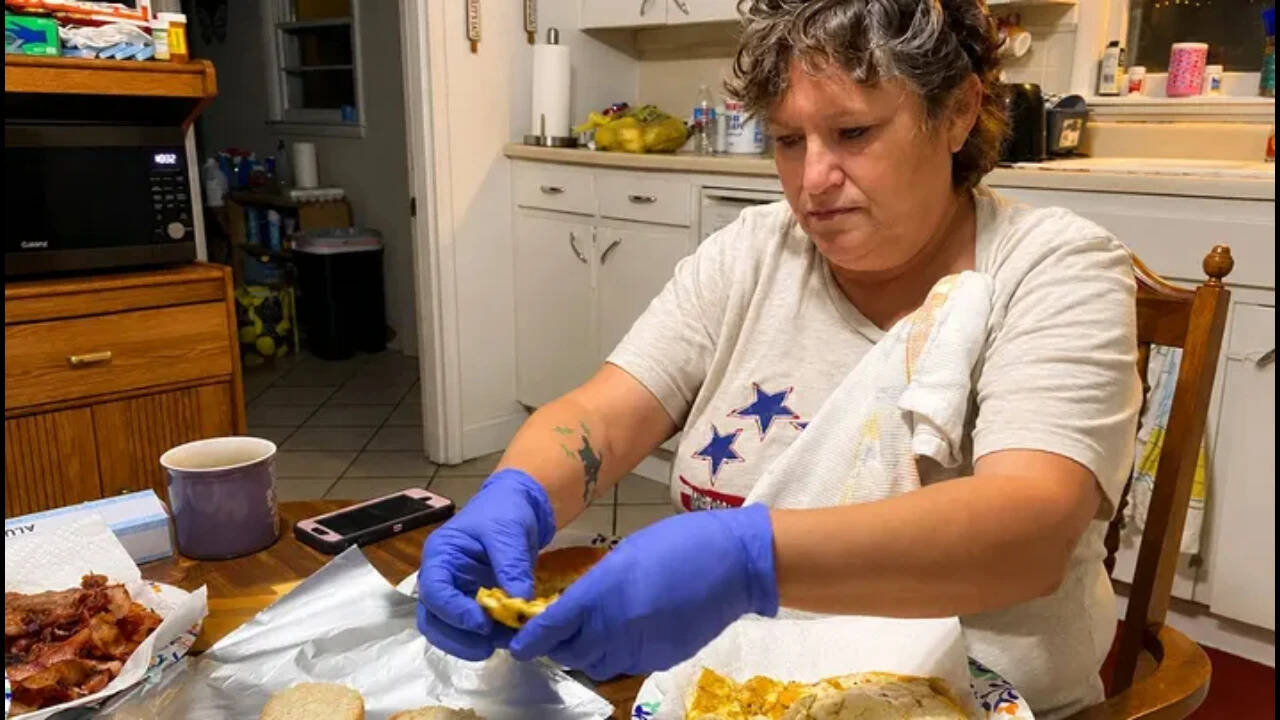
The coffee pot starts gurgling at five in the morning. Long before the sun cracks over the horizon, casting pale yellow light across the modest neighborhoods of Missouri, the kitchen counter is lined with paper plates. There are scrambled eggs flecked with black pepper, strips of bacon spitting grease in a cast-iron skillet, and stacks of toast waiting for a generous smear of butter.
This isn't a soup kitchen. It isn't a state-funded community outreach program with a board of directors, a grant writer, and a clipboard-wielding coordinator. It is a private kitchen. And the woman standing over the stove, wiping a stray strand of silver hair from her forehead with the back of a flour-dusted wrist, is just a grandmother who noticed that the kids waiting at the corner bus stop were shivering.
Hunger does not announce itself with a trumpet blast. It arrives quietly. It looks like a ten-year-old boy in an oversized coat staring intently at his shoes because he didn't get dinner the night before. It looks like a teenager trying to hide the hollow ache in his stomach behind a sullen, defensive shrug. Norma Byrnes—a fictionalized composite of everyday neighborhood protectors, though her story mirrors real headlines across the state—saw those kids morning after morning. So she did what human beings have done for thousands of years when they see someone cold and empty-handed. She fed them.
Plates of warm food traded hands on the sidewalk. Smiles were exchanged. A small, fragile circle of safety formed around a bus stop bench.
Then came the clipboard.
It is a strange and chilling moment when the machinery of the modern administrative state grinds to a halt on a residential sidewalk. Health inspectors do not arrive with sirens wailing. They come quietly, carrying laminated rulebooks, carbon-copy violation forms, and calibrated thermometers.
To the bureaucrat, a kitchen is a hazard zone. It is a battlefield of cross-contamination risks, temperature danger zones, unwashed surfaces, and vector-borne pathogens. In the eyes of the health department, Norma’s stove was an unregulated manufacturing plant operating outside the watchful eye of the municipality. The hot breakfast was classified as a public health liability.
Stop, they said. Or face the fines.
Consider the sheer absurdity of the collision. On one side stands the primal, biological urge to nurture—an instinct older than civilization itself, rooted in the simple truth that when our neighbor is hungry, we share our bread. On the other side stands the cold, defensive architecture of municipal liability law.
We have built a society so terrified of risk that we have criminalized compassion.
The rationale behind food safety regulations is not inherently malicious. Laws governing commercial restaurants exist for good reason. Mass-produced food handled by rotating shifts of strangers requires rigid oversight to prevent outbreaks of salmonella or E. coli. We need inspectors to ensure that commercial establishments keep their walk-in freezers at precise temperatures and their prep stations sanitized.
But stretching those industrial safety nets to wrap around a grandmother handing a plate of eggs to a neighbor kid is an administrative category error of the highest order. It assumes that every human interaction requires a permit, a fee, and a stamp of state approval. It treats neighborliness as a rogue commercial enterprise.
When the story broke across local news channels, the public reaction was predictable. Outrage flared. People pointed out the absurdity of shutting down a breakfast table while drive-thru windows pump out processed grease unchecked across every commercial strip in America. Commentators argued about government overreach, property rights, and the erosion of community autonomy.
Yet the deeper issue remained untouched. The conflict isn't just about a local health code or a bureaucratic misunderstanding. It is about the increasing professionalization and institutionalization of charity.
We have outsourced our empathy. We have decided that caring for the vulnerable is best left to registered non-profits, government agencies, and institutional soup kitchens. When an ordinary citizen tries to step into that gap with their own resources and two hands, the system doesn't know how to categorize them. If you aren't a corporation, and you aren't an official charity, what are you?
You are an anomaly. And anomalies terrify administrators.
Think about what happens when we sterilize our communities of spontaneous kindness. We teach people to look away. If getting involved requires navigating zoning laws, health permits, and liability waivers, the path of least resistance is to mind your own business. Put your head down. Let the kids shiver at the bus stop. Let someone else deal with it.
That is the invisible cost. It isn't just the price of a fine or the loss of a plate of bacon. It is the steady, corrosive erosion of social trust. It is the quiet training of citizens to become passive spectators in their own neighborhoods.
When the state steps in to regulate every act of human warmth, it sends a clear message: the community cannot be trusted to take care of its own. We must be managed. We must be protected from each other.
Norma’s kitchen didn't close immediately. But the atmosphere changed. The easy, unhindered warmth of the morning routine was replaced by the low-grade anxiety of surveillance. Every knock on the door carried a different weight. Every car slowing down on the street felt like an inspection.
That is the tragedy we inflict upon ourselves. We trade the messy, beautiful reality of human connection for the sterile, bureaucratic illusion of total safety.
Real communities are not built on permits and compliance checkboxes. They are built on the risky, vulnerable, beautiful act of opening a door to a stranger and saying, sit down, there is enough for everyone.
Until we learn to carve out legal and cultural space for that impulse, until we remember that a grandmother’s kitchen is not a restaurant, we will continue to starve our neighborhoods in the name of protecting them. The coffee pot still sits on the counter. But the silence on the sidewalk is heavier now. And somewhere out in the cold, a child is waiting for a bus, wondering where the warmth went.


