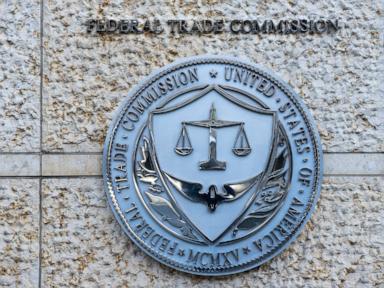
The Federal Trade Commission (FTC), acting in coordination with the attorneys general of Alaska, Iowa, Nebraska, and Texas, has initiated an enforcement action against the World Professional Association for Transgender Health (WPATH). This litigation signals a structural shift in federal regulatory strategy. By bypassing traditional administrative health mechanisms and deploying the consumer protection mandates of Section 5 of the FTC Act, the commission is establishing a precedent: clinical guidelines authored by non-profit medical associations are subject to commercial deceptive-practices liability if they influence purchasing decisions for medical services.
To evaluate the strategic, economic, and legal cross-currents of this enforcement action, market participants must look past the cultural polarization and analyze the underlying structural mechanics. The government’s case relies on an intersecting framework of commercial causation, economic incentive loops, and clinical evidentiary standards.
The Commercial Causation Framework: From Guidelines to Transactions
The foundational legal challenge for the FTC lies in establishing jurisdiction over an organization that does not directly sell medical products or treat patients. WPATH operates as a non-profit professional association. To bridge this gap, the FTC's complaint outlines a transmission mechanism that converts non-binding clinical guidelines into commercial transactions under Section 5 of the FTC Act.
This mechanism operates via a three-stage pipeline:
[WPATH Standards of Care (SOC8)]
              │
              ▼
[Downstream Clinicians / Providers] (Replication of claims to families)
              │
              ▼
[Commercial Transactions] (Purchase of surgeries, hormones, and puberty blockers)
The FTC argues that WPATH provided the "means and instrumentalities" for downstream deceptive acts. Under this doctrine, a third party is liable if it supplies the deceptive content, marketing materials, or authoritative backing that independent merchants use to mislead consumers.
The complaint alleges that WPATH’s Standards of Care (specifically SOC8, published in 2022) contained unsubstantiated claims regarding the safety, efficacy, and medical consensus of pediatric gender transition procedures. When local clinics and practitioners repeated these standards to parents, they directly influenced commercial purchasing decisions for surgeries, hormone therapies, and puberty-suppressing drugs. The transaction occurs at the provider level, but the liability, according to the FTC, traces back to the architectural source of the claims.
The Economic Incentives and Group-Benefit Function
A core component of the FTC’s consumer protection framework is demonstrating economic motivation or financial interest. The commission addresses this by analyzing the financial relationships between WPATH’s internal leadership and the broader market for transgender medical services.
The economic model of the association can be understood through a group-benefit function, where the publication of clinical guidelines serves as a market-expansion mechanism for its members:
$$U_m = f(D_s, I_c, P_m)$$
Where:
- $U_m$ represents the collective utility and financial return of the association’s voting membership.
- $D_s$ represents downstream demand for specialized medical services (e.g., endocrinology, plastic surgery).
- $I_c$ represents institutional insurance coverage and reimbursement rates.
- $P_m$ represents professional insulation and legal protection afforded by adhering to an official consensus document.
The FTC's complaint cites internal communications from the drafters of SOC8 in 2022. The evidence indicates that the removal of age minimums for surgeries and hormone therapies was explicitly calibrated to maximize insurance reimbursement pathways. The legal vulnerability arises because the guidelines were structured around an economic objective—guaranteeing coverage and broadening the addressable patient market—rather than a purely clinical one.
Because WPATH’s membership consists of surgeons, endocrinologists, and specialized pediatricians who directly derive revenue from these procedures, the FTC argues that the association functioned as a commercial apparatus masquerading as an objective scientific body. The guidelines served to artificially suppress the perceived risks of a complex medical intervention to preserve and expand the market demand ($D_s$) and secure institutional reimbursement ($I_c$).
Evidentiary Asymmetry and Risk Suppression
The technical core of the lawsuit hinges on the FTC’s standard for Substantiation of Health Claims. Under federal trade law, any entity making explicit or implied health claims must possess "competent and reliable scientific evidence" at the time the claim is made. The FTC alleges a stark asymmetry between WPATH’s public assertions and the underlying medical literature.
The FTC focuses its case on three specific areas of risk suppression:
1. The Suicidality and Lifesaving Claim
The complaint highlights a specific, widespread clinical interaction where parents were asked if they would prefer "a live daughter or a dead son." The FTC traces this framing directly to WPATH representations that pediatric transition services are universally "lifesaving" interventions that reduce suicide risk. The commission argues there is no competent, long-term, randomized or controlled scientific evidence demonstrating that these interventions reduce suicide rates compared to standard psychiatric care. By asserting a definitive, catastrophic outcome for withholding a commercial service, providers engaged in coercive marketing enabled by WPATH literature.
2. Omission of Long-Term Adverse Effects
The complaint argues that WPATH failed to disclose or accurately represent systemic, irreversible side effects associated with cross-sex hormones and pubertal suppression administered to minors. These physiological outcomes include:
- Chronic pelvic, vaginal, and clitoral pain.
- Persistent vocal pain and structural limitations.
- Permanent loss of orgasmic function and erectile pain.
- Urinary incontinence.
- Irreversible long-term cardiovascular risks and infertility.
Under consumer protection law, omitting material risks is legally equivalent to making an explicit false statement if that omission alters the consumer's risk-reward calculation.
3. Misrepresentation of Medical Consensus
WPATH claimed its standards reflected a stable, global medical consensus. The FTC counters this by pointing to shifting international frameworks, specifically citing recent systematic clinical reviews from the United Kingdom (The Cass Review), Sweden, Finland, and a 2025 review by the U.S. Department of Health and Human Services (HHS). These independent reviews uniformly concluded that the empirical evidence supporting pediatric medical transition is weak and highly uncertain. Thus, advertising the care as backed by an unshakeable scientific consensus constitutes a material misrepresentation.
Systemic Risks and Operational Limitations of the FTC's Strategy
While the FTC's legal framework is structured around traditional consumer protection doctrines, its deployment within clinical medicine introduces severe systemic frictions and operational limitations.
The first structural limitation is the challenge to professional autonomy and the First Amendment. WPATH has asserted that the FTC’s action is a retaliatory enforcement mechanism designed to suppress scientific speech and professional association. A federal judge previously issued a temporary injunction blocking an FTC civil investigative demand for WPATH’s internal documents on these grounds. If the court determines that clinical guidelines constitute protected non-commercial speech rather than commercial marketing, the FTC’s jurisdictional bridge collapses.
The second bottleneck is the institutional competence of a consumer protection agency acting as an arbiter of medical science. The FTC has historically policed clear-cut health fraud, such as unproven dietary supplements or deceptive weight-loss devices. Extending this authority to second-guess the clinical consensus of international medical bodies represents a major expansion of administrative scope. If the FTC prevails, it creates a precedent where any medical society—spanning cardiology, oncology, or psychiatry—could face federal consumer protection lawsuits if its clinical guidelines are found to favor treatments that generate revenue for its members while possessing disputed empirical support.
Strategic Forecast and Market Realignments
The immediate consequence of this litigation will be a rapid, defensive restructuring of medical risk management across the healthcare sector. Professional medical organizations, including the American Academy of Pediatrics and the Endocrine Society—both of which are under parallel FTC scrutiny—will likely revise their clinical statements to include extensive risk disclosures, hedging language, and explicitly outlined empirical limitations to insulate themselves from deceptive-practices liability.
Hospital systems and insurance providers will face immediate upward pressure on compliance costs. To mitigate liability under state and federal consumer protection acts, legal departments will require multi-disciplinary risk-disclosure forms that explicitly detail every known physiological complication, side effect, and evidentiary gap identified in the FTC complaint. This will effectively end the use of streamlined assent models for minors.
Concurrently, the economic viability of specialized gender clinics will face a sharp decline. The threat of civil penalties, combined with the ongoing reduction of federal Medicare and Medicaid reimbursements for pediatric transition procedures, will alter the risk-adjusted return on investment for health systems operating these specialized divisions. Capital allocation will likely pivot away from pediatric gender services toward less legally volatile sectors of adolescent psychiatry and general endocrinology. The litigation will achieve a structural containment of the market, not through explicit statutory bans, but by rendering the underwriting and defense of the medical practice economically unsustainable.