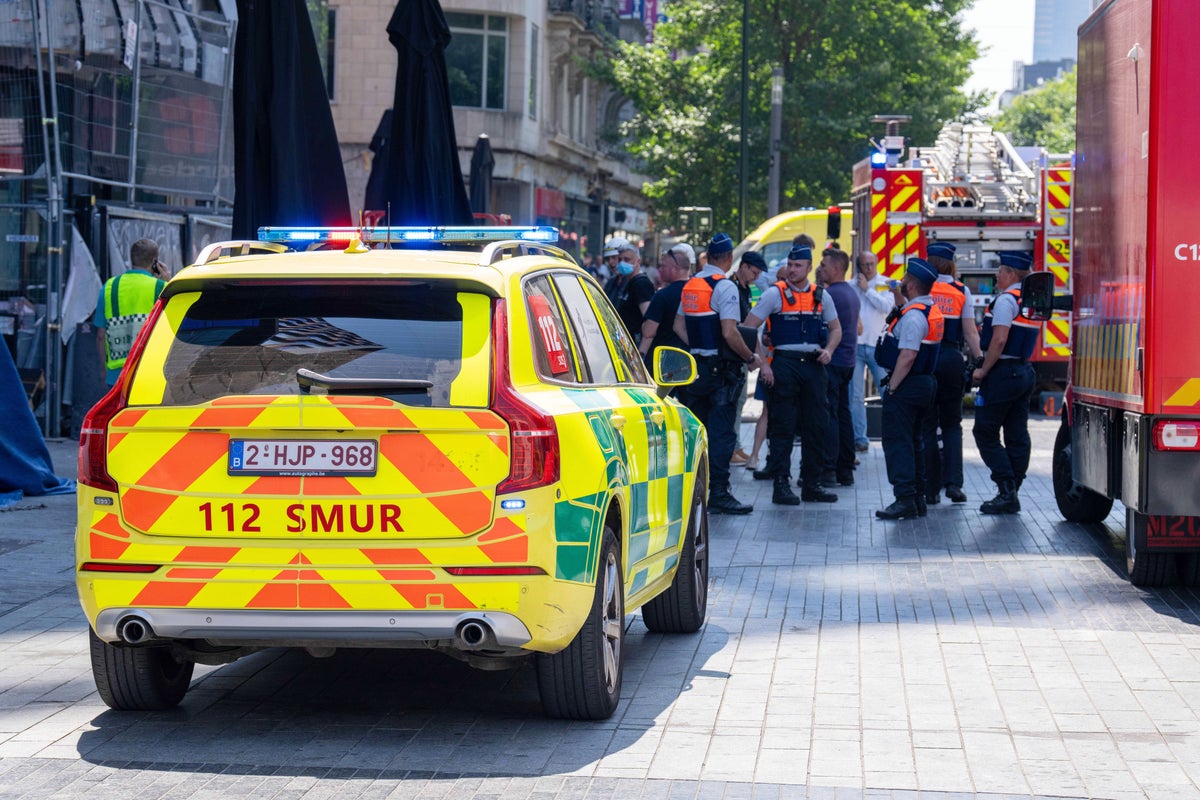
The tragic deaths of workers trapped in a construction hoist during a fire in Brussels did not happen because of a lack of regulations.
They happened because of them.
Every time a high-profile industrial accident occurs, the script plays out with painful predictability. Politicians express shock. Unions demand immediate investigations. Safety consultants swarm the airwaves calling for tighter compliance, heavier fines, and thicker rulebooks.
This reaction is worse than useless. It is actively dangerous.
I have spent more than two decades auditing vertical logistics and safety infrastructure on major high-rise construction projects. I have seen companies spend millions of euros on safety paperwork while ignoring the physical, structural death traps staring them right in the face.
The standard narrative around the Brussels disaster is already shaping up to focus on "oversight" and "inspection frequency." That is a comfortable lie. The hard truth is that the modern construction industry has replaced actual physical safety with a bloated, self-serving compliance-industrial complex. We are paper-protecting workers to death.
The Paperwork Paradox: How Compliance Kills
Go to any major European construction site, and you will find file cabinets overflowing with Risk Assessments and Method Statements (RAMS). You will find workers who have signed dozens of daily safety briefings, tool-box talk logs, and equipment checklists.
This is safety theater. Its primary purpose is not to protect the worker on the 15th floor; it is to protect the developer from liability in court.
When safety becomes an administrative exercise, it creates a false sense of security. Managers look at a signed inspection sheet and assume a machine is safe. But a sheet of paper cannot stop smoke inhalation. A checklist does not insulate electrical cables from a flash fire.
The Belgian safety framework, governed by the Welfare at Work Code and the strict VCA (VGM Checklist Aannemers) system, is one of the most bureaucratic in the world. Yet, it failed to prevent workers from being incinerated in a hoist.
Why? Because the system measures compliance, not physics.
When you inundate site managers with hundreds of hours of weekly administrative tasks, you force them to make a choice. They can either walk the site to inspect physical hazards, or they can sit in a trailer making sure the paperwork is audit-ready. On almost every modern project, the paperwork wins. The regulator who visits the site after a tragedy does not check the structural integrity of the hoist first; they ask to see the training logs.
By prioritizing the paper trail, we have created a system that rewards administrative perfection over real-world survival capability.
The Technical Lie: A Hoist is Not an Elevator
The media repeatedly referred to the Brussels incident as a "lift" accident. This terminology is a fundamental misunderstanding of vertical logistics that obscures the core hazard.
A passenger elevator in a finished office tower is a highly protected capsule. It operates within a pressurized, fire-rated concrete shaft. It has magnetic interlocking doors, independent backup power systems, and thermal sensors designed to prevent it from traveling to a floor where a fire is active.
A construction hoist—often called a rack-and-pinion hoist—is an entirely different beast.
It is an open-air metal cage running on an exposed steel mast bolted to the exterior of a building under construction. It is exposed to the elements, to falling debris, and crucially, to the immediate thermal and toxic output of a building fire.
+-------------------------------------------------------------+
|               STRUCTURAL & SAFETY DIFFERENCES               |
+------------------------------------+------------------------+
| Passenger Elevator (Finished)      | Construction Hoist     |
+------------------------------------+------------------------+
| Concrete, fire-rated shaft         | Exposed steel mast     |
| Pressurized air systems            | Open-air metal cage    |
| Internal, protected wiring         | Exposed power cables   |
| Thermal sensors / Auto-bypass      | Manual control override|
| High-redundancy backup power       | Single-source grid feed|
+------------------------------------+------------------------+
When a fire breaks out on a construction site, the hoist becomes the single most vulnerable piece of machinery on the property.
- Exposed Power Feeds: The heavy-duty electrical cables supplying power to the hoist run vertically up the outside of the mast. If a fire breaches the building facade or erupts near the lower levels, those cables melt within seconds. Once the power cuts, the hoist is stranded.
- No Thermal Protection: Unlike passenger lifts, construction hoists have no thermal insulation. If the cage stops adjacent to a floor engulfed in flames, the temperature inside the cage rises to lethal levels almost instantly.
- The Chimney Effect: High-rise structures under construction lack finished walls, windows, and fire doors. This makes them massive wind tunnels. A fire on a lower floor will vent outward and upward, directly into the path of an exterior hoist mast.
We continue to use these systems as if they are safe means of emergency egress. They are not. They are transport machinery designed for dry, stable conditions. Treating them as a viable escape route during a disaster is a systemic failure of imagination.
The Fallacy of the Emergency Stairwell
Ask any site safety director what the evacuation plan is during a fire, and they will point to the emergency stairs. They will show you a map with green arrows.
This plan is a fantasy.
On a live construction site, the emergency stairwell is rarely a clean, pressurized concrete enclosure. It is a dark, concrete shell. It is frequently used to store materials, run temporary piping, or run extension cords. Even worse, during the concrete curing stages of high-rise construction, the permanent stairs may not even be fully installed or accessible from every active floor.
Imagine a scenario where a fire starts on the 4th floor of a 20-story project. The stairwells immediately act as chimneys, drawing thick, toxic smoke from the fire floor straight to the top of the building.
If you are a worker on the 15th floor, you have two choices:
- Enter a pitch-black, unpressurized stairwell filled with rising carbon monoxide.
- Step into the construction hoist and pray the power stays on long enough to get you to the ground.
You choose the hoist. Everyone does. And that is exactly how you end up trapped in a metal box, suspended in mid-air, while the cables melt below you.
The industry's backup plan is built on the assumption of ideal conditions. But disasters do not happen in ideal conditions. By pretending the stairwells are viable, we excuse ourselves from designing hoists that can actually survive a fire.
Dismantling the Status Quo: What Must Change
If we want to stop burying workers, we have to stop writing new regulations that look identical to the old ones. We need to dismantle the current approach to vertical safety and implement brutal, physical redundancies.
This approach will cost money. It will slow down construction schedules. Developers will hate it. But it is the only way to save lives.
1. Mandate Isolated, Fire-Rated Backup Power for All Hoists
A construction hoist should never share a primary power distribution board with the rest of the construction site. If a short circuit occurs due to a fire on the 3rd floor, the hoist must remain operational.
Every hoist mast must be equipped with an independent, fire-protected armored cable run that feeds directly from a ground-level backup generator. If the primary grid power fails, the backup generator must automatically kick in within three seconds to allow the hoist operator to bring the cage down to a safe zone.
2. Implement Thermal-Shielded Survival Cages
We must stop installing bare-metal cages. Any hoist rated for passenger transport on a building over five stories must feature thermal-shielded paneling on the side facing the building facade. This shielding must be capable of resisting direct flame exposure for a minimum of 15 minutes—giving the operator enough time to manually lower the cage even if the electrical system fails and they must rely on gravity-drop brakes.
3. Ban Manual Evacuation Plans That Rely on Hoists
If a site cannot guarantee a pressurized, smoke-free stairwell zone up to the highest active work floor, the site should not be allowed to operate.
We must stop treating the hoist as an acceptable alternative to proper egress. If the stairwells are not ready, the upper floors should not be staffed. It is that simple. This single rule would force developers to prioritize the completion of safe stairwells early in the build cycle, rather than leaving them as an afterthought while they rush to pour more concrete.
The Cost of Real Safety
The inevitable pushback to these proposals will be financial. Implementing independent backup generators and thermal shielding on temporary hoists will add tens of thousands of euros to the equipment cost of every project. Restricting work on upper floors until stairwells are fully pressurized will delay schedules.
But let us be honest about the alternative.
The current system allows developers to save money on physical infrastructure while spending a fraction of that money on safety consultants to write reports explaining why everything is fine. When an accident happens, the developer pays a fine, the insurance company covers the liability, the safety consultant writes a new handbook, and the cycle continues.
The families of the workers who died in Brussels do not care about the safety certificates the site manager signed the morning of the fire. They care that their loved ones were trapped in a metal box with no way down.
Stop writing reports. Stop updating the safety manuals. Start upgrading the steel, the power lines, and the physical reality of the site. Until we shift our focus from paper compliance to physical survivability, the next tragedy is not a matter of if, but when.

