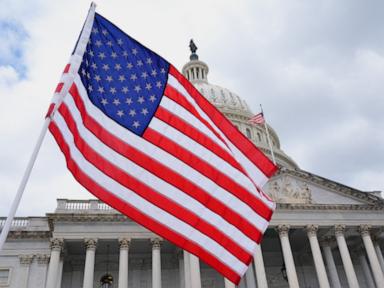
The power of the purse has long been considered the ultimate anchor of congressional authority. When the legislative branch appropriates funds, the executive branch is constitutionally bound to spend them.
That bright-line rule is currently buckling under a calculated challenge. The Trump administration has moved to cancel nearly $1 billion in federal spending previously approved by Congress, deploying a contentious and historically dormant maneuver to redirect funds away from immigrant services and targeted equity initiatives.
This maneuver represents far more than a routine budgetary dispute. It is a high-stakes stress test of the separation of powers, forcing lawmakers and legal scholars to confront the limits of executive discretion over public money.
The Mechanics of the Impoundment Conflict
To understand why this financial recall has triggered an immediate constitutional uproar, one has to examine the machinery of federal budgeting. Decades ago, executive overreach regarding withheld funds led to the Congressional Budget and Impoundment Control Act of 1974. That statute was designed to prevent presidents from quietly killing programs they disliked by simply refusing to disburse allocated cash.
Under the framework established by that post-Watergate law, a president who wishes to rescind previously approved spending must formally notify Congress, initiating a strict 45-day review window. If Congress fails to pass a rescission bill within that window, the money must go out the door.
Yet the administration has pushed boundaries by utilizing alternative mechanisms and aggressive statutory interpretations. By targeting pools of unspent cash close to fiscal deadlines—often referred to in administrative circles as pocket rescissions—the White House is testing whether legislative inertia can be weaponized in its favor.
The latest wave targets specific administrative lines: approximately $10 million stripped from minority business development initiatives, alongside broader cuts directed at immigrant services and cultural programming. While a billion dollars is a fraction of a multi-trillion-dollar federal budget, the symbolic and structural weight of the action vastly outstrips the raw figures.
Pushback from the Hill
The reaction from Capitol Hill laid bare deep institutional fractures, crossing traditional party lines while inflaming partisan divides. Republican Senator Susan Collins of Maine, chair of the Senate Appropriations Committee, issued a sharp rebuke following the announcement, criticizing the administration for acting without warning or prior consultation.
Collins went further, signaling an intent to work with colleagues to challenge what she characterized as illegal executive actions. Her stance underscores an uncomfortable reality for congressional leaders of both parties: when the executive branch unilaterally decides which statutory appropriations are worth funding, the legislative branch effectively surrenders its core constitutional function.
On the other side of the aisle, Democratic lawmakers framed the move as an executive power grab designed to bypass the will of elected representatives. Critics argue that allowing the White House to claw back funds after the legislative ink has dried turns the appropriations process into an advisory exercise rather than a binding mandate.
Proponents of the administration's strategy offer a different perspective. From the executive viewpoint, rooting out what it labels as wasteful, misallocated, or politically entrenched spending is a direct mandate from voters who demand fiscal discipline. Supporters maintain that the office of the presidency must possess the agility to choke off funding streams that run counter to national priorities, especially when federal agencies are bloated or operating under outdated legislative mandates.
The Broader Strategic Play
This latest billion-dollar clawback does not happen in a vacuum. It follows a pattern established during the administration's earlier efforts to redirect billions in foreign aid and leverage federal grant structures to force policy compliance.
By pushing administrative boundaries, the White House is deliberately courting legal battles designed to reach the Supreme Court. The administration calculates that even if lower courts view these unilateral freezes skeptically, the high court's evolving jurisprudence on executive authority could ultimately tilt in favor of presidential oversight.
The broader strategy relies on a simple administrative truth: money frozen is often money lost. Even if Congress eventually mounts a successful legislative or legal counter-offensive, the prolonged uncertainty forces agencies, contractors, and community organizations to stall operations, lay off staff, or dismantle programs altogether. The friction of the process becomes part of the policy outcome.
The Institutional Fallout
As the 45-day review clock ticks down, the fundamental question remains whether Congress has the political will and procedural mechanisms to defend its constitutional turf. Decades of congressional self-delegation and partisan polarization have left the legislative branch structurally weak, prone to gridlock, and heavily reliant on executive initiative to keep the government running.
When the executive branch treats congressional appropriations as optional suggestions, the balance that has defined American governance for half a century shifts decisively toward the West Wing. The dispute over this billion-dollar recall is not merely an argument over bureaucratic line items; it is a preview of a permanent realignment in how federal power is exercised, contested, and constrained.



