The sun does not negotiate with lines drawn on maps. It rises over the jagged peaks of North Africa, warming the stone of Ceuta, spilling light across the fence line, and painting the Mediterranean in shades of bruised cobalt and molten gold. To stand on this scrap of European territory jutting into Morocco is to feel the friction of two entirely different gravitational pulls.
You smell roasting cumin and salt spray on the wind. You hear the sharp clatter of Spanish consonants mixing with the rhythmic cadence of Darija. For centuries, this border was porous, breathing, a living tissue connecting continents rather than a scar dividing them.
Then came the diplomatic tremor.
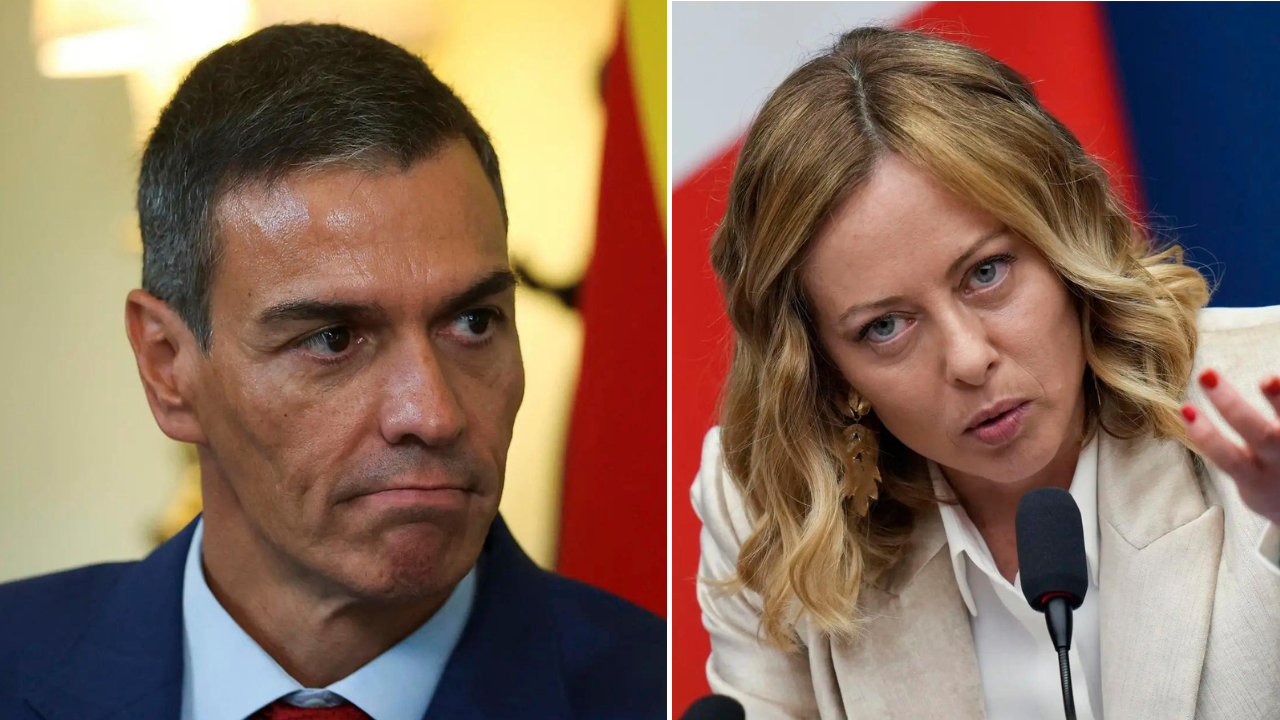
Pedro Sánchez in Madrid and Giorgia Meloni in Rome found themselves staring at the same stubborn dashboard of political reality. Migrant arrivals were ticking upward. Public patience was wearing thin. Headlines shrieked about crises, corridors, and escalation. And so, the machinery of statecraft lurched forward, imposing new border checks between Spain and Italy. Bureaucrats called it policy coordination. Citizens called it friction.
Borders are strange inventions. They are built out of concrete, ink, and anxiety.
Consider a hypothetical traveler named Mateo. He is a trucker hauling fresh produce from Andalusia, his refrigerated rig humming with crates of crisp bell peppers destined for a market in Turin. For years, Mateo crossed European thresholds with a flick of his wrist and a nod to a bored guard. Time was money. Freshness was value.
Now, Mateo sits in a creeping line of trucks under a blistering midday glare.
The engine idles. The digital tachograph ticks away his legally mandated driving hours. Two miles ahead, temporary checkpoints manned by national police forces inspect cabs, check manifests, and question drivers. The peppers are sweating in the dark box behind him. The cost of transport ticks upward by the euro, by the minute, by the drop of wasted fuel.
Why are we here?
To answer that, you have to look past the customs booths and peer into the architecture of modern governance. When migration pressure mounts at Europe's southern rim—specifically around Spanish exclaves like Ceuta and Melilla—the shockwaves ripple northward. Italy, facing its own relentless arrivals across the central Mediterranean, watches Spain closely. Spain, feeling the diplomatic heat from Rabat and the domestic pressure from conservative factions, tightens its posture.
It is a game of political dominos. When one nation adjusts its grip, the neighbor feels the squeeze.
We forget that national borders in the Schengen zone were designed to feel invisible. They were supposed to act like the seams in a well-tailored garment: strong enough to hold the structure together, flexible enough to go unnoticed by the person wearing it. But when fear enters the equation, those seams are pulled taut. They rip.
In Ceuta, the tension is not abstract. It is physical.
Imagine walking down the Avenida de España, where the urban sprawl presses against the massive double fences separating the city from Morocco. These barriers are marvels of modern engineering, spiked with anti-climbing mesh, embedded with thermal cameras, and watched by patrols day and night. Yet, human desperation is an astonishingly creative force. People look at a wall twenty feet high and see a puzzle to be solved.
Down at the border crossing of Tarajal, the daily rhythm involves thousands of cross-border workers—mostly Moroccan women who enter at dawn to work as domestic helpers or traders in Ceuta, returning home by nightfall. These women are the invisible economic engine of the city. When diplomatic rows flare between Madrid and Rabat, or when border checks tighten in response to broader European pressures, these workers are the ones who pay the tax.
They stand in queues for four, five, six hours. Their legs ache. Their buses leave without them.
"The paperwork is heavier now," a vendor named Fatima told me, her hands calloused, her eyes fixed on the distant hills of her homeland. She has crossed this threshold for twenty years. She does not care about prime ministers or geopolitical leverage. She cares about her children's supper. "Every time the politicians argue in the capital, the gate gets narrower."
This is the hidden cost of escalation. We measure state security in statistics, interception rates, and diplomatic communiqués. We count trucks delayed and documents verified. But the true ledger is written in human fatigue.
The migrant row involving Ceuta is merely a symptom of a deeper, structural dissonance. Europe was built on the promise of internal freedom, yet its external perimeter remains an unresolved puzzle. How do you maintain an open house when the neighborhood outside is burning? How do you protect individual dignity while erecting administrative walls?
Sánchez and Meloni are caught in the crossfire of these questions. To ease domestic anxiety, they deploy the oldest tool in the kit: the checkpoint. It is a visible demonstration of control. It says to the voter: Look, we are doing something. We are holding the line.
Yet, economists and sociologists shake their heads. They point out that tightening internal borders within Europe does nothing to solve the root causes of migration originating in sub-Saharan Africa or the Middle East. It merely shifts the bottleneck, creating traffic jams for truck drivers, delaying commerce, and fraying the fragile trust that holds the European Union together.
It is like putting a heavy bandage on a fever. It masks the symptom while the internal temperature continues to rise.
Consider the logistics chain again. Modern manufacturing relies on just-in-time delivery. Parts cross borders three or four times before a car is assembled. Produce travels across countries before it hits a plate. When sudden border checks are imposed without seamless synchronization, the friction compounds exponentially. A delay in Spain cascades into a missed ferry to Italy, which results in empty shelves in Milan.
We think of borders as lines on a map. They are actually rubber bands. Pull them too hard, and they snap back and sting the hand that stretched them.
The diplomatic standoff will eventually cool. Ministers will shake hands at summit dinners in Brussels. Press releases will hail a renewed spirit of cooperation. The temporary checks may even be quietly dismantled, relegated to the footnotes of political history.
But the memory of the queue remains.
For Mateo the trucker, for Fatima the cross-border worker, and for the thousands of travelers caught in the diplomatic crosswinds, the lesson is clear. The architecture of our safety is fragile. It takes years to build a community without walls, and only a single afternoon of political panic to drag the concrete blocks back across the road.
The sun sinks lower over the Mediterranean, casting long, sharp shadows across the fences of Ceuta. The water laps gently against the hull of a rusted fishing boat bobbing near the harbor. Across the strait, lights begin to twinkle on the African shore, blinking steadily through the gathering dusk, indifferent to the lines we draw between them.