The rain in Southeast Asia does not fall; it arrives. It descends with a heavy, deliberate violence that turns the red clay into grease and muffles every sound beneath a blanket of grey humidity. Standing on the edge of an overgrown tarmac in Laos or peering across the fenced perimeters of Cambodia, you can still hear the ghosts if you listen past the cicadas. They sound like roaring twin-turboprops, rattling propellers, and the frantic clicking of radio dials in smoke-filled hootches.
Decades ago, men with uncreased khakis and clipboards walked these exact concrete strips under a flag of plausible deniability. This was the era of Air America and the Central Intelligence Agency’s clandestine footprint, a time when jungle runways were carved out of the wilderness with dynamite and sweat to wage secret wars in the shadows. The logic was simple, brutal, and contained: control the airspace, control the dirt, keep the map quiet.
Dust claimed those airstrips. Roots split the runways. For a long time, the jungle won back what it had been lent.
Then came the new graders.
Quietly, methodically, the concrete scars of the Vietnam era are waking up. But the men walking them today do not wear unmarked uniforms, and their radios speak Mandarin. Across the region, from coastal installations to deep interior outposts, strategic real estate is shifting hands through long-term leases, infrastructure loans, and quiet modernization programs.
To understand what is happening, you have to look past the dry spreadsheets of international trade agreements and stand in the heat.
Imagine a village elder sitting on a split-bamboo porch just three miles outside the perimeter fence of a newly expanded military-use airfield. For forty years, his world was defined by silence, broken only by monsoon thunder and the occasional tractor. Now, the night sky throbs with the unblinking red lights of heavy transport drones and cargo aircraft bearing insignia that belong to a different empire entirely.
He does not care about geopolitical theory. He cares that the truck traffic has tripled, that the local river runs thick with silt from runway extensions, and that the horizon no longer belongs to the people who were born beneath it.
This is not a story about conquest in the traditional sense. Armies do not march across borders with flying banners anymore. Instead, influence arrives on the back of heavy machinery, funded by sovereign debt and secured by concrete.
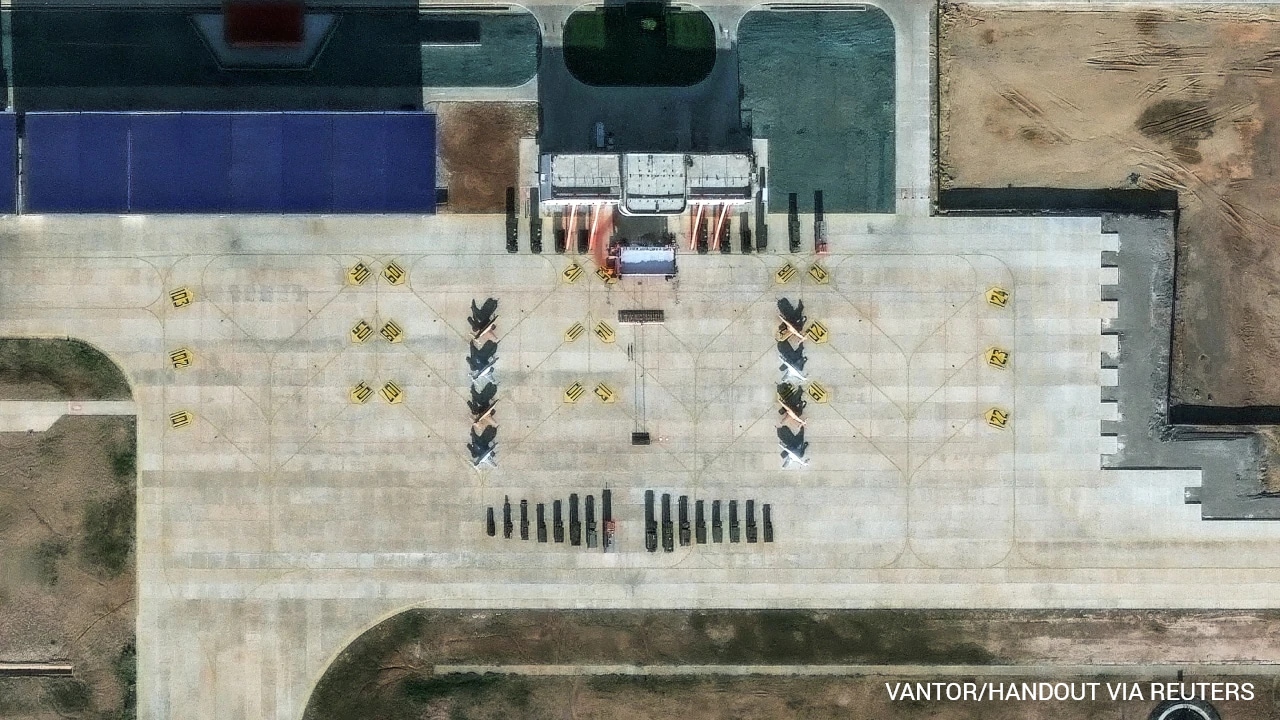
Consider how logistics actually work. A runway is not just a strip of paved earth; it is a gravity well. It pulls fuel depots, radar arrays, barracks, and command bunkers into its orbit. When a rising global power pours millions of tons of asphalt over a neglected American-era CIA staging ground, they are not merely building an airport. They are extending their nervous system directly into the heart of mainland Southeast Asia.
The facts are stark, even if governments prefer to whisper them. Strategic airfields originally mapped out during the Cold War to monitor troop movements and coordinate covert counter-insurgencies now offer modern militaries an unprecedented reach. With extended runways capable of handling wide-body transport and potential fighter deployments, a footprint that once required thousands of boots on the ground can now be maintained through logistics hubs and surveillance grids.
Why these specific locations? Geography is stubborn. The topography that made a valley ideal for launching reconnaissance flights in 1968 makes it equally ideal for projecting electronic surveillance and air mobility today. The ghost airfields were chosen by men who understood maps; the new occupants are simply reading those same maps with better instruments.
We talk about the expansion of global superpowers as if it were weather—an abstract front moving across a meteorological chart. But power is physical. It smells of hot jet fuel, fresh Portland cement, and diesel exhaust. It sounds like the rhythmic pounding of pile drivers at dawn.
When nations inherit the tactical ghost towns of their predecessors, they inherit something else, too: the momentum of history. They inherit the ambition that built those runways in the first place, twisting it toward new ends.
There is a profound irony in watching old CIA logistics nodes transformed into modern staging grounds for a competing superpower. The architects of the secret wars believed they were writing the final draft of the region's history. They drew lines in the mud, flew sorties into the mist, and left behind ruined infrastructure when the political will evaporated. They assumed the story ended when they packed their briefcases.
It did not. The page was simply turned.
Walking along the perimeter of one of these revived installations today, the past and the present blur into a single, uneasy landscape. Rusted barbed wire from the 1970s hangs limply beneath newly installed fiber-optic security cameras. Warning signs written in multiple languages flutter in the hot wind.
The jungle tries, as it always does, to reclaim the edges. Vines creep over concrete barriers; mold climbs the base of newly erected communications towers. But this time, the jungle is losing. The asphalt is thicker, the stakes are higher, and the silence that once belonged to the ghosts has been permanently broken.
The runway stretches out toward the mountains, flat, grey, and waiting.