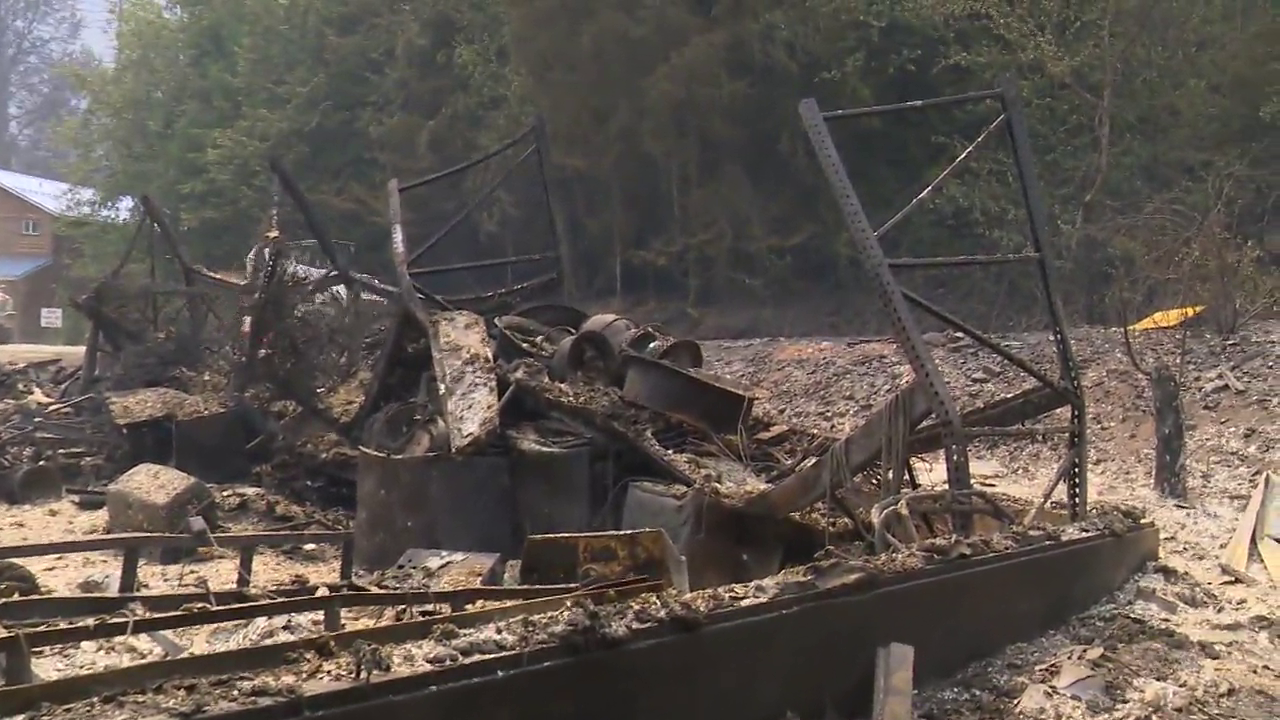
The media has a pathological obsession with disaster voyeurism. When a devastating wildfire rips through a British Columbia resort town, the immediate instinct of headline writers and traumatized business owners alike is to reach for the nearest pop-culture security blanket. "It was like a Michael Bay film," they claim.
Stop. It wasn't.
Michael Bay movies feature high-gloss production values, choreographed explosions, and a guaranteed third-act rescue by the military. Real wildfire disasters feature none of these things. They feature choking grey smoke, bureaucratic gridlock, supply chain collapses, and insurance battles that drag on for a decade. By treating the literal incinerations of our communities as cinematic spectacles, we are coddling ourselves. We are substituting cheap entertainment tropes for the cold, hard, unglamorous math of modern risk management.
I have spent years auditing corporate supply chains and assessing infrastructure risks across North America. I have seen companies blow millions on flashy, superficial crisis-management seminars while ignoring the rusting water pumps and outdated zoning laws right outside their windows. The lazy consensus surrounding the recent B.C. resort fires is that these events are unprecedented, unpredictable anomalies—acts of God that no one could have anticipated.
That is a lie. It is a comforting lie designed to absolve operators, insurers, and local governments of their systemic failures.
The Danger of Cinematic Metaphors
When you call a disaster "cinematic," you subconsciously shift the event from the realm of preventable systemic failure to the realm of fiction. In fiction, the audience has zero agency. You sit in your theater seat, eat your popcorn, and watch the world burn.
This passive mindset is infecting the hospitality and tourism sectors at the worst possible moment.
When a wildfire tears through a high-end eco-resort, it is not a freak cinematic event. It is a predictable consequence of a specific set of variables:
- Decades of aggressive fire suppression that built up unnatural fuel loads in surrounding forests.
- The expansion of the wildland-urban interface without corresponding upgrades to building codes.
- An over-reliance on centralized municipal emergency services that are routinely overwhelmed in a crisis.
Consider the physics of a fast-moving crown fire. It doesn't move like cinematic fire, which is usually controlled propane explosions meant to look good for a camera rig. Real wildfire moves via ember showers. Embers can travel kilometers ahead of the actual fire front, landing in gutters, under decks, and in ventilation shafts.
If your resort burned down, it probably wasn't because a massive wall of flame rolled over you like a wave in a disaster movie. It burned because a single glowing ember drifted into an uncleaned vinyl gutter filled with dry pine needles. That isn't Hollywood. That is poor maintenance.
The Economics of the Wildland-Urban Interface
Every travel publication wants to talk about the tragedy of the lost tourist season. They want to ask, "When will the tourists come back?"
They are asking the wrong question. The real question is: Who is going to underwrite the risk of rebuilding a luxury asset in a high-risk zone?
The insurance industry is currently undergoing a massive structural re-pricing of climate risk. We are seeing major carriers pull out of entire markets completely—look at State Farm and Allstate restricting new policies in California, or the soaring premiums in Florida. British Columbia is not insulated from this global reality.
| Asset Type | Traditional Risk Mitigation | The Hard Reality |
|---|---|---|
| Luxury Wilderness Lodges | Aesthetic integration with nature (timber frames, dense forest canopy views). | Direct exposure to radiant heat and ember ignition points. |
| Infrastructure & Utilities | Reliance on above-ground power lines and standard municipal water pressure. | Grid failure within the first hours of an active fire event. |
| Supply Chain/Access | Single-road access points optimized for privacy and exclusivity. | Complete evacuation bottlenecks and logistical isolation. |
If you are a resort owner relying on standard commercial property insurance to save you after a total loss, you are living in a fantasy world. Insurance companies are not charities. They are looking at the same climate models the scientists are, and their data shows that building a multi-million-dollar wooden playground in the middle of a tinderbox is a bad bet.
Dismantling the Premise of Disaster Recovery
Let's look at what actually happens in the wake of these events, stripped of the emotional media narratives.
People ask: How can governments better support small businesses affected by climate emergencies?
The brutal truth is that government bailouts are a temporary band-aid on a terminal wound. Low-interest loans and emergency grants do not fix a broken business model. If your business model requires 100% predictable, uninterrupted summer weather to remain profitable, your business model is already dead.
Imagine a scenario where a boutique resort spends $5 million to rebuild exactly what they had before the fire, using the insurance payout and a government grant. They use the same wood-shake roofs. They maintain the same dense tree canopy right up to the cabin walls because "the guests want to feel immersed in nature."
Three years later, the next heatwave hits. The insurance premium triples. The resort has to raise its nightly rates by 40% just to cover the overhead. The guests stay away, not because of smoke, but because they have been priced out. The resort goes bankrupt anyway.
Rebuilding to the old status quo is not resilience. It is stubbornness masked as courage.
The Hard Truth About Firewise Architecture
If you want to survive the next two decades in the travel and hospitality industry, you have to stop designing for the camera and start designing for the ember. This requires an entirely different aesthetic philosophy—one that many luxury operators actively resist because it doesn't look "rustic."
True resilience means adopting strict Firewise principles, even if it compromises the traditional cabin aesthetic:
- Creating a 1.5-meter non-combustible zone around every structure. No plants, no bark mulch, no wooden decks touching the foundation. Just gravel, concrete, or stone pavers.
- Replacing timber framing and wood siding with fiber-cement boards, heavy timber with treated fire-retardant coatings, or insulated concrete forms.
- Installing automated, independent exterior rooftop sprinkler systems powered by dedicated, on-site generator units and drawing from independent water reservoirs, not the municipal grid.
Yes, this costs money. Yes, it changes the look of a property. But a modern, concrete-and-steel eco-lodge that survives a fire is infinitely more valuable than a pile of ash that used to look like an authentic 1920s logging camp.
Stop Waiting for a Hero
The ultimate flaw of the Michael Bay metaphor is the expectation of a savior. In the movies, the heroes show up at the eleventh hour to extinguish the threat.
In a real regional wildfire crisis, resource allocation is a brutal game of triage. When multiple fires are burning simultaneously across a province, BC Wildfire Service personnel and structural firefighters are deployed to protect critical public infrastructure, major transmission lines, and dense residential centers. Your private luxury retreat, hidden away at the end of a single-lane dirt road, is at the absolute bottom of their priority list.
You are on your own.
Accepting that reality is the first step toward actual survival. It means investing in your own heavy equipment. It means training your year-round staff in basic wildland firefighting tactics. It means clearing your own defensible space rather than waiting for the local municipality to pass a regulation forcing you to do it.
The era of treating natural disasters as shocking, cinematic interruptions to an otherwise peaceful existence is over. The fire isn't a movie. There is no director to yell "cut" when the flames get too close to the camera. Stop looking for a silver-screen narrative and start hardening your perimeter.