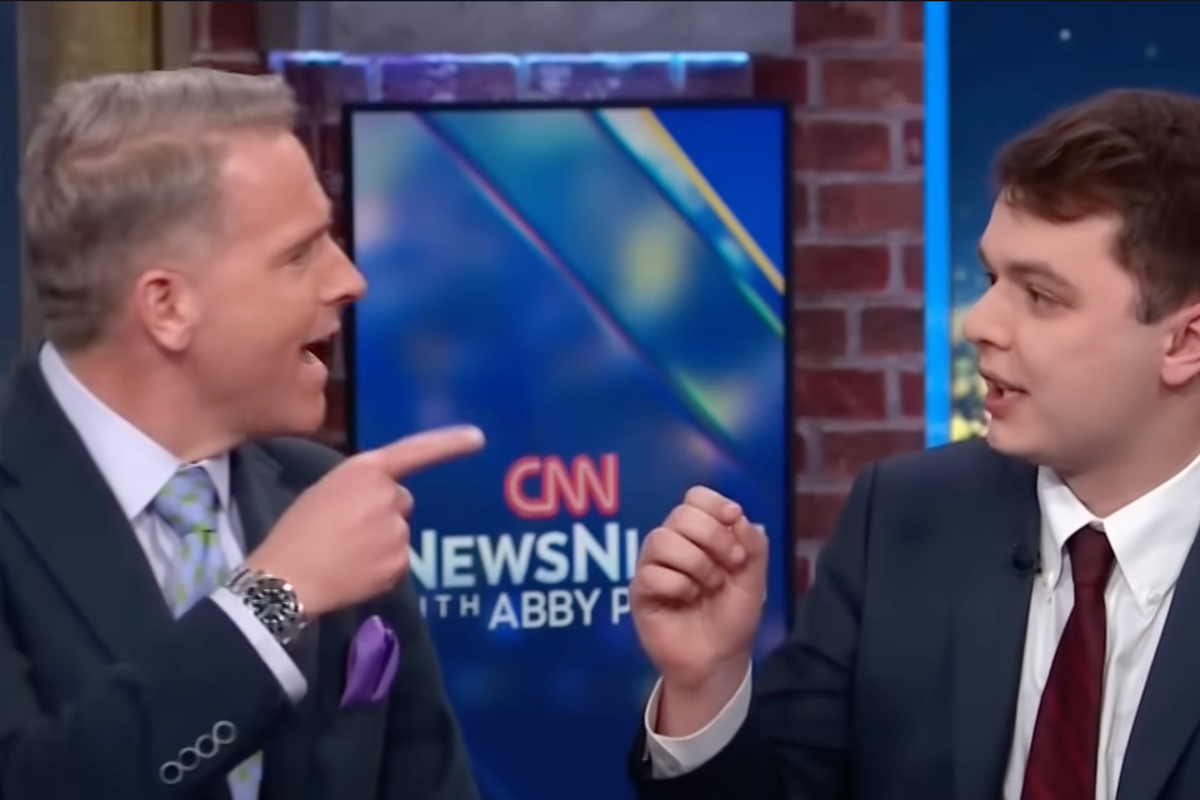
The recent explosion of tempers on CNN involving Scott Jennings and his fellow panelists over Iranian foreign policy was not an isolated incident of bad manners. It was the predictable outcome of a media business model that now prioritizes viral friction over factual synthesis. When Jennings told a colleague to get their hand out of his face during a heated debate about the Middle East, he wasn't just reacting to a physical gesture. He was pushing back against a decade of televised debate turning into a contact sport where the goal is to "win" a clip that can be shared on social media, rather than to inform a voting public.
The confrontation centered on the complexities of the Iranian regime and U.S. intervention. However, the substance of the policy debate was immediately buried by the spectacle of the shouting match. This shift—from the "talking head" to the "shouting head"—has fundamentally altered how Americans consume news and how political analysts approach their jobs. Meanwhile, you can read similar events here: Why Irans Logic and Rationality Defense Changes the Diplomatic Game.
The Architecture of the Outrage Machine
Network news has moved away from the traditional role of a neutral arbiter. Today, the set is designed as a pressure cooker. Producers intentionally book personalities with diametrically opposed views, not to find a middle ground, but to ensure a spark. The physical layout of these panels, with contributors squeezed into tight frames, creates an artificial sense of intimacy that easily sours into hostility.
In the Jennings incident, the physical proximity of the debaters played a massive role. When a debate moves from the intellectual to the personal, the audience stops listening to the arguments and starts watching the body language. We are no longer evaluating the merits of an Iran strategy; we are watching a schoolyard fight with higher production values. This isn't journalism. It’s professional wrestling for the political class. To see the bigger picture, we recommend the recent report by Reuters.
The "viral moment" is the new currency of the industry. A nuanced discussion on the nuances of the JCPOA or the intricacies of Iranian proxy warfare will never trend on X or TikTok. A grown man yelling at another professional to keep their hands to themselves will. Networks know this. They track the metrics in real-time. If a segment is quiet and respectful, the ratings dip. If someone blows up, the clip is replayed every hour on the hour.
The Death of the Nuanced Middle
There is no room for the "maybe" in modern televised discourse. To be a successful pundit, you must be certain. You must be aggressive. You must be unyielding. This creates a feedback loop where analysts like Scott Jennings or his counterparts feel compelled to lean into their most combative selves to secure future bookings.
Consider the subject matter at hand: Iran. This is one of the most complex geopolitical puzzles of the 21st century. It involves decades of sanctions, religious history, nuclear physics, and shifting regional alliances. It is a topic that demands deep breaths and long-form explanation. Instead, it was reduced to a shouting match where the most memorable takeaway was a demand for personal space.
This binary approach to news forces every issue into a "left vs. right" framework, even when the reality doesn't fit those boxes. By flattening the world into two warring camps, the media strips the audience of the ability to understand complexity. We are being trained to view disagreement as an assault.
The Physicality of Modern Punditry
We have reached a point where the physical boundary of the panelist is the new frontline. In the past, "crossfire" was a metaphor. Now, it is literal. The gesture that sparked Jennings’ outburst—a hand moved toward his face to interrupt or emphasize a point—is a common tactic in high-stakes debating. It is designed to rattle the opponent, to "take the floor" physically when you can't take it verbally.
When the opponent snaps back, the goal is achieved. The debate is over. The spectacle has begun.
This behavior is a symptom of a larger rot in public discourse. If the professionals we pay to discuss the fate of nations cannot sit at a table without losing their composure over a hand gesture, what hope is there for the average citizen? The media is not just reflecting the division in the country; it is actively coaching it. It provides the script for how we should treat our neighbors when we disagree.
The Economic Incentive of Conflict
Follow the money. The networks that host these panels are struggling against streaming services and independent creators. Their survival depends on "appointment viewing." In the absence of a major breaking news event, they must manufacture drama.
- Ratings spikes: Conflict creates a measurable increase in viewership.
- Social media reach: A "blow up" segment generates millions of free impressions.
- Brand identity: Hostile panels allow networks to signal to their core audience that they are "fighting" for them.
This creates a perverse incentive structure. An analyst who remains calm and grants points to the other side is seen as weak or, worse, "boring." A boring analyst does not get invited back. The person who causes a scene, who makes the host lean forward in their chair, who makes the internet talk—that person is a valuable asset.
The High Cost of the "Win"
What did the audience actually learn about Iran from that segment? Nothing. They learned that Scott Jennings has a low tolerance for being touched, and they learned that the other panelist was willing to push boundaries to get a word in. The actual policy—the thing that affects the lives of millions—was a mere prop for a personality clash.
This is the "Brutal Truth" of modern news. We are being entertained under the guise of being informed. The more we reward these outbursts with our attention, the more of them we will see. The producers are giving us what we click on, and we are clicking on the train wreck.
The "hand in the face" moment was the logical conclusion of a system that views civil debate as a failed product. If you aren't yelling, you aren't being heard. And if you aren't being heard, you don't exist in the digital economy.
The solution isn't better manners; it's a better business model. Until the networks decide that the integrity of the information is more important than the virality of the clip, we will continue to watch grown adults bicker like toddlers while the world burns in the background. The next time you see a pundit lose their temper, don't ask what they are mad about. Ask who is profiting from their rage.
Stop looking at the hand in the face. Look at the camera that refused to turn away.


