Li Wei sits in a windowless room in Shanghai, staring at a green cursor blinking against a black screen. It is 3:00 AM. His eyes sting from the glow. On his screen lies a sequence of letters—A, C, T, G—repeated millions of times. It looks like software code. It is software code. But it wasn't written by a programmer in Silicon Valley. It was extracted from a tumor inside a grandmother living in Ohio.
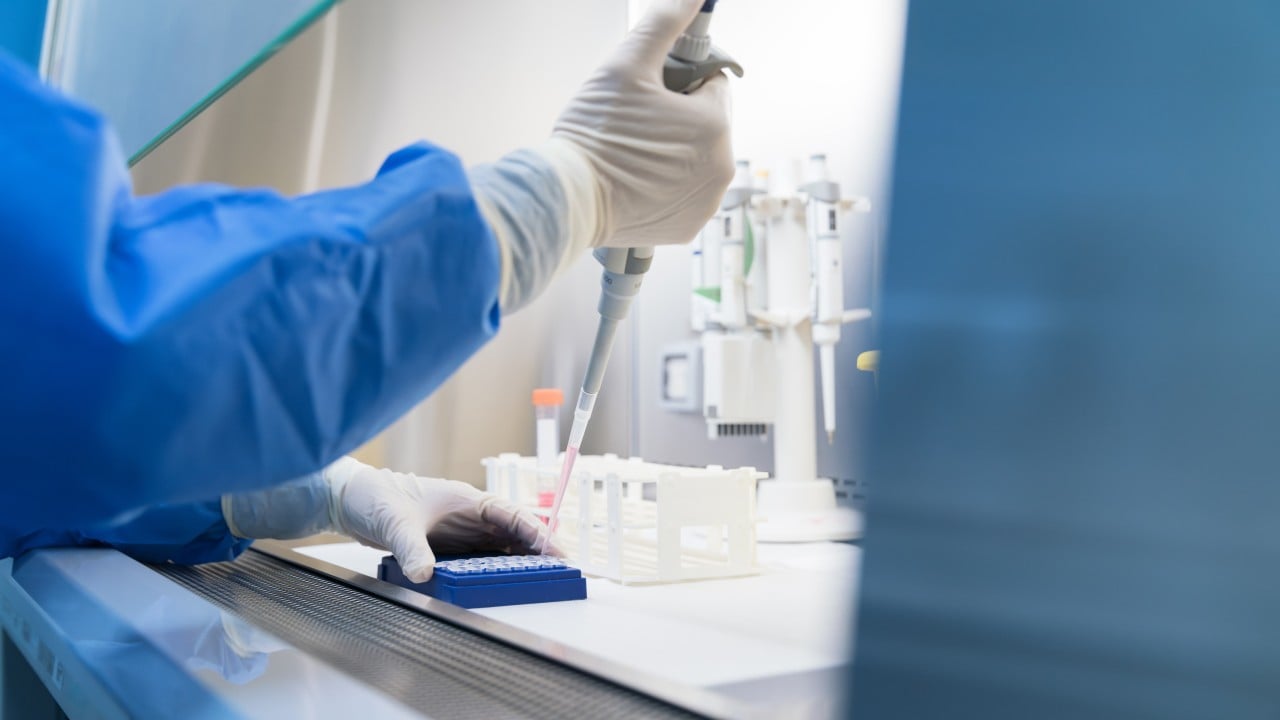
Six thousand miles away, in a sleek laboratory outside Boston, Dr. Sarah Jenkins adjusts a robotic pipette. She is engineering a synthetic microbe designed to eat plastic waste. If she succeeds, she cleans the oceans. If her sequence leaks, or if someone alters a single base pair, she might accidentally create something that degrades the protective coatings of global infrastructure.
They have never met. They probably never will. Yet, Li and Sarah are the frontline soldiers in a silent, invisible conflict that will define the next fifty years of global power.
For decades, Washington and Beijing fought over silicon. They fought over microchips, fiber-optic cables, and the rare earth minerals required to build smartphones. That war is yesterday's news. The new battlefield is inside us. It is written in the language of our DNA.
The Ultimate Database
We used to think of biotechnology as medicine. We thought of insulin, vaccines, and the miraculous ability to cure rare genetic diseases. That view is dangerously outdated. Today, biotechnology is information science.
When the human genome was first sequenced in 2003, the project took thirteen years and cost nearly three billion dollars. Today, a machine the size of a desktop printer can map your entire genetic blueprint in a few hours for less than the cost of a high-end television.
This collapse in cost transformed biology into big data.
Consider what happens when biology becomes data: it can be stored, hacked, weaponized, or monopolized. The nation that possesses the largest, most diverse genetic database wins the future of healthcare. More importantly, they control the global supply chains for everything from food to military countermeasures.
China understood this early. Over the last decade, Chinese firms systematically acquired massive troves of global genetic data. They did it legally. They bought American diagnostics companies. They offered free genetic testing to universities worldwide. They funded prenatal screening apps used by millions of pregnant women across Europe and Asia.
Every time a cheek was swabbed, the data flowed back to servers in Shenzhen.
Why does this matter? Imagine a hypothetical scenario where a state actor wants to disable an opposing military force without firing a shot. They don't need a nuclear warhead. They just need to identify a specific genetic vulnerability—a higher propensity for a certain autoimmune disease or a specific respiratory weakness—that exists predominantly within a particular ethnic population. With that data, they can design a targeted pathogen that causes severe chronic fatigue in 40 percent of the enemy’s population while leaving their own citizens completely untouched.
This is not science fiction. The biological weapons convention of 1972 banned traditional bioweapons, but it never anticipated CRISPR gene-editing technology. It never anticipated an era where biology could be coded like a smartphone app.
The Silicon Valley of the Cell
Walk through the Zhangjiang Hi-Tech Park in Shanghai, and you will see buildings that mimic the architecture of Google and Apple. The young scientists walking between the manicured lawns speak fluent English and hold degrees from Harvard, Stanford, and MIT.
For years, the United States assumed its lead in biomedical innovation was unassailable. American universities attract the brightest minds on earth. Wall Street pours billions into biotech venture capital.
But Washington forgot about scale.
In the world of artificial intelligence and biotechnology, data is the fuel. China has 1.4 billion people and a centralized healthcare system. When Beijing decides to sequence the population of a specific province to map hereditary diseases, it happens by decree. There are no lengthy consent forms, no hipaa regulations, and no corporate lawsuits over data privacy.
The American system is a fractured mosaic. Your medical data is trapped inside a local hospital's proprietary software. Your genetic data might be owned by a commercial ancestry website. Your pharmacy records sit with a retail chain. This fragmentation makes it incredibly difficult for American researchers to train large AI models on human biology at the scale China can achieve.
The tension broke into the open when Washington lawmakers began targeting companies like BGI Group—formerly Beijing Genomics Institute. BGI is the Huawei of the biotech world. They build the sequencing machines and run the data centers. To the US government, BGI is a national security threat disguised as a medical company. To BGI, they are simply scientists trying to cure cancer.
The truth is messy. American researchers rely on cheap Chinese sequencing services to conduct their own peer-reviewed studies. If the US completely cuts off ties with Chinese biotech firms, American research slows down. The price of drug development skyrockets.
We are addicted to their supply chains, and they want our data.
The Pharmacy Lockbox
The danger isn't just about weaponized viruses. It is about who owns the keys to human survival.
During the global supply chain crisis of the early 2020s, the world realized that a terrifying percentage of basic antibiotics and active pharmaceutical ingredients (APIs) were manufactured in a handful of Chinese factories. If Beijing decided to stop shipping those ingredients, American hospitals would run out of generic antibiotics within weeks.
Now, apply that vulnerability to the next generation of medicine.
We are moving away from chemical pills toward biologics—complex medicines manufactured inside living cells. These are the drugs that treat advanced cancers, rheumatoid arthritis, and macular degeneration. They cannot be easily replicated in a generic drug factory. They require precise, high-tech manufacturing facilities called bioreactors.
Right now, WuXi AppTec, a Chinese company with deep ties to the state, handles the research, development, and manufacturing for a massive share of the Western biotech industry. If you are an American startup with a brilliant idea for a new leukemia treatment, odds are high that you hire WuXi to actually build and test your molecule.
But what happens when geopolitical friction turns hot?
If the US imposes sanctions on China over a conflict in the Taiwan Strait, and Beijing retaliates by barring WuXi from manufacturing American-designed cancer therapies, thousands of patients in Chicago, Houston, and New York lose access to their life-saving treatments.
The reliance is a quiet stranglehold. Washington is scrambled, trying to passed legislation to force American drug companies to untangle themselves from Chinese manufacturing. But you cannot rebuild a trillion-dollar global infrastructure overnight. It takes years to pour the concrete for a cleanroom, train the technicians, and clear the regulatory hurdles.
While the politicians argue, the clock ticks for patients who don't care about geopolitics; they just want their medicine.
The Ethics Divide
The conflict runs deeper than market share or military strategy. It is a fundamental clash of philosophies regarding what it means to be human.
In 2018, a Chinese scientist named He Jiankui shocked the international scientific community by revealing he had created the world's first gene-edited babies. Using CRISPR, he altered the DNA of twin girls to make them resistant to HIV. The backlash was immediate and fierce. Western scientists condemned him for bypassing safety protocols and altering the human germline—changes that would be passed down to the twins' children and grandchildren.
Beijing initially hesitated, then sentenced He Jiankui to three years in prison for practicing medicine without a license.
But look closer at what happened after his release. He was quietly allowed to open a new research lab in Beijing. The message was subtle but clear: the methods were wrong, but the ambition was right.
The West views genetic engineering through a lens of profound caution, deeply colored by the horrors of twentieth-century eugenics. There is a heavy emphasis on individual consent, bioethical boards, and the precautionary principle.
In the race for global dominance, that caution can look like hesitation.
The regulatory frameworks in the East are more fluid. There is an intense, state-driven pressure to achieve breakthroughs at all costs. If editing the genome of human embryos can eliminate hereditary diseases and create a healthier, more productive workforce, the state sees it as a national imperative.
This creates an asymmetrical race. If one side feels bound by a strict moral code and the other views that code as a luxury they cannot afford, the balance of power shifts rapidly.
The Code We Share
Behind the grand strategies of presidents and CEOs, the reality of biology remains stubborn.
DNA does not care about national borders. A mutation that arises in a village in Africa can jump to a city in Europe within forty-eight hours. A breakthrough in a lab in San Francisco relies on data published by a researcher in Wuhan.
The terrifying irony of the biotech war is that human biology is the ultimate shared resource. We are trying to nationalize something that is inherently universal.
When we partition the scientific world into hostile camps, everyone loses. If American and Chinese scientists stop sharing data on cancer mutations, people die on both sides of the Pacific. If we create two separate, non-communicating systems of medical technology, we double the cost of innovation and halve the speed of discovery.
But the machinery of statecraft is already in motion. The borders are going up. The firewalls are being built around our genetic code.
Back in Boston, Dr. Sarah Jenkins watches her robotic pipette deposit a clear drop of liquid into a plastic vial. She wonders if the sequence she just engineered will be flagged by a government screening algorithm tomorrow morning. In Shanghai, Li Wei rubs his eyes, saves his spreadsheet of Ohioan tumor data, and shuts down his computer.
The cursor stops blinking. The screen goes dark. But inside the servers, the code remains—millions of lines of human instruction, waiting to see who will master them first, and whether that mastery will save us or destroy us.