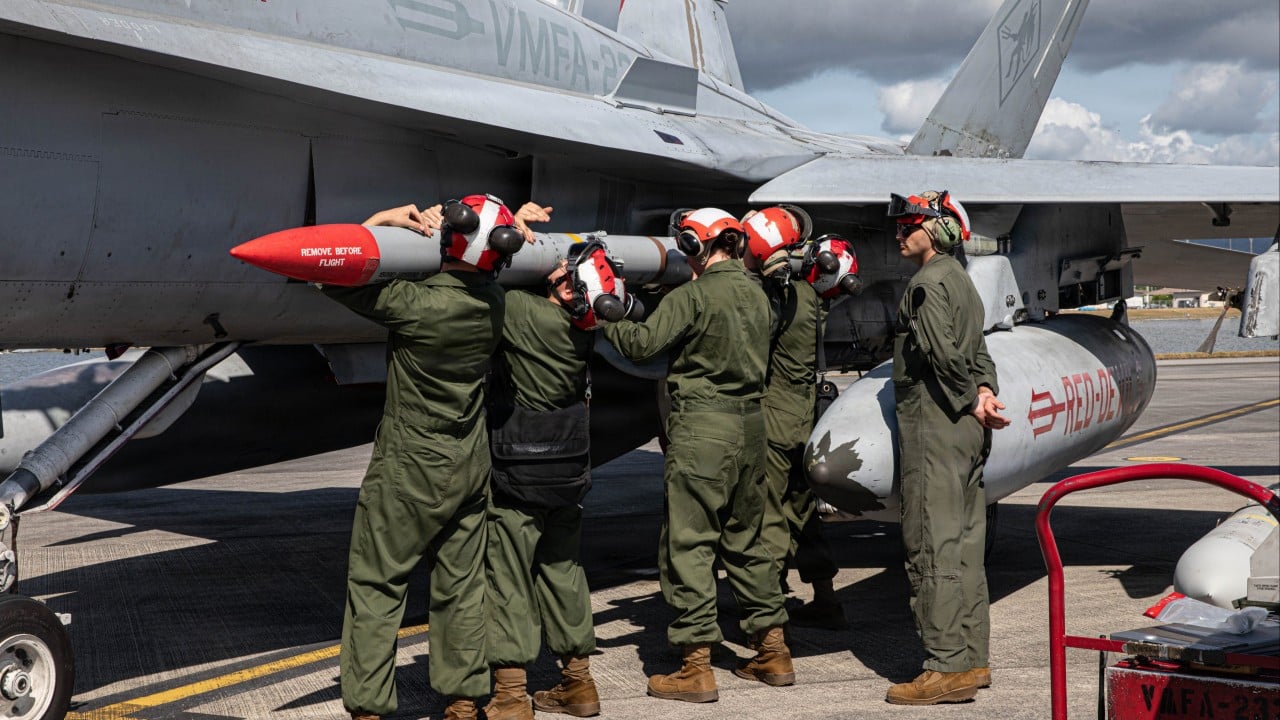
The bilateral agreement between Washington and Tokyo to co-produce and assemble advanced missiles inside Japan is not merely a procurement contract; it is a structural re-architecture of Indo-Pacific defense logistics designed to solve a critical wartime bottleneck. For decades, the US-Japan security alliance operated on a hub-and-spoke supply model where the United States manufactured high-end munitions domestically and shipped them across the Pacific. Under high-intensity conflict conditions, trans-Pacific supply lines face severe attrition risks and multi-year replenishment delays. By shifting final assembly and component integration to Japanese industrial facilities—specifically targeting air-to-air interceptors like the AIM-120 AMRAAM and surface-to-air systems like the Patriot PAC-3 MSE—both nations are converting Japan from a passive consumer of American defense hardware into a distributed manufacturing node.
Standard reporting treats this pact as a routine diplomatic milestone accompanying Tokyo’s broader military buildup. That framing misses the underlying industrial mechanics. To understand the operational reality of this deal, one must analyze the three structural pressures driving it: the magazine depth deficit, the industrial base bottleneck in the continental United States, and Japan’s doctrinal shift toward counterstrike capabilities.
The Magazine Depth Deficit and the Tyranny of Distance
Modern air and missile defense consumes interceptors at rates that exceed peacetime production capacities by an order of magnitude. Recent high-intensity conflicts in Eastern Europe and the Middle East have demonstrated that daily expenditure rates of surface-to-air and air-to-air munitions rapidly exhaust existing stockpiles. In an Indo-Pacific contingency, the tyranny of distance compounds this burn rate.
Shipping munitions from production facilities in Alabama, Arkansas, or Arizona to forward bases in Okinawa or mainland Japan requires traversing roughly 6,000 miles of contested maritime space. Under the hub-and-spoke model, three failure points emerge immediately during a crisis:
- Transit Latency: Maritime sealift takes weeks, while strategic airlift lacks the volume capacity to sustain continuous high-intensity air defense operations.
- Interdiction Vulnerability: Long-range anti-ship ballistic missiles and submarine-launched cruise missiles threaten logistics vessels long before they reach Japanese ports.
- Allocation Friction: When global demand spikes simultaneously across multiple theaters, Washington faces zero-sum allocation choices between European allies, Middle Eastern partners, and Indo-Pacific forces.
Localizing missile assembly inside Japan eliminates the transit latency variable for finished rounds. When Japanese defense contractors—led by heavyweights such as Mitsubishi Heavy Industries (MHI)—assemble interceptors domestically, the munitions enter the theater inventory directly at the point of need. This creates regional magazine depth that does not depend on vulnerable trans-Pacific supply chains surviving the opening weeks of a conflict.
Deconstructing the US Defense Industrial Bottleneck
The second driver of the agreement is strictly economic and industrial. The US defense industrial base operates on lean, just-in-time manufacturing principles optimized for predictable peacetime budgets rather than surge production. Expanding domestic assembly lines for complex guided munitions requires massive capital expenditure, specialized tooling, and years of regulatory clearance—investments defense primes are reluctant to make without multi-year, guaranteed purchase commitments.
Even when Congress authorizes surge funding, specific choke points stall output:
- Solid Rocket Motors: A narrow oligopoly of domestic suppliers controls energetic materials and propellant casting, creating severe lead-time delays.
- Microelectronics and Seekers: Radio-frequency seekers and radiation-hardened processors compete for fabrication capacity with commercial sectors and require intricate hand-assembly and calibration.
- Final Assembly and Checkout (FACO) Facilities: Physical floor space and certified technicians for final integration are capped at existing domestic plants.
By licensing assembly and sub-component manufacturing to Japanese firms, the Pentagon bypasses its own domestic FACO bottleneck without waiting five to ten years to build new American factories. Japan possesses latent, high-precision manufacturing capacity across its automotive, aerospace, and electronics sectors. Companies like MHI, Kawasaki Heavy Industries, and IHI already maintain strict quality control standards, cleanroom environments, and experienced engineering workforces capable of absorbing licensed production with minimal friction.
The economic logic follows classic comparative advantage applied to defense industrial policy. Rather than over-concentrating capital risk in a single domestic supply chain, the alliance distributes production overhead across two allied economies. Japan’s Ministry of Defense absorbs the capital setup costs for domestic assembly lines in exchange for sovereign production rights and supply security, while the US gains additional global output of critical interceptors—including the option to backfill American inventories using Japanese-assembled rounds.
The Architecture of Japan’s Long-Range Arsenal
This assembly agreement does not exist in a vacuum; it is the industrial backbone supporting Tokyo’s 2022 National Security Strategy. That strategy fundamentally altered Japan’s postwar defense posture by authorizing the acquisition of "counterstrike capabilities"—long-range precision munitions designed to strike enemy missile launch sites and command nodes before they can fire a second salvo.
Building a credible counterstrike posture requires simultaneous expansion across two distinct capability tiers:
Tier 1: Offensive Strike Systems
Tokyo is actively field-deploying standoff munitions capable of reaching targets across the East China Sea and beyond. This portfolio includes foreign acquisitions—specifically up to 400 US-made Tomahawk land-attack cruise missiles—alongside indigenous development programs. MHI is leading the rapid upgrade of the Type 12 surface-to-ship missile, extending its range from roughly 200 kilometers to over 1,000 kilometers, while also developing hypersonic glide vehicles for island defense.
Tier 2: Active Defense and Air Superiority
Offensive counterstrike assets are useless if the bases, radar sites, and runways supporting them are destroyed in an opening enemy barrage. Counterstrike capability requires an impenetrable defensive umbrella to survive a first strike. This is where the US-Japan assembly pact directly connects to Tokyo’s long-range arsenal.
Co-producing the Patriot PAC-3 MSE secures the lower-tier ballistic and cruise missile defense of Japanese airbases and command centers. Co-producing the AIM-120 AMRAAM equips Japan Air Self-Defense Force F-15J and F-35 fighters with the primary beyond-visual-range weapon needed to maintain air superiority and intercept incoming bombers and cruise missiles. Without sufficient stocks of PAC-3 and AMRAAM interceptors, Japan’s long-range strike platforms would be pinned down or destroyed on the ground.
Legal and Regulatory Mechanics of Co-Production
For decades, Japan’s self-imposed Three Principles on Arms Exports barred domestic manufacturers from exporting defense equipment or participating in international weapons co-production. Even after the Shinzo Abe administration relaxed these rules in 2014 to establish the Three Principles on Transfer of Defense Equipment and Technology, strict prohibitions remained against exporting lethal weapons to third countries or transferring licensed foreign defense technology back to the licensor for third-party distribution.
Tokyo’s recent regulatory revisions specifically targeted these legal friction points to enable the missile assembly pact. Under the updated implementation guidelines:
- Direct Return to Licensor: Japanese manufacturers can now export finished weapons produced under foreign license—such as Patriot interceptors—directly back to the country that holds the patent (the United States).
- Third-Party Replenishment: While Japan still prohibits direct lethal exports to active warzones, returning Japanese-assembled missiles to the US military allows the Pentagon to replenish its own domestic stockpiles, freeing up American-made rounds to be sent to allies like Ukraine or Taiwan.
- Joint Development Frameworks: The revised rules clear legal hurdles for deeper technology sharing, paving the way for joint research and development projects such as the Glide Phase Interceptor (GPI), a specialized system designed to defeat hypersonic weapons.
This regulatory evolution transforms Japan’s defense industry from an isolated, low-volume domestic supplier—historically plagued by exorbitant unit costs due to small production runs—into an integrated component of the broader allied defense market.
Operational Limitations and Strategic Vulnerabilities
While the co-production framework solves critical supply chain and capacity problems, treating it as a complete solution ignores four severe operational constraints.
1. Sub-Tier Supply Chain Dependencies
Final assembly in Japan does not equal full supply chain autonomy. If Japanese assembly lines still rely on American-made solid rocket motors, specialized energetic chemicals, or proprietary seeker microchips shipped from the US, the bottleneck simply shifts upstream. Until Japan achieves sovereign production of sub-tier components—or establishes dual-sourced allied supply lines—a disruption in American sub-component output will still halt Japanese final assembly.
2. Kinetic Vulnerability of Japanese Industrial Nodes
Moving missile assembly into Japan reduces transit distance, but it places the factories directly inside the engagement envelope of adversary theater ballistic and cruise missiles. Facilities operated by MHI in Nagoya or Nagasaki are fixed, high-value targets. Unlike factories in the continental United States, which enjoy geographic sanctuary from conventional kinetic strikes, Japanese industrial plants require dedicated hardened infrastructure, dispersed manufacturing footprints, and active air defense coverage to survive a conflict.
3. Unit Cost Inflation and Scale Economics
Japanese defense manufacturing has historically suffered from high unit costs because the Japan Self-Defense Forces buy in small quantities and export restrictions prevented economies of scale. Standing up duplicate assembly lines in Japan incurs substantial non-recurring engineering and tooling costs. Unless production volumes are maintained at high, steady rates over a multi-decade horizon, the per-unit cost of a Japanese-assembled AMRAAM or PAC-3 will remain significantly higher than its American-assembled counterpart, straining Japan’s defense budget even as spending approaches 2 percent of GDP.
4. Technology Transfer and Cybersecurity Risks
Co-producing advanced guided munitions requires sharing sensitive technical data packages, source code, and manufacturing tolerances. Integrating Japanese commercial-military conglomerates deeper into the US defense supply chain expands the attack surface for state-sponsored cyber espionage. Ensuring that Japanese contractors meet stringent US defense cybersecurity standards (such as CMMC) requires continuous auditing and capital investment that smaller sub-tier suppliers may struggle to afford.
The Strategic Imperative for Allied Industrial Integration
The US-Japan missile assembly agreement marks the end of the post-Cold War era in which Western militaries could treat industrial capacity as an afterthought. Deterrence in the Indo-Pacific now rests on visible, measurable industrial throughput—the ability to manufacture, store, and replace complex precision munitions faster than an adversary can expend or destroy them.
To maximize the strategic value of this pact and prevent it from stalling at the final-assembly stage, defense planners in both Washington and Tokyo must execute three immediate operational steps:
First, transition immediately from "knock-down kit" assembly to deep sub-tier localization. Both governments must authorize and fund Japanese manufacturers to produce energetic materials, solid rocket motors, and seeker electronics domestically, eliminating reliance on trans-Pacific shipments of sub-components.
Second, establish standardized, interoperable production specifications across US and Japanese lines. Every missile assembled in Japan must be certified for seamless plug-and-play deployment on both US Navy/Air Force platforms and Japan Self-Defense Force systems, allowing commanders to pool munitions dynamically during a crisis without logistical friction.
Third, harden and disperse the industrial base. Future capital allocations under Japan’s defense buildup must prioritize underground or hardened manufacturing facilities and redundant production nodes outside major urban centers, ensuring that the factories building the shield cannot be knocked out in the opening hours of a conflict.