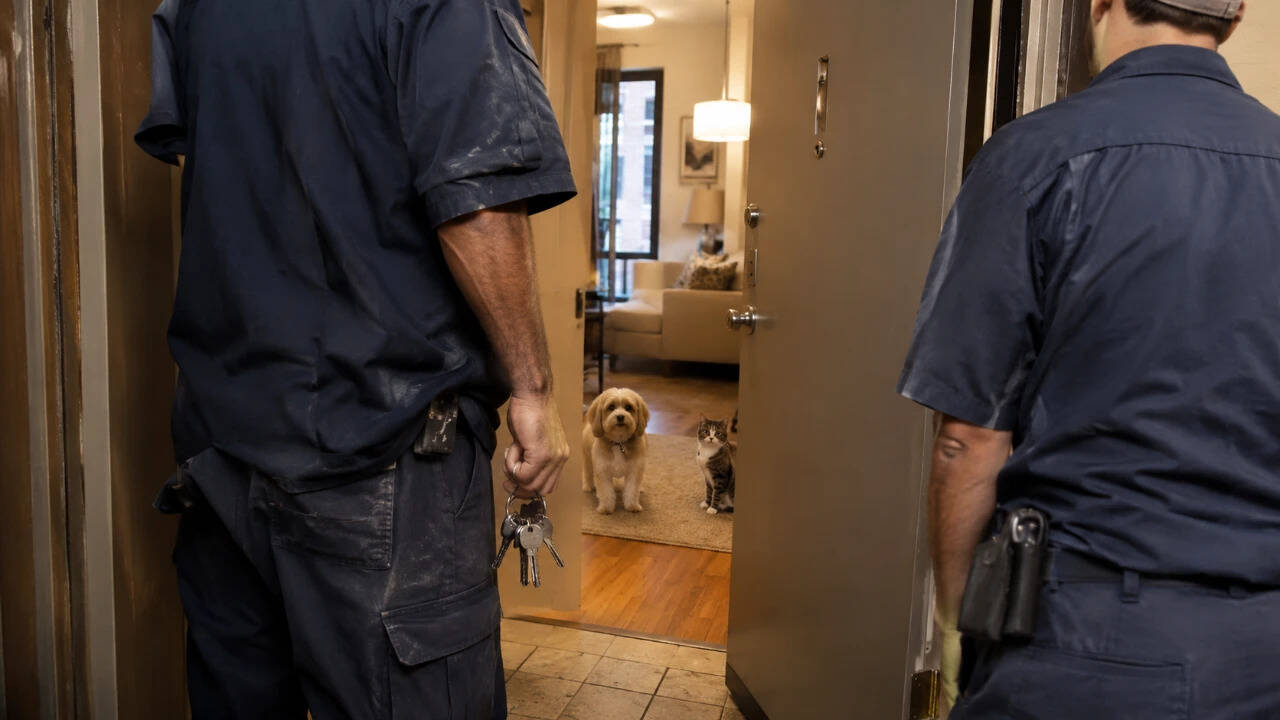
Imagine coming home to an empty apartment and realizing your pets are gone—not because they slipped out the door, but because your building's staff took them and won't tell you where your dog is.
That nightmare scenario sits at the center of a legal battle in the United States, where a woman sued her housing cooperative after claiming staff members removed her pets and concealed her dog's whereabouts. A court has now refused to shut the door on her case, allowing the lawsuit to move forward.
This isn't just a bizarre neighbor dispute. It hits a raw nerve for millions of people living in co-ops, condos, and homeowner associations across the country. Boards hold massive power over daily life, yet that authority stops hard at the threshold of illegal seizure and emotional harm.
What Happens When a Co-op Lawsuit Survives Dismissal
Most people assume housing co-op boards are untouchable. They aren't.
When a plaintiff files a lawsuit alleging that building employees entered a unit, removed animals, and hid a dog's location, defense lawyers almost always file an immediate motion to dismiss. Their standard playbook argues that board decisions are protected by internal house rules, proprietary leases, or the business judgment rule.
Courts take a much narrower view when personal property—and living companions—are physically taken without due process.
Under U.S. property law, pets are legally classified as personal property, though several states increasingly recognize their unique emotional value in custody and damages disputes. Even under strict traditional property rules, a landlord or co-op corporation cannot simply walk into a shareholder's home, confiscate animals, and refuse to disclose where they were sent.
By allowing the woman's lawsuit to proceed, the court signaled that her factual allegations, if proven true, could establish serious legal liability. Survival at the pleading stage doesn't mean she has won the case yet. It means the co-op can't sweep the allegations under the rug without facing discovery, sworn depositions, and potential financial damages.
Why Co-op Boards Overreach on Pet Rules
If you've ever sat on a co-op board or dealt with property management, you know how quickly minor rule enforcement spirals into personal warfare.
Housing cooperatives operate differently from standard rental buildings. Instead of renting an apartment, you buy shares in a corporation and receive a proprietary lease. That structure gives boards wide latitude to enforce house rules covering everything from subletting to dog weight limits.
Problems erupt when boards confuse administrative authority with police power.
- Self-help evictions and seizures are illegal. Even when a resident blatantly violates a no-pet clause or exceeds a two-pet limit, a co-op cannot use master keys to confiscate animals. Their legal remedy is serving a formal notice to cure, followed by eviction proceedings in housing court.
- Staff members follow bad orders. Superintendents and porters often get caught in the middle. When a property manager or board president tells staff to "handle" an animal issue while a resident is away, the corporation becomes directly liable for conversion, trespass, and intentional infliction of emotional distress.
- Hiding an animal escalates damages. Taking a pet to a municipal shelter is one thing. Concealing a dog's whereabouts from its owner turns a property dispute into something courts view as malicious behavior, opening the door to punitive damages.
Honestly, most boards know better. The ones that cross this line usually operate in echo chambers where nobody pushes back against an aggressive board president or an overwhelmed managing agent.
The Legal Claims That Stick in Pet Removal Cases
When a housing provider takes a resident's pets without a court order, plaintiffs' attorneys generally stack multiple causes of action to ensure the case survives early challenges.
Conversion and Trespass to Chattels
In plain English, conversion is the civil equivalent of theft. If co-op staff exercised unauthorized control over the woman's pets and deprived her of them—especially by hiding her dog—that fits the textbook definition of conversion. Courts rarely dismiss conversion claims when a defendant admits or is credibly accused of refusing to return someone's property.
Breach of the Proprietary Lease and Quiet Enjoyment
Every co-op shareholder pays monthly maintenance in exchange for the right to live peacefully in their home. Unauthorized entry by staff to remove personal belongings violates the covenant of quiet enjoyment. Boards have access rights for genuine emergencies, like a burst pipe or a gas leak. Removing pets during a non-emergency doesn't qualify.
Intentional Infliction of Emotional Distress
This is usually the hardest claim to keep alive in civil court because the legal bar is high. Judges look for conduct that goes beyond all possible bounds of decency. Taking someone's animals and deliberately hiding where the dog was sent is the exact kind of factual detail that makes judges pause before throwing out an emotional distress claim.
What Co-op Shareholders and Pet Owners Should Do Immediately
You don't need to wait for a crisis to protect yourself if you live in a co-op or condo with strict animal policies. If tensions are rising with management over your pets, take concrete steps right away.
- Document everything in writing. Never rely on hallway conversations with your super or phone calls with a property manager. Send emails summarizing every interaction about your pets so there is a timestamped paper trail.
- Keep proof of ownership and medical records accessible. Store adoption papers, microchip registration numbers, vet bills, and current photos in cloud storage. If an animal ever goes missing or gets taken to a shelter, microchip records prove legal ownership instantly.
- Install an indoor security camera. A simple Wi-Fi camera pointed at your front door creates indisputable video evidence if building staff enter your unit without notice or permission. Check your local laws regarding audio recording, though video inside your own private living space is broadly permitted.
- Know your proprietary lease notice rules. Read the exact language governing landlord entry and rule violations. Almost every lease requires advance written notice before management can enter for non-emergencies, and zero leases authorize staff to confiscate pets.
- Contact municipal shelters and animal control immediately if a pet vanishes. If you suspect building staff removed your animal, call local shelters with your microchip number right away before a stray hold expires and the animal is adopted out.
Living in a co-op means trading some personal freedom for shared building governance, yet buying shares in a building never means surrendering your basic property rights. When boards forget that boundary and treat residents' homes like their personal domain, the courts are eventually going to remind them.


