Awareness days like the International Day of Climate Action on October 24 generate spikes in attention and pledges, yet global emissions and physical climate damages continue to compound. The core flaw in standard climate observance coverage is treating atmospheric stabilization as a motivational campaign rather than an engineering, capital allocation, and regulatory coordination problem. To turn an annual calendar marker into durable progress, decision-makers must separate symbolic mobilization from measurable abatement, shift capital toward high-leverage bottlenecks, and match interventions to local institutional capacity.
Deconstructing Standard Climate Observance Logic
Conventional articles covering the International Day of Climate Action follow a predictable narrative arc: they trace the movement back to 350.org's October 24, 2009 mobilization ahead of international negotiations, list severe environmental impacts such as heatwaves, droughts, storms, and sea-level rise, cite broad warnings from international bodies or education disruptions, and close with a checklist of individual habits like planting trees, switching off lights, or posting online.
That structure fails on three analytical fronts. First, it conflates awareness with throughput. A one-day spike in social posts or community cleanups alters public salience briefly, but physical emissions depend on long-lived capital stock—power plants, grids, industrial furnaces, buildings, vehicles, and land-use systems—that turns over over decades. Second, it treats all actions as additive and equivalent, ignoring marginal abatement cost and rebound effects. Switching a bulb or planting a sapling in isolation does not resolve grid congestion, permitting delays, or fossil fuel lock-in. Third, it obscures causality and distribution. Climate hazards do not strike uniformly; vulnerability depends on exposure, infrastructure quality, and fiscal capacity, meaning low-income communities often absorb severe disruption even when their per-capita emissions are low.
The Four Structural Layers of Climate Execution
A rigorous evaluation of climate action requires separating the problem into four distinct operational layers rather than lumping policy, business, and personal habits into a single call to action.
1. Emissions Abatement and Capital Stock Turnover
Mitigation is governed by how quickly high-carbon assets are retired or electrified and how fast low-carbon capacity scales. In physical systems, replacing an asset before the end of its economic life faces financial friction, while building new infrastructure faces siting, supply-chain, and interconnection constraints. A known scientific and engineering fact is that greenhouse gases accumulate in the atmosphere, so incremental reductions slow the rate of additional warming rather than reversing past accumulation immediately. An educated hypothesis across many energy markets is that policy stability and grid transmission expansion exert greater leverage over multi-year emissions trajectories than voluntary consumer pledges alone.
2. Adaptation and Resilience Economics
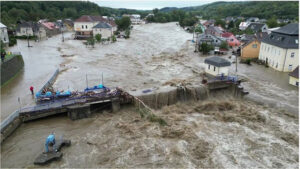
Even as mitigation progresses, societies must manage physical hazards already locked in by historical emissions. Adaptation is not a single project; it is a continuous risk-management function spanning early warning systems, flood defenses, heat-resilient urban design, water storage, and supply-chain redundancy. For example, UNICEF reported that climate-related hazards disrupted the education of more than 171 million students in 2025, with three-quarters of those affected living in low- and lower-middle-income countries. The mechanism behind that disparity is straightforward: when extreme weather damages transit or school facilities, households with fewer financial buffers and less resilient public infrastructure face longer outages and steeper learning losses.
3. Institutional Rules and Market Incentives
Markets price what rules and contracts require them to price. Procurement standards, building codes, industrial emissions rules, utility rate structures, and public infrastructure budgets determine which investments clear hurdle rates. When rules remain fragmented or short-term, project developers face higher financing costs, which slows deployment even when underlying hardware costs fall. Conversely, clear long-term rules reduce risk premiums and crowd in private capital.
4. Behavioral and Civic Feedback Loops
Individual and community actions matter most when they alter demand profiles or political and organizational norms, rather than acting as isolated gestures. Shifting peak electricity demand, cutting waste in commercial operations, or organizing local stakeholders around a concrete building or municipal decision can produce real operational change. The limitation is scale: individual choices operate inside constraints set by infrastructure and income. Asking households to make "green choices" when low-carbon options are unavailable or unaffordable shifts responsibility downward without removing structural barriers.
Hidden Cause-and-Effect Chains and Failure Modes
Standard commentary often misses second-order effects that blunt well-intentioned initiatives.
- The Delay Cost Multiplier: Postponing emissions cuts increases cumulative atmospheric concentrations over time, which raises the scale and cost of future adaptation and loss management. In infrastructure planning, delayed upgrades also mean retrofitting later under tighter physical and financial constraints.
- The Siting and Grid Bottleneck: Deploying renewable generation or electric vehicles does not automatically cut fossil generation if transmission lines are congested or permitting takes years. Adding capacity without grid and storage coordination can increase curtailment or local bottlenecks.
- The Unverified Offset Trap: Treating tree planting or external offsets as a direct substitute for operational emissions cuts introduces measurement, permanence, and baseline risks. Biological carbon storage is vulnerable to drought, fire, pests, and land-use reversal, making it a poor replacement for direct industrial or energy decarbonization.
- The Regressive Cost Pitfall: Poorly designed climate policies or unsubsidized upfront costs can hit lower-income households hardest through higher energy or compliance prices. Without targeted relief or accessible alternatives, public backing for climate measures erodes.
Consider a common workplace or community scenario around October 24. A group organizes a one-day awareness talk and pledges to cut energy use. Without auditing baseload power, checking thermostat schedules, or clarifying who controls building maintenance contracts, energy consumption often reverts to baseline the following week. By contrast, a team that maps actual meter data, identifies off-hours equipment loads, and assigns maintenance ownership creates repeatable savings that persist long after the calendar date passes.
Operationalizing Action Across Roles
Because no single actor controls all four layers, effective execution requires matching interventions to decision authority and verifying claims carefully.
For Policymakers and Public Institutions
- Audit Exposure and Critical Infrastructure: Map where extreme heat, flooding, drought, or storms disrupt essential services—such as schools, clinics, power grids, and transit—prioritizing high-vulnerability districts.
- Streamline Permitting and Grid Connections: Remove administrative bottlenecks for clean power, transmission, and resilience upgrades while maintaining environmental safeguards.
- Pair Standards with Targeted Support: Align building codes, procurement rules, and emissions targets with practical financing or rebates so households and small businesses can comply without severe cost shocks.
- Enforce Transparent Reporting: Require clear separation between gross emissions, direct reductions, and any offsets or adaptation spending so progress is auditable.
For Business Leaders and Operators
- Establish a Verified Emissions Baseline: Separate Scope 1, Scope 2, and material Scope 3 sources using primary operational data rather than rough estimates before setting targets.
- Target High-Abatement Operational Levers: Focus capital and engineering effort on electrifying thermal and transport processes, improving energy efficiency, and securing clean power contracts tied to actual grid additionality.
- Stress-Test Supply Chains and Sites: Evaluate supplier locations, raw material inputs, and logistics routes against acute weather disruptions and chronic heat or water stress.
- Replace Vague Pledges with Milestone Governance: Tie leadership accountability and capital budgeting to near-term operational milestones rather than distant net-zero dates alone.
For Citizens, Educators, and Local Groups
- Pick One Controllable System: Focus on a specific local lever—such as shared building energy waste, municipal transit access, or school heat readiness—rather than trying to solve global climate change in a single afternoon.
- Verify Claims and Data: Check dates, sources, and what a metric actually measures before sharing statistics or joining a campaign; distinguish learning goals from fundraising appeals.
- Measure Before and After: Track concrete indicators—such as kilowatt-hours used, waste diverted, or a completed policy request—and set a follow-up review date.
Limits and Trade-Offs of These Strategies
None of these measures is a silver bullet. Permitting reform can spark local opposition if community consultation is rushed or environmental impacts are glossed over. Rapid electrification increases demand for minerals, grid equipment, and skilled technicians, creating supply-chain and cost pressures if deployment outpaces manufacturing and workforce capacity. Adaptation investments require upfront public or private capital, which is scarce in heavily indebted or low-income jurisdictions. Moreover, even rigorous measurement cannot eliminate scientific uncertainty around regional weather extremes or tipping points, which means plans must remain adaptable as empirical data updates.
The Strategic Play for the Next Cycle
Treat October 24 not as a campaign finish line, but as an annual execution audit. Organizations and communities that outperform will stop measuring success by awareness reach and start measuring installed capacity, verified emissions avoided, and infrastructure downtime prevented over a 12-month operating cycle. Pick one high-friction bottleneck you directly influence, publish a clear baseline and owner before the next cycle begins, and judge every subsequent initiative by whether it moves that hard metric.