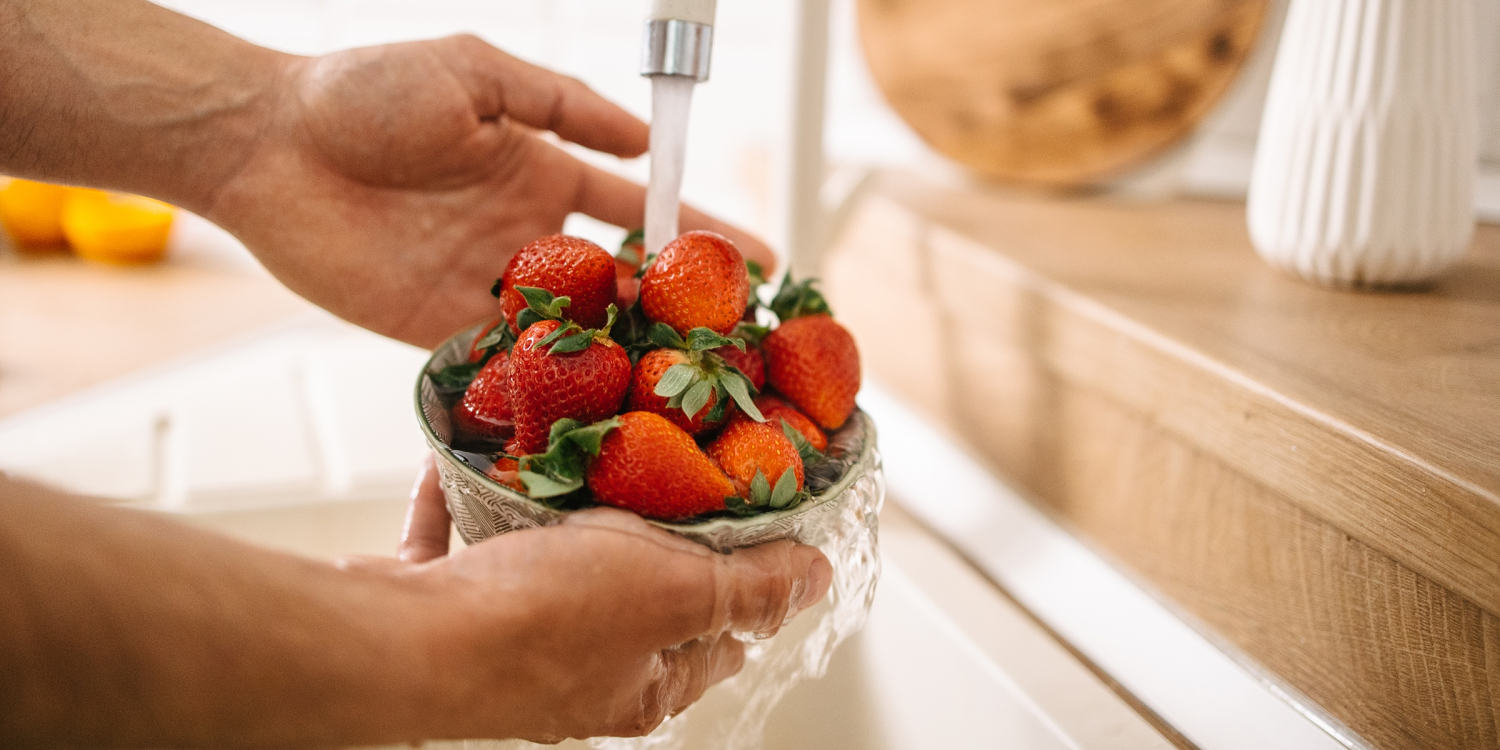
You bought a fresh carton of strawberries, left them in the fridge for two days, and opened the crisper drawer only to find a fuzzy blanket of gray mold. Sound familiar? Most people throw their berries straight under running tap water the second they bring them home, or worse, they don't wash them until right before eating—and even then, they do it wrong.
Running fresh fruit under cold water for five seconds gets rid of visible dirt, but it barely touches pesticide residues or spores. Microscopic mold spores ride home from the grocery store on nearly every batch. If you wash them incorrectly, you accelerate decay. If you don't wash them at all, you swallow whatever chemicals were sprayed on the farm.
There is a simple, science-backed way to clean strawberries that removes dirt, lowers pesticide exposure, and stops mold before it ruins your food.
Stop Rinsing Your Berries Under Plain Tap Water
Tap water alone isn't enough. Strawberries consistently top the Environmental Working Group's Dirty Dozen list, an annual ranking of produce with the highest pesticide levels. Their soft, porous skin absorbs agricultural chemicals far more easily than thick-skinned fruits like oranges or bananas.
Water rinses away loose dirt. It doesn't break down wax-based synthetic pesticides designed specifically to survive rainstorms.
Plain water also fails to kill Botrytis cinerea, the fungal pathogen responsible for gray mold. When you soak strawberries in plain water, you give fungal spores the exact moisture they need to multiply. You end up creating the perfect environment for rot.
The Vinegar Soak Method That Gets Results
Soaking berries in a diluted vinegar bath is the standard for a reason. Acetic acid lowers the pH of the water, creating an environment that neutralizes bacteria and destroys mold spores without ruining the fruit's natural flavor.
Don't worry about your fruit tasting like salad dressing. At the right ratio, you won't taste a thing.
What You Need
- White distilled vinegar (5% acidity)
- Cold water
- A large mixing bowl
- A colander
- Paper towels or a clean kitchen cloth
The Step-by-Step Process
- Mix the solution: Pour three cups of cold water into your bowl and add one cup of white distilled vinegar. Stick to this four-to-one ratio. Too much vinegar will leave an aftertaste and soften the skin.
- Submerge the berries: Place your unwashed strawberries directly into the mixture. Let them sit for five to seven minutes. Don't leave them in longer than ten minutes, or the flesh will absorb liquid and turn mushy.
- Agitate gently: Swirl the berries around with your hands to loosen trapped debris, soil, and tiny insects hiding under the leafy green caps.
- Rinse thoroughly: Transfer the fruit into a colander and rinse under cold, running tap water for 30 seconds. This step washes away any lingering vinegar residue and floating debris.
- Dry completely: Lay the berries out in a single layer on paper towels. Let them air-dry completely. Moisture is the ultimate enemy. Storing damp strawberries leads to rapid mold growth, no matter how clean they are.
Baking Soda vs. Vinegar: Which Works Better?
Researchers at the University of Massachusetts looked into methods for removing pesticide residues from produce skin. Their findings showed that a diluted baking soda solution outperformed plain water and bleach solutions when breaking down common fungicides and insecticides.
Baking soda creates an alkaline environment that breaks down certain synthetic chemical compounds on the fruit's surface.
Mix one teaspoon of baking soda into two cups of cold water. Soak the strawberries for 10 to 12 minutes, then rinse thoroughly.
Which one should you pick? Use vinegar if your main goal is stopping mold and extending shelf life. Use baking soda if your main concern is scrubbing away chemical pesticides. If you buy organic, stick with vinegar.
Three Mistakes That Ruin Your Berries Immediately
Small errors in your kitchen routine cause fruit to spoil days earlier than it should. Avoid these common traps:
- Hulling before washing: Never pull off the leafy green hull or chop your berries before washing them. Cutting the skin opens pathways for water, bacteria, and vinegar to soak straight into the inner flesh. Wash first, dry second, hull right before eating.
- Storing in original plastic clamshells: The clear plastic boxes from the store lack proper ventilation and trap moisture inside. Moisture encourages mold spores to bloom fast.
- Washing too far in advance without proper drying: If you don't have time to let your strawberries dry completely on the counter before putting them in the fridge, wait to wash them right before you eat them. Putting wet fruit into cold storage guarantees rot within 48 hours.
The Best Way to Store Berries After Cleaning
Once your strawberries are clean and completely dry to the touch, line a glass food container with a clean paper towel.
Place the berries inside in a single layer, or stack them lightly with an extra paper towel placed between layers to absorb ambient condensation. Cover the container with a lid, but leave it slightly unsealed to allow minimal air circulation. Keep the container in the main body of your refrigerator rather than the high-humidity crisper drawer.
Following this protocol keeps fresh strawberries bright, firm, and mold-free for up to ten days.
Go inspect the berries in your fridge right now. Discard any soft or visibly moldy ones before spores spread to the rest of the batch, mix up a fresh four-to-one water and vinegar bath, and dry the remaining fruit completely before putting them back into cold storage.