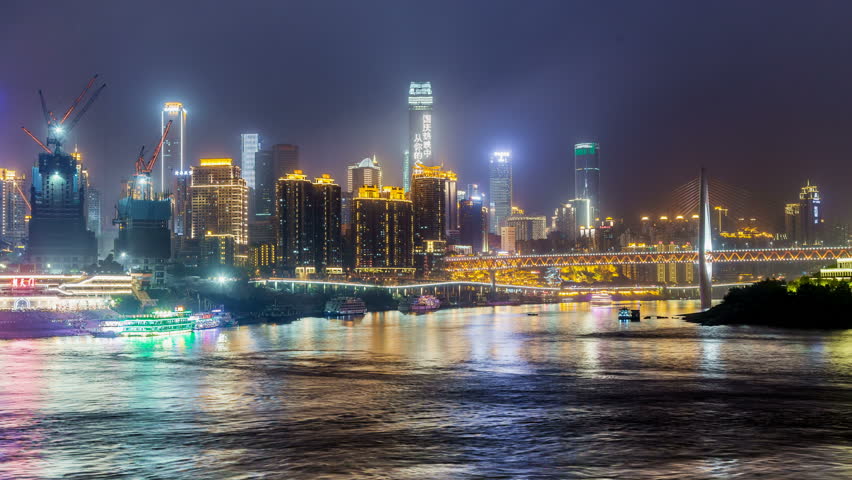
Three dead. Seventeen missing. Torrential downpours trigger flash floods and mudslides in Chongqing, turning streets into raging rivers and burying homes under tons of debris.
Every time a disaster like this hits Southwestern China, the media falls back on a tired, predictable script. The narrative is always the same: a tragic combination of unprecedented "once-in-a-century" rainfall and unfortunate geography. The prescription is equally uninspired: build higher seawalls, pour more concrete, install bigger pumps, and upgrade the early warning apps.
This lazy consensus misses the entire point.
The tragedy in Chongqing is not a failure of meteorology, nor is it a simple case of bad luck. It is the predictable consequence of an outdated engineering philosophy that views nature as an enemy to be suppressed rather than a system to be integrated. We are spending billions trying to build "invincible" cities, ignoring the fundamental law of fluid dynamics: water always wins.
If we want to stop burying citizens, we need to stop trying to conquer rivers. We have to change the blueprint entirely.
The Illusion of the Hundred-Year Flood
The media loves the term "once-in-a-century flood" because it implies an unavoidable act of God. It frees local governments, urban planners, and civil engineers from accountability.
Let's dismantle this mathematical misunderstanding immediately.
In engineering terms, a 100-year flood means an event has a 1% probability of occurring in any given year. It does not mean it happens once every hundred years. When climate volatility accelerates, those static historical probabilities become completely useless. If you use a 30-year-old dataset to calculate your drainage capacity, your "cutting-edge" infrastructure is already obsolete before the concrete cures.
I have spent years analyzing urban development patterns and resource allocation. I have watched municipal governments pour billions into massive, centralized drainage networks, only to watch those exact systems get overwhelmed because a localized storm cell dropped three inches of rain in forty minutes.
The standard approach to flood management relies on a flawed premise: centralization.
We funnel water from thousands of acres into single, massive concrete arteries. When those arteries clog or exceed capacity by even a fraction, the failure is catastrophic. We create artificial bottlenecks, accelerate the velocity of the runoff, and then act surprised when the resulting flash flood tears through a residential district with the force of a demolition derby.
The Concrete Trap: Why More Infrastructure Makes Disasters Worse
When a city floods, the immediate political reflex is to promise more infrastructure. More dikes. Deeper channels. Bigger reservoirs.
This is the concrete trap.
Urbanization replaces absorbent topsoil, wetlands, and forests with impermeable surfaces: asphalt, concrete, and roofing. In a natural ecosystem, up to 90% of rainfall soaks into the ground or is retained by vegetation. In a dense urban center, that dynamic flips. Up to 90% of the water becomes immediate surface runoff.
Natural Landscape: 10% Runoff / 90% Absorption
Concrete Urban Center: 90% Runoff / 10% Absorption
By relying on gray infrastructure (concrete channels and pipes), we are simply moving the problem downstream at high speed. A concrete channel doesn't absorb water; it accelerates it. It turns a manageable swell into a high-velocity battering ram that decimates the next town or district down the line.
The Cost of Hyper-Defensive Engineering
- Eco-systemic Suffocation: Straightening and concreting riverbeds destroys the natural riparian zones that filter water and slow down currents.
- The False Sense of Security: Building a massive levee encourages developers to build high-density housing right next to it. When the levee eventually fails—and it will—the loss of life and property is multiplied tenfold.
- Maintenance Insolvency: Civil engineering departments rarely budget for the compounding maintenance costs of aging concrete. Cracks, siltation, and structural fatigue turn today's defenses into tomorrow's liabilities.
The Counter-Intuitive Alternative: Cities That Learn to Drown
Instead of trying to keep water out, successful cities of the future must learn how to let water in.
This is the philosophy behind the "Sponge City" concept, originally championed by landscape architect Yu Kongjian. But let's look past the marketing buzzwords and examine the brutal operational reality of this approach. It requires a radical departure from traditional real estate economics.
To make a city a sponge, you must sacrifice premium, high-value urban land to create dedicated flood plains, constructed wetlands, and green corridors. You have to tolerate temporary, controlled flooding in public parks, sports fields, and plazas so that residential basements and transit tunnels stay dry.
Operational Reality: You cannot build high-rise luxury apartments on land that needs to serve as a seasonal retention basin. Urban planners must choose between maximizing short-term real estate tax revenue and ensuring long-term systemic survival.
This approach is painful. It requires politicians to tell developers "no." It requires accepting that certain areas of a city should not exist. But the alternative is continuing to pay a blood toll every monsoon season.
Dismantling the Smart City Myth
Whenever a disaster strikes, tech evangelists line up to sell their latest solutions: IoT sensors, AI-powered predictive evacuation modeling, and real-time drone monitoring.
Let's be brutally honest: An app cannot stop a mudslide.
Early warning systems are necessary, but they are a band-aid on a gaping wound. They optimize the evacuation process; they do nothing to mitigate the underlying destruction. If your city's survival strategy relies on sending a push notification telling twenty thousand people to flee up a single-lane mountain road in the middle of a torrential downpour, you do not have a resilient city. You have an emergency management nightmare.
We must shift our investment from high-tech detection to low-tech, high-yielding ecological restoration.
Traditional Playbook: Sensors -> Alerts -> Evacuation -> Rebuild -> Repeat
The Resilient Playbook: Room for the River -> Decelerate Flow -> Natural Infiltration -> Continuous Operations
The Uncomfortable Truth About Relocation
Here is the perspective nobody wants to admit: some places are simply unlivable under current climatic realities.
Chongqing's geography—mountainous terrain, steep valleys, and powerful river systems—makes certain pockets of development inherently dangerous. No amount of engineering can completely eliminate the risk of a hillside liquefying after days of continuous rain.
The hardest, most contrarian action a government can take is managed retreat.
It means identifying high-risk zones, zoning them permanently off-limits for residential habitation, and moving existing populations to safer ground. It is incredibly expensive, politically toxic, and deeply disruptive to communities. It flies in the face of our cultural obsession with growth, expansion, and conquering nature.
But clinging to a dangerous piece of geography out of pride, tradition, or real estate speculation is a losing bet. Nature plays a long game, and it has an infinite budget.
Stop upgrading the pumps. Stop patching the levees. Break the concrete, widen the riverbeds, and give the water somewhere to go before it carves a path through another neighborhood.