The sea does not care about doctrine. It cares about weight, draft, and the unforgiving calculus of salt water meeting steel.
Standing on the bridge of a commercial tanker creeping through the Strait of Hormuz, the silence is what hits you first. It is a unnatural silence, heavy with heat and humidity so thick the air tastes of sulfur and salt. To the left lies the jagged coastline of Oman; to the right, the mist-shrouded hills of Iran. Between them sits a narrow band of deep water—barely twenty-one miles wide at its tightest point—through which a fifth of the world’s petroleum must pass every single day.
For ten consecutive nights, the sky above this narrow strip of ocean has burned.
On land, thousands of miles away, strategic strikes unfold as precise data points on high-definition displays. Commanders track coordinates, analyze satellite imagery, and calculate collateral thresholds. But down on the water, aboard a panamax vessel carrying three million barrels of crude, conflict isn't measured in strategic metrics. It is measured in the vibration of the hull underfoot when a low-flying drone buzzes two hundred feet overhead, or the sudden, blinding flash of light against a dark horizon that turns a midnight watch into an existential vigil.
Steel, Salt, and Silent Panic
Consider a hypothetical commercial sailor—let's call him Captain Thomas, a veteran mariner who has spent thirty years navigating international sea lanes. For Thomas and his twenty-person crew, the geopolitical maneuvering between nations isn't an abstract debate aired on cable news. It is a physical, terrifying reality.
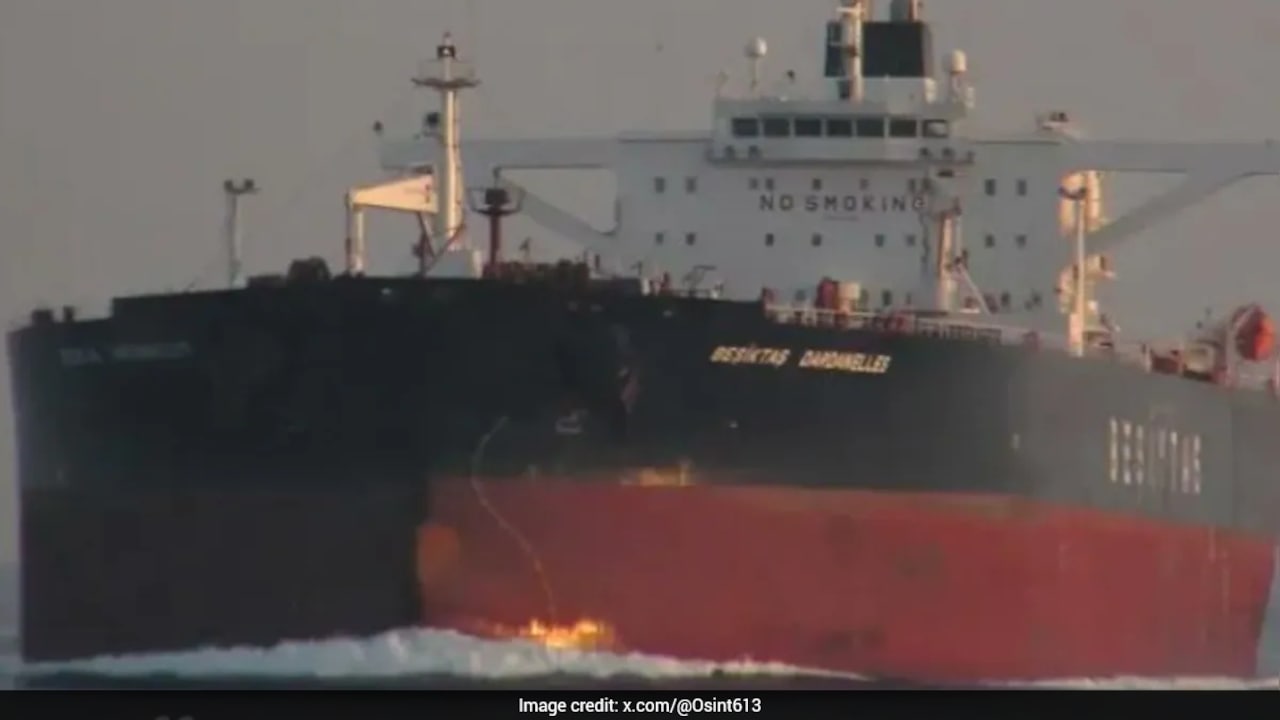
When regional forces target another commercial vessel in the strait, the reverberations travel far beyond the immediate blast radius. The initial radio call goes out: a frantic distress signal cutting through the static on Channel 16. Then comes the smoke, drifting across the water, carrying the distinct smell of burning synthetic insulation and diesel.
On Thomas's ship, the routine dissolves instantly. The crew isn't composed of combatants; they are merchant mariners from Kerala, Manila, and Odesa, working four-month rotations to send money home for school fees and mortgages. When a nearby ship is struck, they don't rush to battle stations. They put on Nomex fire suits, secure the watertight hatches, and stare out into the black ocean, knowing that their vessel—a floating city of volatile hydrocarbons—is essentially a massive, slow-moving target.
The immediate impact of these skirmishes is felt in the engine room. To evade potential threats or clear a dangerous corridor, a vessel must push its engines to full emergency speed. The whole ship vibrates violently, the massive diesel engines roaring as temperatures in the mechanical space climb past one hundred and twenty degrees Fahrenheit. Engineers toil in deafening noise, knowing that if a main bearing seizes or a fuel line ruptures right now, the ship becomes dead in the water in the middle of a conflict zone.
The Global Nervous System
It is easy to compartmentalize events in the Middle East as distant regional friction. We read a headline, absorb the stark facts—ten nights of strikes, another ship hit—and move on with our morning routine. But the global economy is not a collection of independent islands. It is a single, interconnected nervous system, and the Strait of Hormuz is its primary artery.
When a ship is targeted in these waters, the financial shockwaves travel at the speed of light.
Before the damaged vessel even reaches a safe anchorage, insurance underwriters in London and Zurich are revising their risk models. War-risk premiums for ships transiting the gulf skyrocket overnight. A single voyage that cost fifty thousand dollars in insurance coverage yesterday might cost half a million dollars tomorrow.
Shipping companies face an impossible choice. Do they risk the lives of their crews and hundreds of millions of dollars in cargo by pushing through the strait? Or do they route their ships all the way around the Cape of Good Hope at the southern tip of Africa?
Choosing the long way adds two weeks of sailing time and thousands of tons of fuel consumption. That delay cascades through supply chains across the globe. Refineries in Rotterdam and Singapore run low on feedstock. Energy utilities scramble to secure spot-market liquid natural gas. Within days, a strike on a single vessel in a narrow sea channel translates into higher electricity bills in Chicago, inflated diesel prices in Munich, and rising fertilizer costs for farmers in Brazil.
The economic disruption is real, tangible, and immediate. Yet, the human cost remains hidden behind trade charts and commodity indices.
The Invisible Stakes
When conflict becomes routine, society develops a dangerous numbness. Ten nights of strikes blend into eleven; another targeted vessel becomes just another entry in a maritime security briefing.
Inside the wheelhouses of the vessels still making the transit, however, routine is a ghost. Mariners sleep in their clothes, life vests resting at the foot of their berths. AIS tracking systems—the electronic beacons that tell the world who and where a ship is—are routinely turned off to avoid targeting, leaving navigators relying on radar and visual sightings in some of the most congested waters on Earth.
Navigating a nine-hundred-foot vessel in complete darkness without broadcast identification is like driving a semi-truck down a packed highway at night with the headlights turned off. The margin for error is zero. A simple misunderstanding over VHF radio, a delayed turn, or a misidentified radar contact can lead to a catastrophic collision, even without a missile involved.
This is the invisible toll of modern maritime friction. It forces ordinary civilians performing essential global work into a state of perpetual, high-stakes crisis management.
The conflict in the strait is fundamentally a contest of wills, political leverage, and regional power dynamics. But strips of water do not belong to governments; they belong to the sailors who navigate them and the global society that depends on the quiet, uninterrupted flow of commerce.
As night falls once again over the Gulf, another tanker weighs anchor near Fujairah, preparing to enter the narrow corridor. Its spotlight cuts through the heavy haze, reflecting off the dark water. High above on the bridge, a young second mate adjusts the radar gain, takes a deep breath, and peers out into the blackness, watching for the first sign of trouble on the horizon.