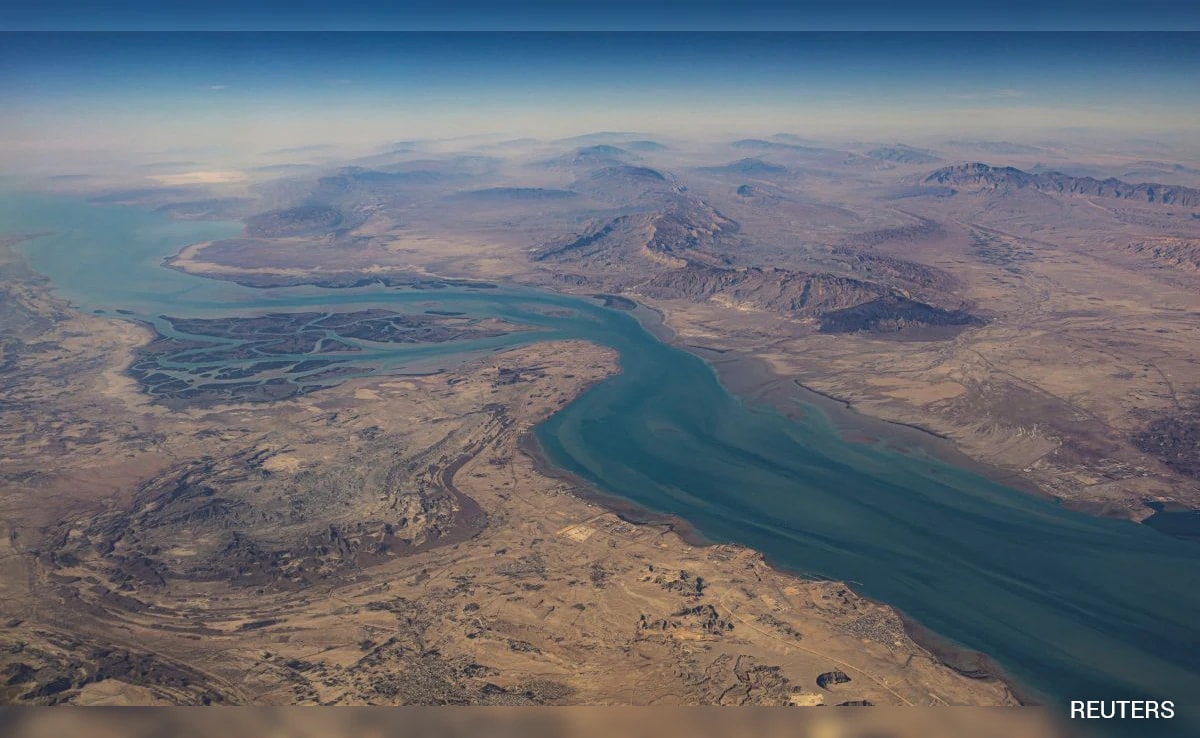
The water in the Strait of Hormuz is a deceptively bright shade of turquoise. From the deck of a VLCC—a Very Large Crude Carrier—the view looks like a postcard. But look closer. You’ll see the silhouettes of fast-attack craft darting between the tankers like hornets. You’ll feel the hum of the engines carrying two million barrels of oil, a cargo so valuable and so volatile that it dictates the price of bread in Cairo and the cost of a gallon of gas in Ohio.
This narrow strip of water, barely twenty-one miles wide at its tightest squeeze, is the carotid artery of the global economy. If it gets severed, the world bleeds. Meanwhile, you can read similar developments here: The Tactical Mirage Why Precision Strikes are Strategic Failures.
Recently, Tehran claimed it offered a metaphorical bandage. According to Iranian officials, a new proposal was sent to Washington—a deal designed to "open" the Strait, ease the suffocating grip of sanctions, and bring a semblance of predictability back to the Persian Gulf. They say Donald Trump looked at the paperwork and walked away.
The story isn't just about a rejected memo. It is about the fundamental friction between two men who believe they are the only ones in the room with any leverage. To see the bigger picture, we recommend the excellent article by The New York Times.
The Mathematics of a Bottleneck
To understand why this matters, you have to stop thinking about "international relations" and start thinking about a kitchen table.
Imagine a family that relies on a single grocery store. There is only one road to get there. Now imagine that road is owned by a neighbor who is currently screaming at you from across the fence. You need the milk; they need the toll money. But neither of you can agree on who insulted whom first.
One-fifth of the world’s total oil consumption passes through this specific coordinate. It is a logistical miracle and a geopolitical nightmare. When Iran speaks about "opening" the Strait, they aren't talking about physical barriers. The water is already there. They are talking about the removal of the invisible walls: the sanctions that prevent them from selling their own oil and the naval presence that keeps every captain in the region on a knife-edge.
The proposal supposedly offered a "new framework." On paper, it likely promised maritime security and perhaps a slowdown in enrichment activities in exchange for the one thing Tehran craves more than anything else: the ability to participate in the global economy again.
But the White House didn't bite.
The Art of the No
Why would a leader known for his desire to make "the big deal" reject a proposal that claims to solve one of the world’s most enduring flashpoints?
The answer lies in the nature of the "maximum pressure" campaign. To the Trump administration, a proposal from a cornered opponent isn't an olive branch. It’s a white flag that hasn't quite been hoisted high enough yet. From their perspective, accepting a deal now would be like stopping a marathon at mile twenty-four. They believe the sanctions are working, that the Iranian economy is hollowing out, and that a "better" deal—one that covers not just shipping lanes but ballistic missiles and regional proxies—is just around the corner.
It is a high-stakes game of chicken played with ships that take three miles just to come to a full stop.
Consider the perspective of a merchant mariner on one of those tankers. You aren't a soldier. You’re a father from the Philippines or an engineer from Norway. You’re checking the radar, watching those Iranian Revolutionary Guard boats circle. You know that if a deal is rejected, the "shadow war" continues. Limpet mines. Seized vessels. GPS jamming that makes the bridge displays flicker and lie.
For the sailor, the rejection of a proposal isn't a headline. It’s a sleepless night.
The Invisible Stakes
We often talk about these events in terms of "geopolitical shifts," a phrase so dry it practically turns to dust in your mouth. Let’s talk about the actual stakes instead.
When a proposal like this fails, the ripple effect doesn't stay in the Middle East. It travels through the insurance markets in London. When the risk of transit in the Strait rises, the "war risk" premiums for tankers skyrocket. Those costs are passed down. You don’t see the Strait of Hormuz on your credit card statement, but you pay for it every time you buy a plastic toy, a polyester shirt, or a plane ticket.
The Iranian claim—that they offered a way out and were rebuffed—is a tactical move in the court of public opinion. By casting themselves as the spurned peacemaker, they hope to drive a wedge between the United States and its European allies, who are desperate to see the region stabilized.
"We tried," the narrative suggests. "If the tankers start burning again, don't look at us. Look at the man who said no."
It’s a clever bit of storytelling. But it ignores the reality that "proposals" in this part of the world are rarely what they seem. Often, they are packed with "poison pills"—clauses that the other side could never possibly accept. It’s a way of negotiating without actually having to reach a conclusion.
The Human Element in the Hull
Deep in the engine room of a Suezmax tanker, the heat is a physical weight. The noise is a constant, rhythmic thrum. The men working there don't care about the nuances of the JCPOA or the specific phrasing of a diplomatic cable. They care about the fact that they are sailing through a zone where, at any moment, they could become pawns in a giant’s chess game.
In 2019, when tensions spiked, we saw the "tanker war" return in a modern, digital form. Ships were boarded by commandos sliding down ropes from helicopters. Others were damaged by mysterious explosions below the waterline.
Every time a deal is floated and then sinks, that tension ratchets up another notch. The "No" from Washington signals a belief that the status quo, however dangerous, is preferable to a weak agreement. It is a bet that the current system can hold out longer than the Iranian government can.
But systems are made of people.
The diplomats in Vienna or the officials in the West Wing sit in climate-controlled rooms with mahogany furniture. They deal in abstractions. They deal in "leverage" and "credibility." They don't deal in the smell of salt spray and the sight of a heavy machine gun pointed at your bridge from a fast-moving skiff.
The Echo Chamber of Diplomacy
The danger of rejecting a proposal isn't just that the war continues; it’s that the channels of communication begin to atrophy. When one side feels that every offer is met with a closed door, they eventually stop knocking. That’s when the "kinetic" options start looking more attractive.
If you can't trade your oil, you make sure no one else can either. That has been the unspoken threat from Tehran for decades. "If we don't go through, nobody goes through."
It’s a scorched-earth policy for the sea.
The Trump administration’s rejection suggests they don't believe the threat is imminent, or they believe their own naval deterrent is enough to keep the lanes open. It’s a gamble on silence. They are betting that the "Great Satan" can outwait the "Islamic Republic."
Meanwhile, the turquoise water of the Strait continues to flow, indifferent to the men who claim to own it. The tankers keep moving, their hulls filled with the ancient, pressurized remains of a billion organisms, powering a world that is too busy to notice how close it is to a standstill.
The "proposal" is now a ghost, another entry in the long ledger of missed opportunities and strategic denials. Whether it was a genuine path to peace or a cynical trap is almost irrelevant now. What matters is the void it left behind. In that void, the hornets continue to circle the giants, and the world waits to see who will blink first.
The sun sets over the Musandam Peninsula, casting long, jagged shadows across the water. On the horizon, the lights of a dozen tankers begin to flicker on, a constellation of commerce floating on a sea of unresolved grudges. Everything seems calm. But in the silence of a rejected deal, the pressure only continues to build.