Walk into almost any independent bookstore in Beijing or Shanghai today, and you'll smell roasted espresso beans long before you catch a whiff of fresh paper.
That isn't a cute aesthetic choice. It's a desperate survival strategy.
A public dispute over seating and coffee orders at a well-known Beijing bookshop-cafe sparked a fierce debate across Chinese social media. Customers complained about minimum spend rules and strict time limits for sitting at tables, while shop owners fired back about razor-thin margins and people treating retail spaces like free coworking offices. On the surface, it looked like a petty spat over a $5 latte. Underneath, it exposed a brutal truth about retail economics: China’s physical bookshops can no longer survive on selling books.
The Math Behind China’s Bookstore Crisis
Let's look at the actual numbers, because the romantic idea of running a cozy neighborhood bookshop collides hard with Chinese real estate and e-commerce realities.
In China, online platforms like JD.com, Dangdang, and Douyin routinely sell new releases at 40% to 60% off the cover price. Sometimes they go even lower during massive shopping festivals like Singles' Day. When a customer walks into a brick-and-mortar store in Beijing's Chaoyang or Dongcheng district, they rarely buy the book right there. They browse the shelves, snap a photo of the ISBN barcode, and order it on their phone for half the price before they even reach the exit.
Physical stores simply cannot match those discounts. Wholesale costs for independent shops usually hover around 55% to 65% of the list price. If a shop discounts a book to compete with Douyin livestreams, it loses money on every single sale.
Add commercial rent to that equation and things get ugly fast. Prime street-level retail space in tier-one Chinese cities commands steep monthly leases, even with recent property market slowdowns. Selling a few dozen paperbacks a day won't pay the landlord, let alone cover staff wages and electricity.
So what actually keeps the lights on? High-margin beverages, pastries, and cultural merchandise.
A cup of pour-over coffee costs a fraction of its retail price in raw ingredients, yielding gross margins often north of 70%. Compare that to a 25% or 30% gross margin on a book—assuming the book sells at full price, which almost never happens anymore. When you understand that math, the Beijing cafe dispute makes complete sense. If a customer buys nothing, or nurses a single glass of tap water for six hours while hogging a prime seat, they aren't just taking up space. They're actively blocking the only revenue stream keeping the bookstore alive.
Why the Beijing Cafe Dispute Hit a Nerve
The argument that blew up online centered on a familiar friction point in urban China: blurred boundaries between public libraries, commercial cafes, and retail stores.
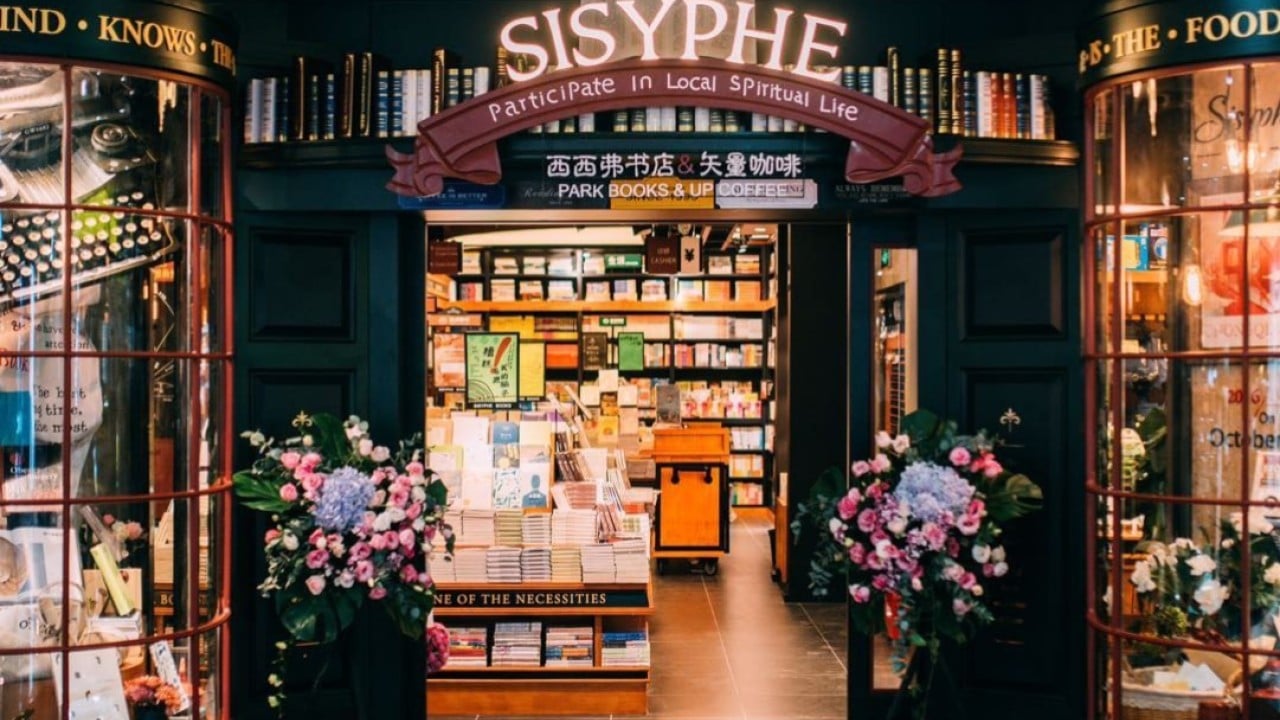
Over the past decade, a wave of "Instagrammable" bookstores swept across China. Chains like Zhongshuge, Sisyphe, and Page One—alongside hundreds of fiercely independent spaces like Beijing's Kubrick or Librairie Avant-Garde in Nanjing—redesigned the bookstore experience. They brought in soaring floor-to-ceiling bookshelves, dramatic lighting, plush armchairs, and full-service espresso bars.
Local governments even subsidized many of these openings to boost urban cultural metrics and foot traffic in struggling shopping malls.
It worked too well. Young professionals, freelance designers, and university students flooded these venues. They didn't come to browse literature. They came for free air conditioning, fast Wi-Fi, power outlets, and a quiet backdrop for laptop work or studying for civil service exams.
During peak weekends, paying customers couldn't find a single empty chair. People spread textbooks across four-person tables, left backpacks on adjacent seats to reserve them for friends, and never bought a single book or drink. When Beijing shop staff finally started enforcing "one drink per person" policies or taping off power outlets, online backlash erupted immediately.
Critics accused the stores of betraying their cultural mission and becoming greedy, elitist cafes that only cared about money. Bookshop owners countered with raw financial reality. They pointed out that culture doesn't pay rent, and demanding free workspace from a struggling small business isn't supporting literature—it's killing it.
How E-Commerce and Livestreaming Broke Traditional Publishing
To understand why these shops are cornered, you have to look at how aggressively China's book market has shifted online. According to annual retail reports from Beijing OpenBook, a leading Chinese book market research firm, online channels now account for roughly 80% of all book sales in China.
That dominance isn't just about convenience anymore. It's driven by short-video platforms.
Douyin (China's version of TikTok) has completely rewritten how books are marketed and sold. Publishers partner directly with massive livestreaming hosts who move tens of thousands of copies in a ten-minute broadcast window. To get featured on those streams, publishers offer rock-bottom wholesale rates that brick-and-mortar buyers could never dream of negotiating.
This creates a toxic feedback loop for physical retailers:
- Publishers depend on livestreamers for volume, so they let online prices collapse.
- Readers get conditioned to believe a book should never cost more than 20 or 30 RMB.
- Physical bookstores look outrageously expensive by comparison, driving even loyal readers away from the cash register.
- Stores pivot harder into coffee, stationery, tote bags, and paid author talks to survive.
Honestly, it's a miracle any independent shop survives without a secondary business model. Even famous cultural landmarks have struggled. Beijing's iconic Sanlian Taofen Bookstore, celebrated for pioneering 24-hour operations in 2014, had to scale back overnight hours and rethink its floor space as late-night foot traffic failed to offset operational costs. Across the country, dozens of beloved neighborhood shops have quietly shuttered over the last few years, often posting heartfelt farewell letters on WeChat that go viral for forty-eight hours before everyone goes right back to ordering discounted books online.
The "Bookstore Plus" Survival Playbook
If selling books doesn't work, what does? The survivors in China's retail book sector have mostly abandoned the traditional store model in favor of hybrid spaces—often called "Bookstore Plus" in industry circles.
Here is how the ones still standing actually make their money:
1. Tiered Seating and Clear Consumption Zones
Smart operators stopped pretending the entire store is a free lounge. Instead, they physically separate the retail shelves from the cafe zone. You can browse the stacks for free, flip through sample copies, and stand around as long as you want. The moment you cross into the seating area, clear signage states the rules: minimum beverage order required, two-hour time limits during weekends, and restricted laptop hours. It removes the awkwardness and sets boundaries upfront.
2. High-Margin Cultural Goods (Wenchuang)
Walk through a Sisyphe or a regional museum bookshop, and you'll notice books take up less floor space every year. Prime front-of-store tables are now stacked with wenchuang—creative cultural products. Think canvas tote bags stamped with literary quotes, brass bookmarks, scented candles, blind-box figurines, and custom notebooks. A canvas bag costs pennies to manufacture in Yiwu or Guangzhou and sells for 68 RMB ($9.50). One tote bag often generates more net profit than selling five hardcover novels.
3. Paid Events and Community Memberships
Instead of hoping random foot traffic buys something, independent shops like Single Street (Danxiangjie) have leaned hard into paid community building. They charge admission for weekend film screenings, intimate author salons, philosophy reading groups, and creative writing workshops. They also sell annual paid memberships that bundle discounted coffee, early event access, and curated monthly book boxes.
4. Mall Subsidies and Anchor Tenant Deals
Real estate developers in China still want bookstores in their malls because they elevate the property's image and attract educated, middle-class shoppers. Savvy bookstore chains negotiate heavily reduced rent—sometimes even rent-free periods or build-out subsidies—by positioning themselves as cultural anchor tenants that drive foot traffic to surrounding restaurants and fashion retailers.
What Most Commentators Miss About This Debate
The loudest voices in the Beijing cafe controversy treated the issue like a moral failure on one side or the other. Either the customers were entitled freeloaders, or the bookstore owners were money-grubbing hypocrites.
Both takes miss the point entirely.
What we're watching in Beijing, Shanghai, and Chengdu isn't a local etiquette problem. It's the structural collapse of single-category brick-and-mortar retail in a hyper-digitized economy. China simply reached this inflection point faster and harder than Western markets because mobile payments, same-day delivery, and livestream commerce penetrated daily life at breakneck speed.
In the US or the UK, independent bookstores fought back through strict publisher price protections (like fixed book prices in parts of Europe), strong local loyalty movements, and curated used-book inventories. Chinese indie bookstores don't have fixed-price legislation protecting them from predatory online discounting. They are fighting a price war with zero armor.
When a Beijing bookstore asks you to buy a 35 RMB americano before opening your MacBook at their wooden table, they aren't being hostile to readers. They're asking you to subsidize the physical space that allows the books to exist on those shelves in the first place.
If you actually care about keeping physical bookstores alive—whether in Beijing, London, or New York—stop treating them like free museums or public libraries. Buy a drink if you sit down. Purchase at least one book at full cover price instead of scanning the barcode to save five dollars online. Pay for the occasional author ticket or overpriced tote bag. Physical cultural spaces don't survive on good intentions and aesthetic Instagram photos; they survive on basic unit economics.