The sudden, massive spike in Chinese solar exports isn't a sign of global green energy health. It is a desperate venting of industrial overpressure. When the latest trade data showed Chinese photovoltaic (PV) exports nearly doubling in a single month, headlines screamed of a renewable revolution. The reality is far more clinical and much more dangerous for international competitors. China has built a manufacturing machine so large that it can no longer be contained by its own borders or by rational market demand. This is a liquidation sale disguised as a growth strategy.
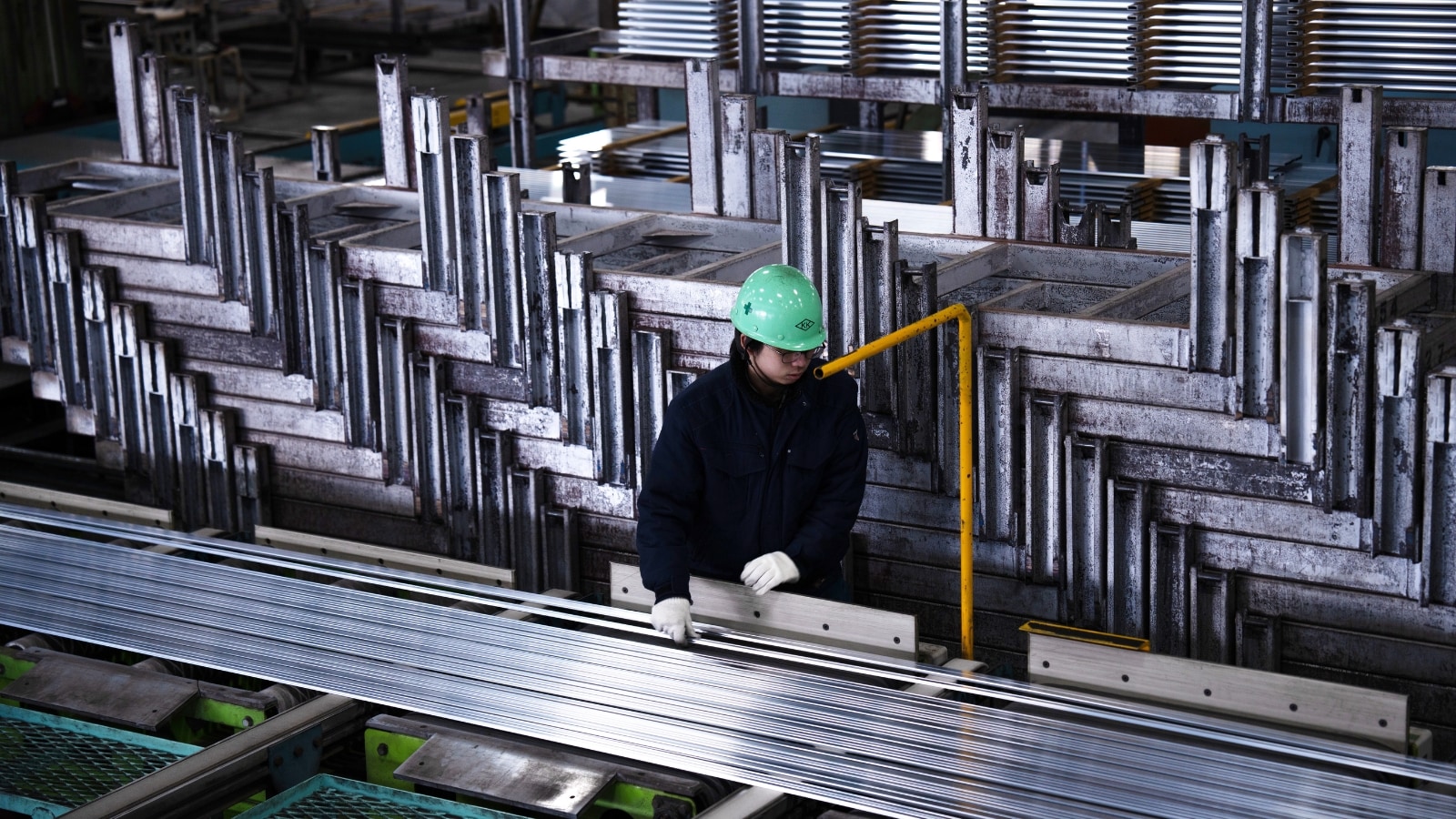
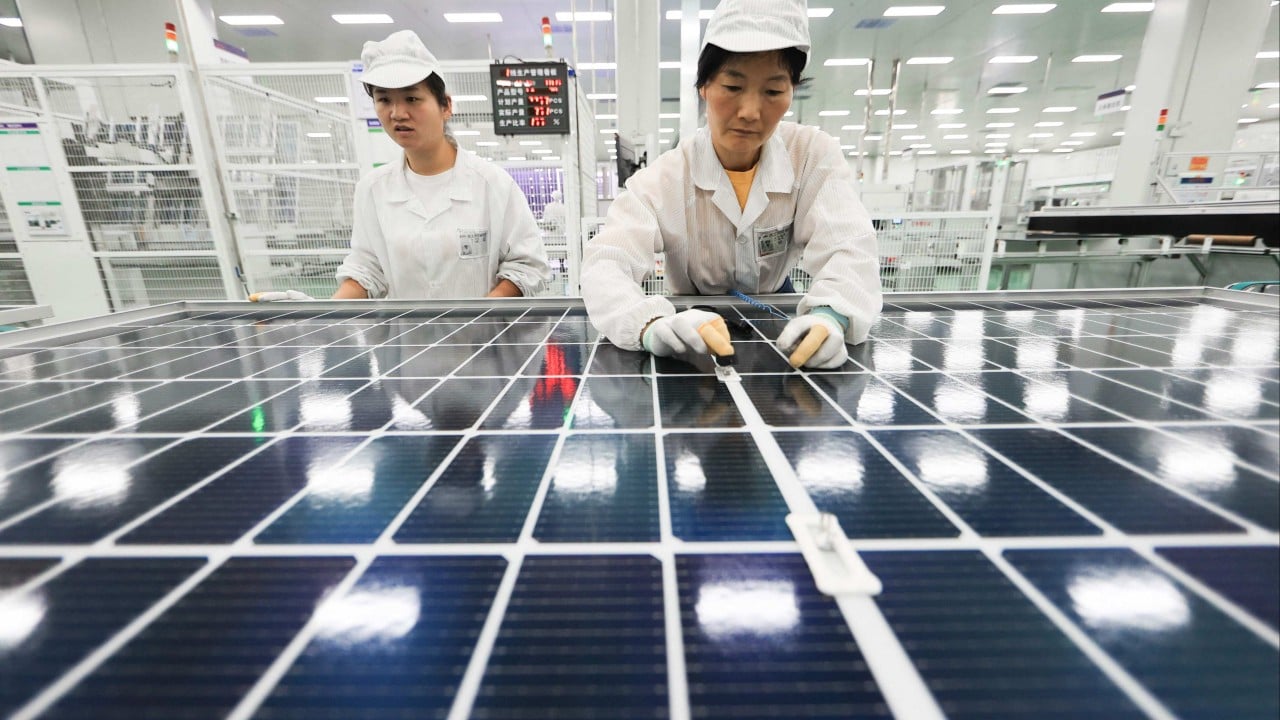
To understand why a 100% month-on-month increase in exports matters, you have to look at the floor of the Chinese factory. For years, Beijing poured subsidies into silicon ingot production and wafer fabrication. They didn't just build factories; they built entire cities dedicated to the supply chain. Now, domestic demand in China is cooling as their property market stumbles and their power grid struggles to integrate more intermittent energy. The result? A massive glut of hardware that has nowhere to go but onto ships headed for Europe, Brazil, and Southeast Asia at prices that defy the laws of physics.
The Math of Economic Survival
http://googleusercontent.com/image_content/154
Chinese manufacturers are currently operating at a loss. This isn't a theory; it is visible in the quarterly reports of the biggest players in the industry. The cost of producing a high-efficiency monocrystalline module has fallen, but the market price has fallen faster. In some regions, Chinese panels are selling for less than the cost of the raw materials required to assemble them in a Western facility.
Why would a company sell at a loss? Because in the Chinese industrial model, stopping is more expensive than losing money. These firms carry massive debt loads backed by state-aligned banks. If they stop producing, they lose their cash flow, their ability to service that debt, and their standing with local government officials who prize employment metrics above all else. They are trapped in a cycle where they must produce more to lower the unit cost, which then lowers the market price, requiring even more production to stay alive.
Weaponizing the Supply Chain
This export surge serves a secondary, more cynical purpose. By flooding the market with ultra-cheap modules, China is effectively suffocating the nascent solar manufacturing industries in the United States, India, and Europe before they can reach scale. It is a classic "scorched earth" tactic.
- Silicon Dominance: China controls over 80% of the world’s polysilicon production.
- Logistics Efficiency: The "integrated campus" model allows a raw ingot to become a finished module without ever leaving a single industrial zone.
- Capital Access: State-backed credit allows firms to endure years of negative margins that would bankrupt a private Western company in six months.
The Western response has been a frantic patchwork of tariffs and local content requirements. The U.S. has the Inflation Reduction Act, and Europe is scrambling with its own Green Deal Industrial Plan. But these are slow-moving legislative tools. A tariff takes months to implement; a container ship takes weeks to arrive. By the time a 25% duty is slapped on a panel, the Chinese manufacturer has already dropped the price by 30% to compensate.
The Quality Crisis No One Mentions
In the rush to dump inventory, quality control is becoming the industry's dirty secret. When you double production volume in a month to clear out warehouses, the rigor of the testing process inevitably slips. Investigative audits of recent shipments have revealed a creeping increase in "micro-cracks" and "potential induced degradation" (PID) in modules.
Investors are buying these panels because they are cheap today, but solar is a thirty-year asset. If these modules begin to fail in year seven because of cut corners during this massive export surge, the "green revolution" will face a massive capital crisis. We are currently installing billions of dollars of hardware that may not live out its promised lifespan, all because the manufacturer needed to hit an export quota to satisfy a provincial governor.
The Grid Is the Real Bottleneck
While the world focuses on the sheer number of panels leaving Chinese ports, they are ignoring where those panels are going—and whether they can actually be plugged in. In Europe and parts of Latin America, the backlog for grid connections is measured in years, not months.
You can buy a million cheap panels, but if the local utility doesn't have the transformer capacity to take the power, those panels sit in a warehouse. This creates a secondary glut. The "doubling" of exports doesn't mean a doubling of installations. It means a doubling of inventory sitting in Rotterdam or Long Beach. We are seeing a massive "bullwhip effect" where the supply chain is completely decoupled from the reality of the electrical grid.
The Illusion of Energy Independence
Nations importing these panels often frame it as a step toward energy security. There is a deep irony in trying to escape a dependence on Russian gas or Middle Eastern oil by becoming 100% dependent on Chinese silicon and silver paste.
If China decided to throttle exports tomorrow, the global energy transition would grind to a halt. We aren't just buying products; we are importing an entire infrastructure's worth of vulnerability. The current export surge is the hook. Once the global competition is dead and buried because they couldn't compete with subsidized loss-leading prices, the "market price" for solar will magically begin to rise again.
Forced Labor and the Traceability Trap
We cannot discuss this export surge without addressing the Xinjiang region. Despite international bans and "clean" supply chain certifications, the complexity of the solar sub-component market makes it nearly impossible to guarantee that no forced labor touched a specific wafer.
Chinese firms have become experts at "laundering" silicon through third-party countries. An ingot made with questionable labor in western China is shipped to Vietnam, sliced into wafers, and then exported to the U.S. as "Vietnamese" solar tech. The massive volume of the recent export surge makes the job of customs officials impossible. You cannot inspect 20,000 containers with the same scrutiny you apply to 2,000. The surge is, in part, a shell game designed to overwhelm the regulators trying to enforce ethical labor standards.
The Inevitable Trade War
The current trajectory is unsustainable. We are heading toward a global trade confrontation that will make the steel and aluminum disputes of the last decade look like a minor disagreement.
Nations are beginning to realize that "cheap green energy" comes at the cost of their own industrial base. If a country loses its ability to manufacture the fundamental components of its power grid, it loses its sovereignty. Expect to see more aggressive "anti-dumping" investigations and perhaps even total bans on certain classes of technology.
The surge in Chinese solar exports isn't a victory for the planet. It is the sound of an economic engine redlining, throwing off parts as it threatens to blow apart. For the buyer, the deal looks too good to be true. Usually, that’s because it is.
Governments must stop viewing solar panels as simple consumer goods and start treating them as critical strategic infrastructure. If they don't, the current flood of cheap modules will leave behind a wasteland of bankrupt domestic industries and a global energy system built on a foundation of sand. Build the factories at home, pay the premium for domestic stability, or prepare to be at the mercy of a monopoly that doesn't care about your climate goals.