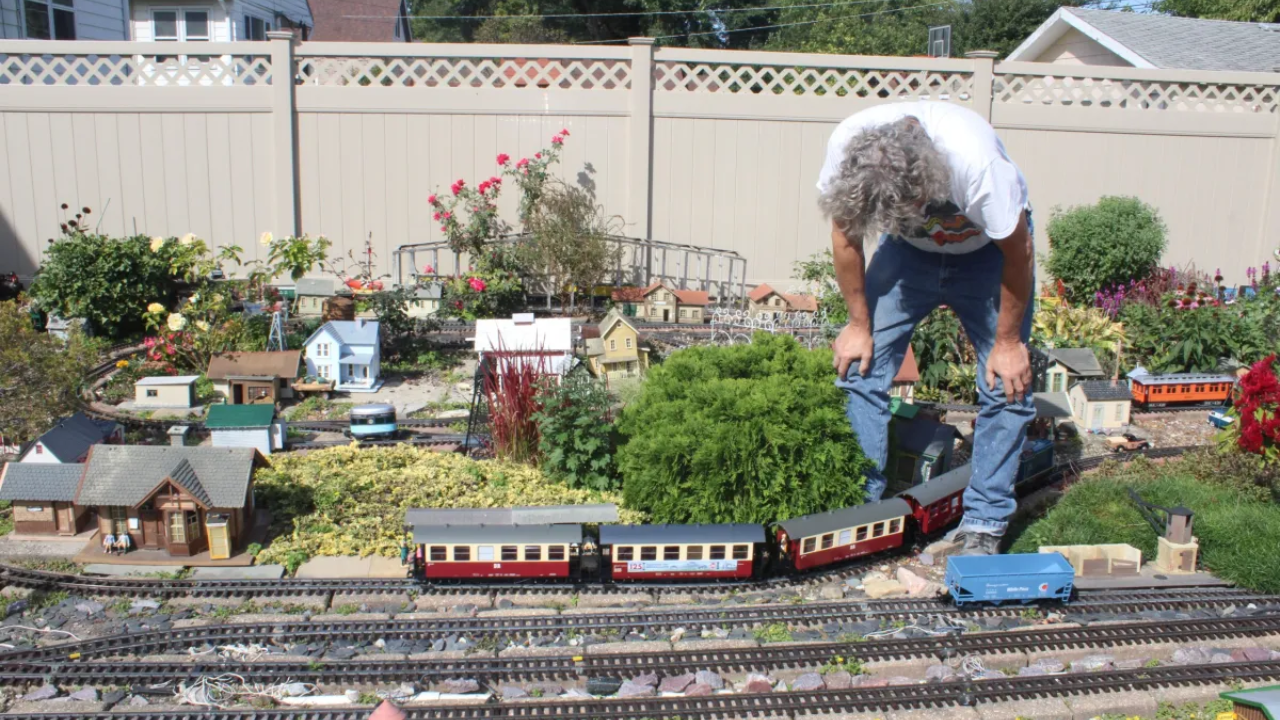
Most people stare at their overgrown suburban lawn and think about weekend mowing chores. One Chicago family looked at their backyard dirt and decided to build an entire operating miniature civilization. It sounds like a quirky neighborhood legend. Honestly, it is much more than that. It stands as a masterclass in scale modeling, landscape design, and pure outdoor creativity that stops passersby right in their tracks.
Scale modeling outdoors is a brutal test of patience. You aren't working inside a climate-controlled basement where dust stays away and humidity never fluctuates. You are fighting Wisconsin winters, torrential midwestern thunderstorms, aggressive squirrels, and UV radiation that fades painted plastic in a single season. When a family manages to turn a standard plot of land into a thriving garden railway village complete with working locomotives, tiny storefronts, and hand-sculpted landscaping, they deserve serious respect.
Let's break down why this specific hobby catches so much attention, how these sprawling miniature setups actually survive the elements, and what you need to know if you ever want to tear up your own grass to lay down scale brass tracks.
The Real Engineering Behind Outdoor Model Railways
Building a train layout inside your house is hard enough. Doing it outside requires civil engineering chops. You are dealing with soil shifting, frost heaves, and drainage problems that can completely wreck a miniature town over a single winter.
Smart builders don't just set track on top of the dirt. They