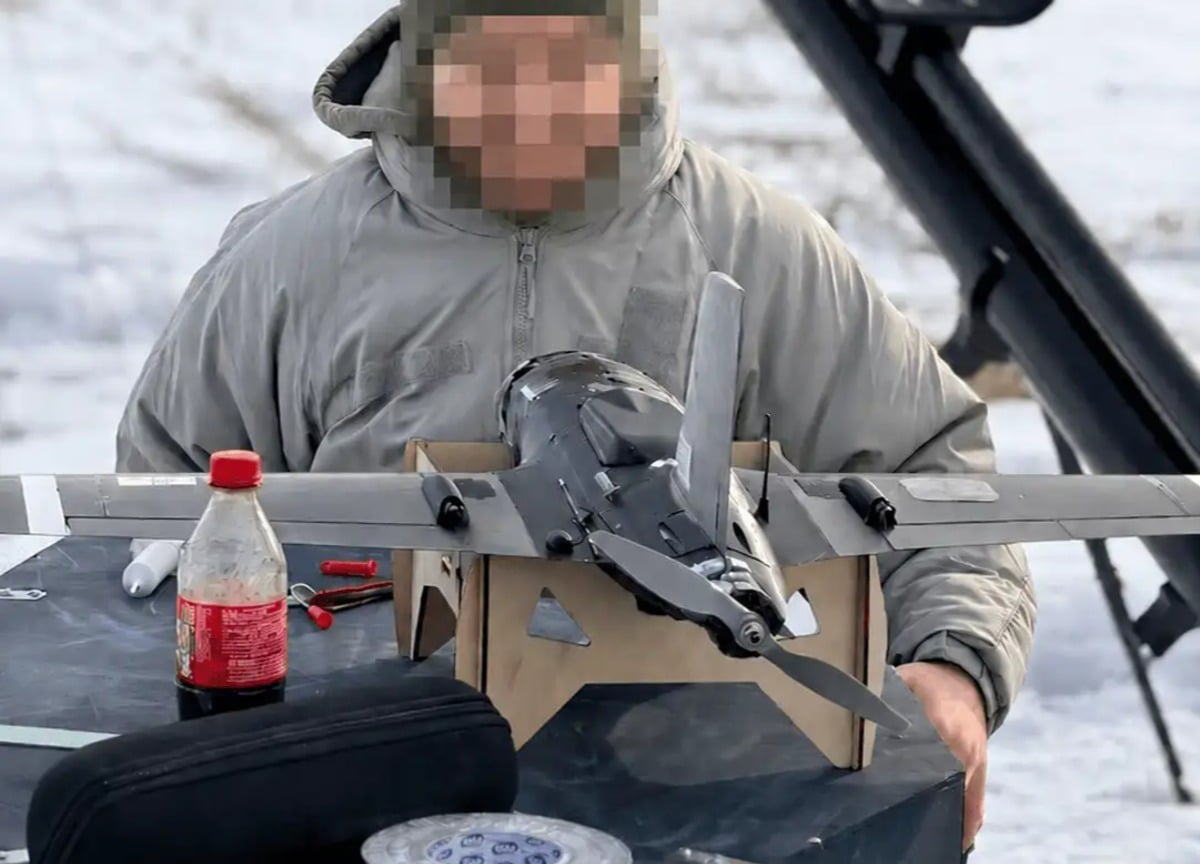
You don't fight cheap flying mopeds with million-dollar weapons. For a long time, that was the brutal math of the air war over Ukraine. Russia regularly launches massive swarms of Iranian-designed Shahed-136 kamikaze drones. Each one costs Moscow somewhere between $20,000 and $70,000 to put together. To stop them, defenders were often forced to fire Western air defense missiles that cost seven figures a pop. It's a losing equation. It drains stockpiles. It burns cash.
That broken economic model just crumbled. Ukrainian engineers figured out that the best way to kill a cheap, slow-moving flying bomb is with an even cheaper, smarter, semi-autonomous flying robot. Meet the new generation of interceptor drones, led by local designs like the Sting and the Skyfall P1-SUN. These aren't concepts on a whiteboard. They're built, deployed, and killing targets right now for roughly $2,000 to $3,500 a unit.
The math flipped instantly. Now, Ukraine holds a 10-to-1 cost advantage in the sky.
The Brutal Attrition Math
If you want to understand why this matters, you have to look at the sheer scale of the nightly bombardments. Look at the numbers from January 2026. Ukraine destroyed a record 1,704 Shahed drones in a single month. If you try to swat that many targets out of the sky using traditional Patriot, NASAMS, or IRIS-T systems, you'll run out of missiles before the month ends. The West simply cannot manufacture interceptors fast enough to keep up with Russia’s factory lines.
That's where the 412th Unmanned Systems Brigade, famously known as Nemesis, stepped in. They accounted for roughly one-sixth of all those January shootdowns. Their secret weapon wasn't a shiny new piece of hardware from a legacy defense contractor. It was a fleet of low-cost, semi-autonomous interceptors. In fact, roughly 70% of all Shahed kills that month came from interceptor drones rather than traditional anti-aircraft guns or missile batteries.
We aren't talking about hobbyist quadcopters strapped with plastic explosives. These are purpose-built drone hunters designed to track, chase, and ram targets at high speeds.
Two Different Ways to Kill a Shahed
The Ukrainian interceptor ecosystem is highly decentralized, meaning different teams are constantly testing different airframes to see what works best under fire. Right now, two distinct design Philosophies dominate the front lines.
The Hybrid Rocket: Skyfall P1-SUN
The Skyfall P1-SUN is a weird, clever piece of engineering. It bridges the gap between a standard quadcopter and a miniature missile. It takes off vertically like a drone, clearing trees or buildings easily. Once it hits operational altitude, the entire frame pitches forward 90 degrees. Its bullet-shaped nose leads the way, allowing it to cut through the air with minimal drag.
The P1-SUN clocks in at speeds around 350 kph. It carries a small explosive charge in the nose, but pilots say they often don't even need it. At that speed, simply ramming the Shahed's rear propeller or wing structure is enough to send the Russian weapon spinning into the ground. The system has already logged over 1,000 confirmed airborne kills, including more than 700 Shaheds.
The Low-Cost Volume Play: The Sting
While high-end autonomous models like the Merops—developed with backing from former Google CEO Eric Schmidt—boast incredible 95% hit rates, they suffer from a massive flaw. They're too expensive to scale when thousands of targets are coming over the border.
The locally produced Sting filled the gap, lowering the price point to the $2,000–$2,500 range. It drops the price to a fraction of a Merops unit while maintaining the necessary speed and autonomy to get the job done. It's the ultimate volume play for a war that relies completely on industrial capacity.
The Software Fight Behind the Screen
Building a fast frame is only half the battle. The real magic happens in the coding. A human pilot can use first-person view (FPV) goggles to get close to a Shahed, but chasing down a target moving at 180 kph at night is an absolute nightmare. Radio jamming makes it even worse. If a pilot loses the video feed a few hundred meters from the target due to electronic warfare, the mission fails.
To counter this, Ukrainian builders integrated automated terminal guidance. The human pilot's job is simply to get the interceptor into the general vicinity of the threat. Once the onboard camera locks its visual tracking system onto the silhouette of the Shahed, the human steps back. The drone enters an autonomous tracking mode, steering itself directly into the target even if Russian jamming completely cuts the radio link with the ground station.
Naturally, Russia isn't sitting still. The tactical back-and-forth changes weekly:
- Low-altitude flight: Russian operators noticed Ukrainian interceptors frequently attacked from below, so they lowered the Shahed's cruising altitude to hug the tree line.
- Evasive programming: Newer Shahed variants now execute random, sharp zig-zag maneuvers every few minutes to break the tracking algorithms of Western and Ukrainian software.
- Decoy swarms: Russia regularly mixes in cheaper, lightweight "Gerbera" decoys made of foam and plywood to trick radar systems and exhaust the interceptor lines.
The Upcoming Speed Wall
The current fleet of $2,500 interceptors is winning the economic battle today, but a massive technical hurdle is fast approaching. Current Ukrainian interceptor quadcopters and hybrids top out at around 350 kph. That's perfectly fine for standard propeller-driven Shahed-136 models, which typically cruise below 200 kph.
However, jet-powered Russian drones have already begun appearing over the battlefield, screaming through the sky at speeds between 400 and 500 kph. You can't catch a jet with a propeller.
To stay ahead of this threat, expect Ukraine to roll out a brand-new class of fixed-wing interceptors within the next few months. These won't be modified quadcopters. They'll be aerodynamically slick, mini-jet or high-speed rocket platforms designed purely for terminal velocity. They will cost more than $2,500, but they'll still be infinitely cheaper than firing a traditional surface-to-air missile.
Oleksiy Honcharuk, the former Ukrainian prime minister who now chairs the expert council for the Nemesis unit, sees an even wilder shift on the horizon. He envisions automated "walls" of interceptor drones stationed permanently along borders. The second a long-range radar picks up an incoming signature, a pod opens, the drone launches itself, tracks the target, and eliminates it without a single human finger touching a joystick.
What This Means for Global Defense Strategy
If you run a modern military, you are watching this development with intense focus. The age of relying exclusively on massive, centralized, multi-million-dollar air defense infrastructure is drawing to a close. Defense forces from the US military to Gulf nations are scrambling to study how Ukraine built this distributed, low-cost shield.
The playbook has changed permanently. If you want to secure airspace moving forward, you need to build your own distributed manufacturing network capable of pumping out thousands of autonomous interceptors every single month. The side that builds the cheapest, smartest, most adaptable software-driven frame wins the sky. Expect to see these exact same Ukrainian-style interceptor tactics adopted globally by every major defense force before the decade ends.
Why The US Wants Ukraine's Shahed-Killer Drones
This video breaks down the specific technical design of Ukraine's homegrown anti-drone systems and analyzes why global militaries are looking to adopt this exact low-cost interception strategy.