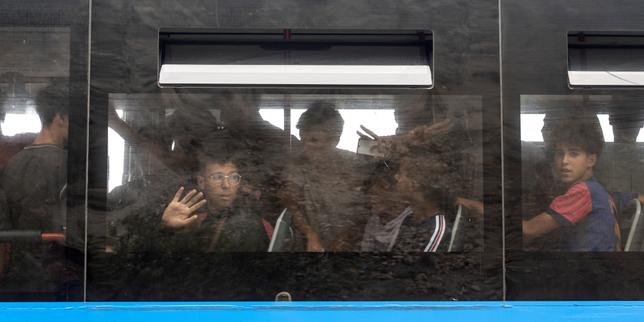
Months after tens of thousands of migrants rushed across the border into the Spanish North African enclave of Ceuta, the political shockwaves are still rattling Madrid. Prime Minister Pedro Sánchez thought he could weather the storm by avoiding a direct confrontation with Rabat. He was wrong. The crisis isn't fading into the background. Instead, it has exposed deep structural fractures in Spain's migration policy, turned local municipalities into pressure cookers, and handed the political right a permanent weapon.
You don't understand modern Spanish politics if you ignore how fragile border governance actually is. When an estimated 70,000 people crossed into an enclave of roughly 80,000 residents in a matter of days, local resources didn't just strain—they collapsed. Thousands of migrants remain stranded in the territory, caught between a Spanish government trying to avoid diplomatic warfare and a local population demanding immediate protection.
The Geopolitical Tightrope of Madrid
Sánchez has walked a diplomatic tightrope that defies gravity. On one side, he faces intense pressure from the conservative opposition and even elements within his own coalition who suspect Morocco of weaponizing migration. On the other side, Madrid relies heavily on Rabat for regional security, intelligence sharing, and cooperation on border control.
Official investigations have repeatedly noted that concrete proof of direct state-level orchestration by Morocco remains thin. Yet, local leaders like Ceuta’s mayor-president, Juan Jesús Vivas, have openly pointed out the obvious: tens of thousands of people simply do not mobilize across international borders without tacit operational awareness from local security forces. By refusing to point fingers at Morocco, Sánchez wants to protect a delicate bilateral alliance. Domestically, however, that diplomatic caution looks like weakness to voters watching social services buckle under the pressure.
Local Reality Versus National Rhetoric
Walk through the streets of Ceuta today and you see the human cost of a political deadlock. While many individuals who made the crossing were swiftly returned, thousands remain in limbo, avoiding official reception centers because they fear immediate deportation. Local infrastructure is overwhelmed. Schools, healthcare facilities, and municipal budgets are absorbing a shock they were never designed to handle.
When Sánchez visited the enclave, angry residents greeted him with jeers and demands for his resignation. They weren't just protesting immigration numbers; they were protesting a sense of abandonment. For years, border enclaves like Ceuta and Melilla have warned Madrid that treating border security as an afterthought would eventually backfire. Now, that warning has materialized into a permanent state of emergency.
The Broader European Fallout
The crisis has also drawn sharp criticism from Brussels. European officials have scrutinized Madrid's domestic regularization strategies, arguing that poorly managed approaches send mixed signals to the rest of the Schengen area. While Spain insists that internal police checks protect mainland Europe from uncontrolled movement, neighboring capitals are growing increasingly impatient with porous external borders.
Far-right political factions across Europe have seized on the footage of the border breach to fuel anti-migration narratives, making it much harder for center-left leaders like Sánchez to advocate for balanced or humane asylum frameworks. Every time a fresh wave hits the southern fence, the political center loses ground.
What Comes Next for the Prime Minister
Sánchez has survived numerous political scandals by pivoting quickly and outlasting his opponents. But the Ceuta crisis hits differently. It combines foreign policy failure, domestic economic strain, and a breakdown of public trust into a single, volatile package.
If the prime minister cannot secure a permanent structural framework and financial backing for North African border enclaves, the discontent will spread well beyond Ceuta's borders. Managing a nation's borders requires more than optimistic diplomacy and damage control. It requires brutal honesty about who holds the leverage across the Mediterranean. Right now, Madrid is running out of time to prove it has the upper hand.
Take a hard look at how European governments handle regional border security before dismissing these flashpoints as localized anomalies. Review local municipal funding models to see how frontline cities absorb sudden demographic shifts. Demand accountability from national leaders who promise structural fixes but deliver temporary band-aids.


