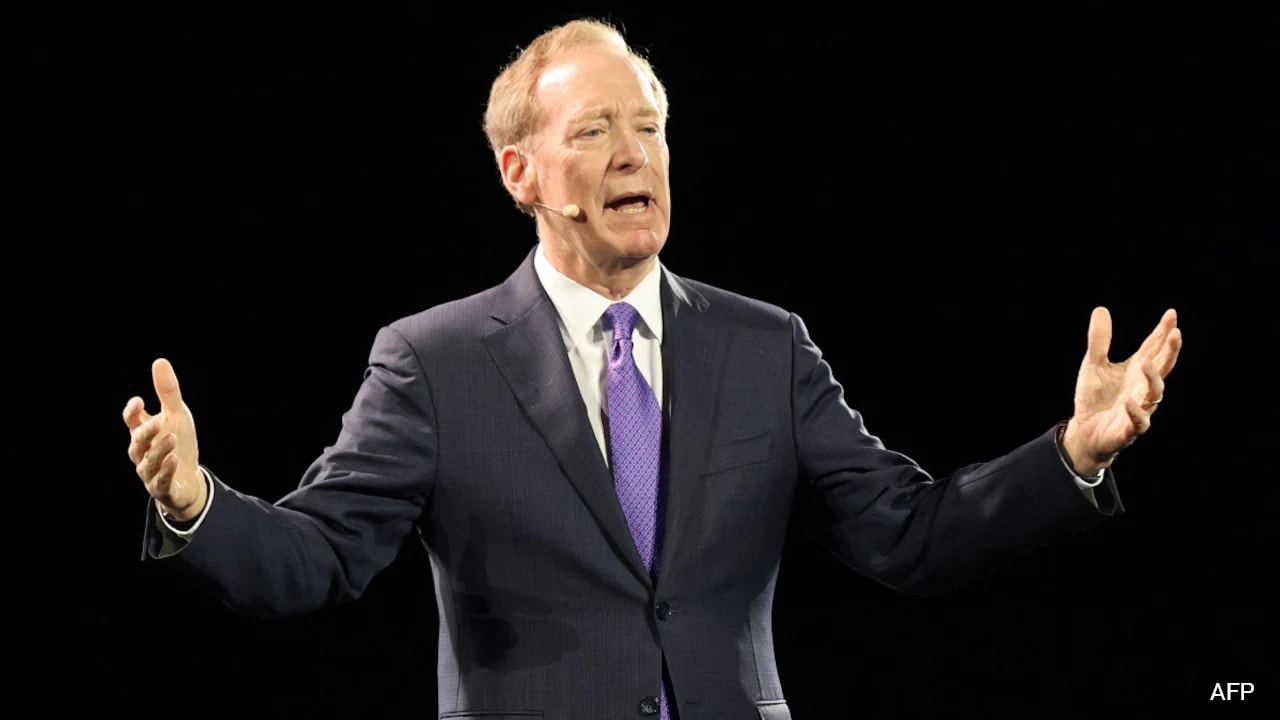
Bill Gates wants a bigger AI safety push. He wants CEOs in the room. And the press treats it like a breakthrough.
It isn't.
When a billionaire philanthropist convenes chief executives around a table to talk about "AI safety," the headline writes itself: big names, noble intentions, urgent warnings. The lazy consensus says that getting top brass aligned is the missing piece between reckless deployment and responsible guardrails. If the people running the biggest companies agree on standards, surely the rest of the market will follow.
That logic is backwards. Worse, it is comforting. It lets executives look statesmanlike while dodging the unglamorous engineering, incentive design, and governance work that actually determines whether a model behaves safely in production.
Safety does not fail because CEOs forgot to chat over coffee. Safety fails because shipping fast pays bonuses today, while edge-case failures show up six months later in someone else's incident report.
The CEO Consensus Mirage
Watch what happens when executives gather for a safety summit. Everyone nods. Everyone uses words like "accountability," "guardrails," and "trust." Nobody signs up to slow down their own product roadmap unless their competitors are forced to do the same.
Why? Because public-facing CEO alignment is cheap theater. A chief executive can endorse high-level safety principles in the morning and still push a product team to cut evaluation time in half by afternoon to hit a quarterly launch window. That is not hypocrisy; that is how incentives work inside public and high-growth tech companies.
I have watched organizations spend seven figures on executive advisory councils, glossy ethics charters, and high-profile pledges while their actual engineering teams lacked basic red-teaming coverage, versioned evaluation datasets, or clear rollback triggers. One company I worked with had a prominent safety manifesto on its website and a single overstretched engineer manually spot-checking prompts before major releases. When a customer found a glaring data-leakage path two weeks after launch, the manifesto didn't stop the fire.
Let's be precise about what "AI safety" even means before we pretend a boardroom can solve it. In industry shorthand, people mash together four completely different problems under one label:
- Alignment and misuse prevention: Stopping models from assisting with severe harm, cyberattacks, bio-risks, or illegal acts.
- Reliability and truthfulness: Reducing hallucinations, brittle reasoning, and silent failures when inputs drift from training distributions.
- Privacy and security: Preventing prompt injection, training-data memorization leaks, and unauthorized tool execution.
- Systemic and labor impact: Managing market concentration, job displacement, and downstream economic disruption.
Conflating all four into a single "safety push" is a trap. A policy agreement among CEOs might produce a shared vocabulary around existential or misuse risks. It does almost nothing to fix brittle retrieval pipelines, weak permission boundaries on autonomous agents, or sloppy evaluation benchmarks that models game before they ever touch real users.
Why Top-Down Pledges Break on Contact With Code
Safety is a systems property, not a mission statement. You cannot mandate reliability into a probabilistic system from the C-suite any more than you can mandate zero bridge deflections by having civil engineers sign a pledge.
Consider how modern AI systems actually fail. Most real-world failures are boring, messy, and architectural. A model gets connected to internal tools or APIs without strict least-privilege scoping. An untrusted document contains hidden instructions that hijack the model's next action. A subtle shift in user phrasing pushes an input into an under-tested region of the latent space, and the model answers with total confidence while being completely wrong.
CEOs rarely see those mechanics. They see demos, revenue curves, and competitive pressure. Even technical founders often sit three layers removed from the daily failure modes discovered by evaluation engineers, security researchers, and customer support logs.
When a big name like Bill Gates steps in to rally leaders, the gravitational pull of authority can actually distort technical priorities. Attention flows toward headline risks and high-level frameworks that sound impressive in speeches, while foundational operational work gets starved of prestige and budget.
Imagine a scenario where three competing AI labs sign a voluntary safety accord pledging rigorous pre-deployment testing. Each lab defines "rigorous" slightly differently, tests on private benchmarks that favor its own architecture, and treats speed-to-market as the tie-breaker whenever a borderline evaluation score appears. Nobody broke the letter of the pledge. Everyone rationalized the shortcut. And the baseline bar barely moved.
Voluntary executive coalitions run straight into collective-action problems. If one company holds back a capability or delays a release over an ambiguous risk, and a rival ships it anyway and captures enterprise contracts, the cautious company pays a direct commercial penalty. Without binding rules, verifiable audits, or real liability for preventable harm, goodwill loses to market share almost every time.
The Questions People Are Actually Asking Wrong
When news breaks about a renewed push on AI safety led by prominent figures, public curiosity usually jumps to predictable questions: Will this finally stop dangerous AI? Which companies will join? Should governments step back and let industry self-regulate?
Every one of those questions starts from a flawed premise.
Premise check 1: "Will this stop dangerous AI?"
It assumes "dangerous AI" is a single switch waiting to be flipped rather than a spectrum of technical weaknesses, adversarial exploits, and real-world misconfigurations. Big names raising awareness can spotlight neglected risks, which matters. They cannot magically make models predictable or make bad integrations safe.
Premise check 2: "Which CEOs show up?"
Attendance is a signal of PR appetite, not operational commitment. The most meaningful safety work often happens in quiet engineering standards, incident disclosures, and independent evaluations—not on a stage.
Premise check 3: "Should industry self-regulate or wait for government?"
Treating self-regulation and public oversight as a binary choice misses how accountability actually gets built. Industry practices shape what is technically feasible and measurable; laws and enforcement set the floor when voluntary restraint fails. Relying solely on executive promises is naive. Waiting years for slow-moving legislation while deploying high-consequence systems unchecked is reckless.
What Actually Moves the Needle
If you care about safer AI—whether you run a product team, buy enterprise software, or invest in the space—stop looking at who is hosting the summit. Look at the mechanics that force discipline when nobody is clapping.
- Tie compensation and release gates to hard evals, not vibes. If a model or agent fails defined safety, security, or accuracy thresholds, shipping should be blocked automatically. If product managers and engineers are judged purely on launch velocity and usage growth, safety will always be treated as a speed bump.
- Isolate permissions before expanding autonomy. Giving a language model broad read/write access to email, databases, code repositories, or financial actions is an invitation to disaster. Enforce strict sandboxing, human-in-the-loop checkpoints for high-impact actions, and explicit tool permissions.
- Demand adversarial testing, not cherry-picked demos. Happy-path testing proves nothing. Real readiness requires red-teaming for prompt injection, jailbreaks, data exfiltration, and multi-step failure chains under realistic load.
- Insist on post-mortems and telemetry. Aviation and high-reliability software learned long ago that near-misses and production incidents are gold mines—if teams actually log them, analyze root causes, and fix systemic flaws instead of blaming "user error" or "hallucination."
- Price in downstream liability. Accountability gets real when the party that designs, deploys, or profits from a system bears clear financial and legal consequences for preventable harm caused by foreseeable flaws.
Where This Contrarian Bet Can Go Wrong
Being skeptical of executive safety initiatives carries its own blind spots, and pretending otherwise would be dishonest.
First, convening high-profile leaders can still unlock resources, research funding, and public attention for areas that are chronically underfunded—especially long-term alignment research, independent safety institutes, and cross-border dialogue on catastrophic risks. Dismissing influence entirely ignores how capital and agendas move.
Second, pushing too hard on rigid checklists or heavy compliance too early can entrench incumbents. Large companies with massive legal and compliance departments can absorb bureaucratic overhead far more easily than small teams building genuinely safer architectures. Over-indexing on process can create paper compliance while missing novel technical risks.
Third, treating every executive effort as cynical theater can make people overly fatalistic. Some leaders genuinely want to avoid catastrophic mistakes and are willing to back serious technical work if shown concrete mechanisms rather than platitudes.
None of that changes the core reality: a room full of CEOs is a starting line for conversation, not a substitute for engineering rigor, adversarial testing, and real accountability.
Ship the guardrails before you ship the power.