The grease on Mateo’s hands never quite washed out. For thirty years, working the dying pumps of Maracaibo, he had watched his country’s lifeblood turn to grit and silence. Pipes rusted. Flare stacks flickered and died. A nation built on subterranean wealth stood shivering in the dark, waiting for a miracle that kept retreating behind barbed wire and political impasse.
Then came the ink.
It was signed quietly, away from the roaring crowds, bearing a weight that spans generations. A hundred years. Think about that span of time. A century ago, Model T Fords were newly choking city streets and aviation was a pilot praying over canvas wings. Now, a US-backed entity known as NABEP has locked down seventy-year extensions and century-long horizons across seventeen vital Venezuelan oil fields.
This is not merely about barrels pumped or spot prices ticked upward on a New York ticker. This is an anchor dropped into the seabed of global energy security.
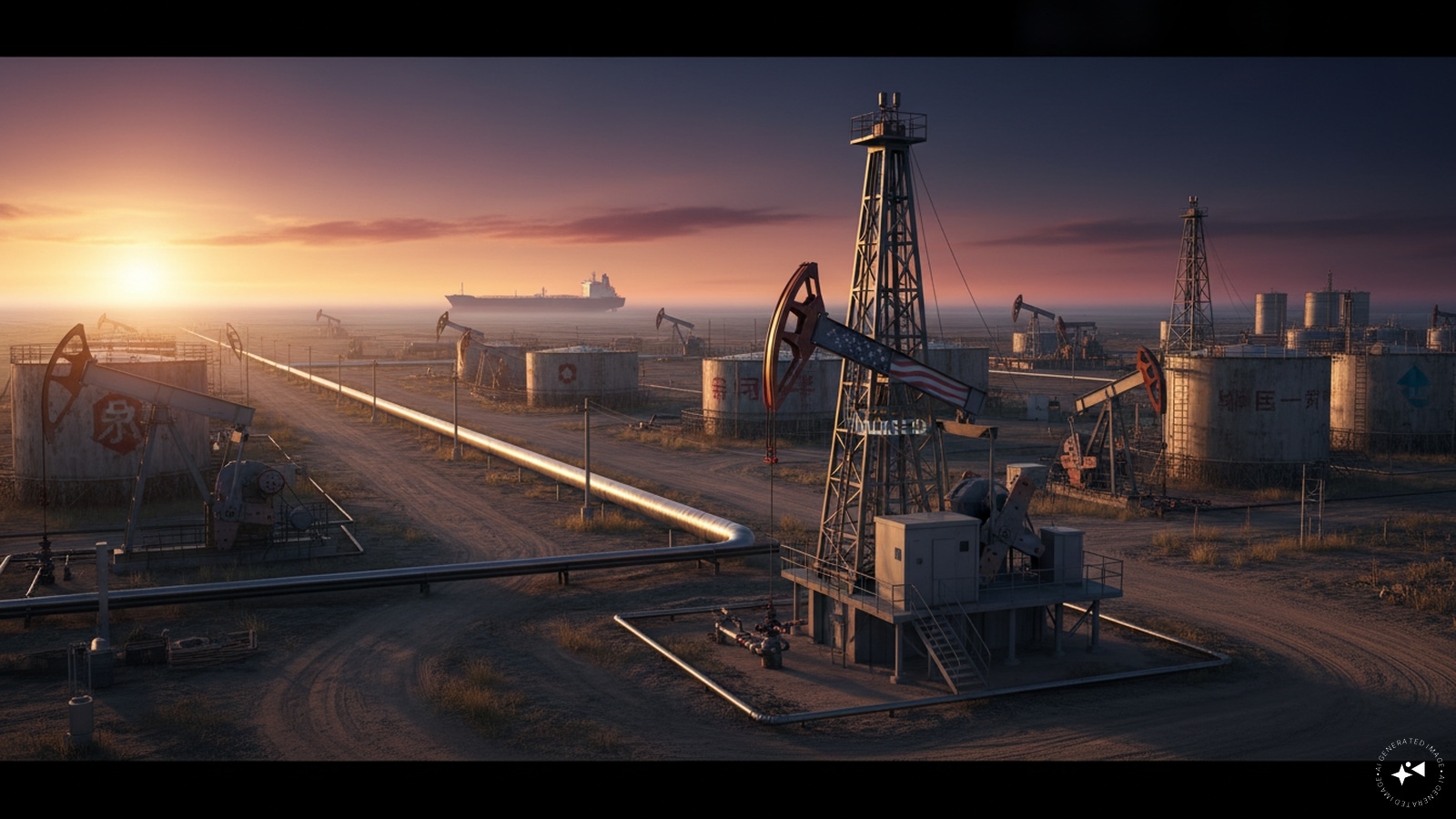
To understand why this matters, you have to smell the sulfur in the Venezuelan dawn. You have to walk through fields where sophisticated hardware sat abandoned, cannibalized for scrap, while millions of citizens fled across borders with little more than a backpack. For over a decade, isolation and mismanagement choked the valves. The ground beneath them held enough crude to power industrial empires, yet the infrastructure choked on its own neglect.
Enter NABEP, backed by the heavy financial and diplomatic architecture of the United States.
Consider what happens when you hand a corporation a hundred-year lease. You are not buying a quick fix. You are rewriting the architectural layout of geopolitics. Short-term extraction is cheap and destructive. A century-long timeline demands something entirely different: patience, billions in capital expenditure, massive engineering overhauls, and a profound gamble on long-term stability.
Mateo looked at the reports when they filtered down to the floor. He didn't care about the corporate acronyms. He cared about the heavy iron machinery rolling down the unpaved access roads for the first time since his hair went gray.
Critics will call it neo-colonialism by another name. They will point to the heavy hand of Washington and whisper about resource extraction wrapped in the flag of diplomacy. They aren't wrong to feel cynical. History gives us plenty of reasons to flinch when foreign powers start pouring money into wounded petro-states. But cynicism keeps the lights off. Cynicism doesn't pay for the overhaul of corroded pipelines leaking methane into the tropical air.
Money talks. And right now, it is speaking the language of heavy crude and strategic endurance.
The seventeen fields in question are not uniform. Some are ancient giants, tired veterans of the twentieth-century boom, while others hold complex reserves requiring advanced secondary and tertiary recovery techniques. Pumping oil in Venezuela today is nothing like drilling a fresh shale basin in Texas. It requires resuscitation. It requires an army of specialists, seismic surveys, and an industrial miracle to restore pressure to subterranean chambers that have spent years sinking into exhaustion.
This is where the human element collides with macroeconomics. Every valve turned back on means jobs in regions where employment meant smuggling or starvation. Every megawatt generated from restored local power grids means children can study after sundown without candles flickering out in the humid air.
Yet, the shadow of uncertainty lingers like coastal fog. Contracts on paper are fragile things when governments shift and the winds of populism change direction. A hundred years is an eternity in politics. Regimes rise and fall in Caracas like seasonal tides. Will a future administration honor the ink of today? Can a US-backed venture survive the turbulent tides of domestic Venezuelan backlash?
These are the questions that keep executives awake in Houston and workers uneasy in Cabimas.
Yet the gamble has been made. The capital is moving. Supertankers are being quietly retrofitted for routes that have lain dormant for years. The global energy market, desperate for diversification amid fractured Middle Eastern supply lines and volatile European demands, is watching this South American resurrection with bated breath.
When the first modernized pumps began turning last week, Mateo didn't pop champagne. He just wiped a smear of dark oil across his forehead, squinted against the fierce equatorial sun, and watched the pressure gauge climb for the first time in his working life. The needle moved. Slowly at first. Then with a steady, stubborn rhythm that sounded suspiciously like a heartbeat.