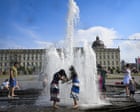
Europe is warming faster than any other continent on earth. That isn't a projection for some distant decade. It is happening right now. As thermometers across Poland, Hungary, Romania, and the Balkans crawl toward 38 degrees Celsius, local infrastructure is hitting a breaking point.
Most people look at these summer heatwaves and blame the discomfort on bad air conditioning. The reality runs much deeper. This persistent extreme heat continues in central and eastern Europe because regional architecture, power grids, and labor laws were built for a climate that no longer exists.
Dealing with 38C in Madrid or Athens is one thing. Those cities spent decades adapting their daily rhythms and building codes to scorching summers. Facing those exact same numbers in Warsaw, Budapest, or Bucharest is an entirely different crisis. The infrastructure here was designed to trap heat, keep winters bearable, and keep society moving through heavy snow. Now, that exact design framework is turning deadly.
The Architectural Trap Inside Eastern European Cities
Go into any major residential zone across the former Eastern Bloc and you see the same thing. Massive concrete apartment complexes dominate the skyline. These buildings were throwing up a solution to the post-war housing shortages, built quickly with dense, heavy materials meant to insulate against bitter Baltic and Carpathian winters.
Concrete acts like a giant thermal battery. During a prolonged heatwave, these structures absorb solar radiation all day long. They don't cool down when the sun goes setting. Instead, they radiate that trapped heat back into the apartments throughout the night. It creates a relentless indoor greenhouse effect where the indoor temperature can easily exceed the outdoor environment by midnight.
Air conditioning isn't a standard utility here. In western Europe, commercial spaces and newer builds have rapidly retrofitted cooling systems. In central and eastern Europe, residential AC penetration remains remarkably low in older districts. People rely on open windows and basic electric fans. When the air outside is 38C, a fan just circulates the ambient heat, accelerating dehydration rather than cooling the skin.
Urban planning makes this worse. Decades of aggressive post-communist development saw green spaces and public parks paved over for shopping centers and parking lots. The loss of mature tree canopies removes natural evaporative cooling from the environment. This amplifies the urban heat island effect, making city centers up to 10 degrees hotter than surrounding rural areas.
Why Regional Power Grids Are Redlining
Extreme heat doesn't just exhaust human bodies. It destroys electrical infrastructure. The current heatwave across central and eastern Europe is putting unprecedented strain on energy grids that rely heavily on aging coal and river-cooled nuclear plants.
Thermal power generation requires massive amounts of water to cool the turbines. When outdoor temperatures hover near 38C for days on end, river temperatures spike. Water levels drop due to evaporation. Power stations in Poland and Romania frequently have to throttle their electricity output because the river water is simply too warm to safely cool the reactors or coal-fired units.
At the exact moment electricity demand peaks from millions of people trying to run cooling units, the power supply capacity shrinks.
Transmission lines fail under these conditions too. High ambient temperatures combined with high electrical loads cause copper cables to expand and sag. Sagging lines risk touching trees or triggering automatic circuit breakers, causing sudden localized blackouts. When a neighborhood loses power during a 38C spike, the vulnerability of elderly residents living on upper floors of concrete high-rises skyrockets within hours.
The Economic Cost of Scorching Workdays
We often evaluate heatwaves through the lens of public health, but the economic friction is massive. Labor laws across central and eastern Europe are wildly outdated when it comes to thermal stress.
Most regional frameworks protect workers from extreme cold. They mandate heating, heavy gear, and indoor breaks during sub-zero winter blasts. The guidelines for extreme heat are incredibly vague. Many countries only require employers to provide free drinking water once temperatures cross 30C.
Think about construction crews working on infrastructure projects in Budapest or shipyard workers in Gdansk. Working in 38C heat on asphalt or metal surfaces pushes the local microclimate past 45C. Human productivity drops off a cliff under these conditions. The body redirects blood flow to the skin to dump heat, leaving less oxygen and energy for muscles and cognitive function.
Ignoring this reality leads to a surge in workplace accidents. Heat exhaustion dulls reflexes and slows decision-making. When a crane operator or a highway worker loses focus for a fraction of a second due to mild heat stroke, the consequences are catastrophic. The economic hit from lost productivity and medical emergencies during these prolonged summer blocks runs into billions of euros across the region.
Public Health Systems Facing a Silent Killer
Heatwaves are fundamentally different from floods or storms. They don't leave behind dramatic footage of destroyed buildings or shattered trees. They kill quietly, behind closed apartment doors.
The primary metric health officials track isn't direct heatstroke. It is excess mortality. Data from the Copernicus Climate Change Service and regional health ministries consistently shows that during these intense thermal spikes, hospital admissions for cardiovascular and respiratory failures surge.
The human heart has to beat significantly harder and faster to maintain core temperature when the air is hot. For someone with an underlying heart condition or compromised kidney function, a 38C afternoon isn't an inconvenience. It is a severe medical crisis.
Emergency medical services across regional capitals are seeing response times slow down simply because call volumes are overwhelming dispatch centers. Ambulances are constantly in motion, moving vulnerable citizens out of stifling apartments into clinical environments that actually possess industrial cooling capabilities.
Immediate Survival Steps for the Current Heatwave
If you are currently living through this regional temperature spike, relying on standard summer habits won't cut it. You have to adapt your daily routine aggressively to protect your health and your living space.
- Manage your windows with military precision. Keep windows completely shut and covered with heavy blinds or reflective sheets during the day. Only open them after midnight when the outside air finally drops below the indoor temperature.
- Shift your water intake strategy. Don't wait until you feel thirsty to drink. Avoid heavy meals, caffeine, and alcohol, which actively flush water out of your system and place extra metabolic stress on your liver and heart.
- Identify air-conditioned refuge points. If your home lacks cooling and begins trapping heat, plan to spend the hottest hours of the day (typically between 1 PM and 6 PM) in public libraries, large shopping malls, or modern community centers.
- Check on isolated neighbors. The highest mortality rates during European heatwaves occur among elderly individuals living alone on higher floors of uncooled residential blocks. A quick check can literally save a life.
The weather patterns over central and eastern Europe aren't returning to the old baselines. These 38C weeks are becoming regular summer fixtures. Adapting to this shift requires shifting your mindset away from viewing heat as a temporary spell of beach weather and recognizing it as an ongoing structural hazard.