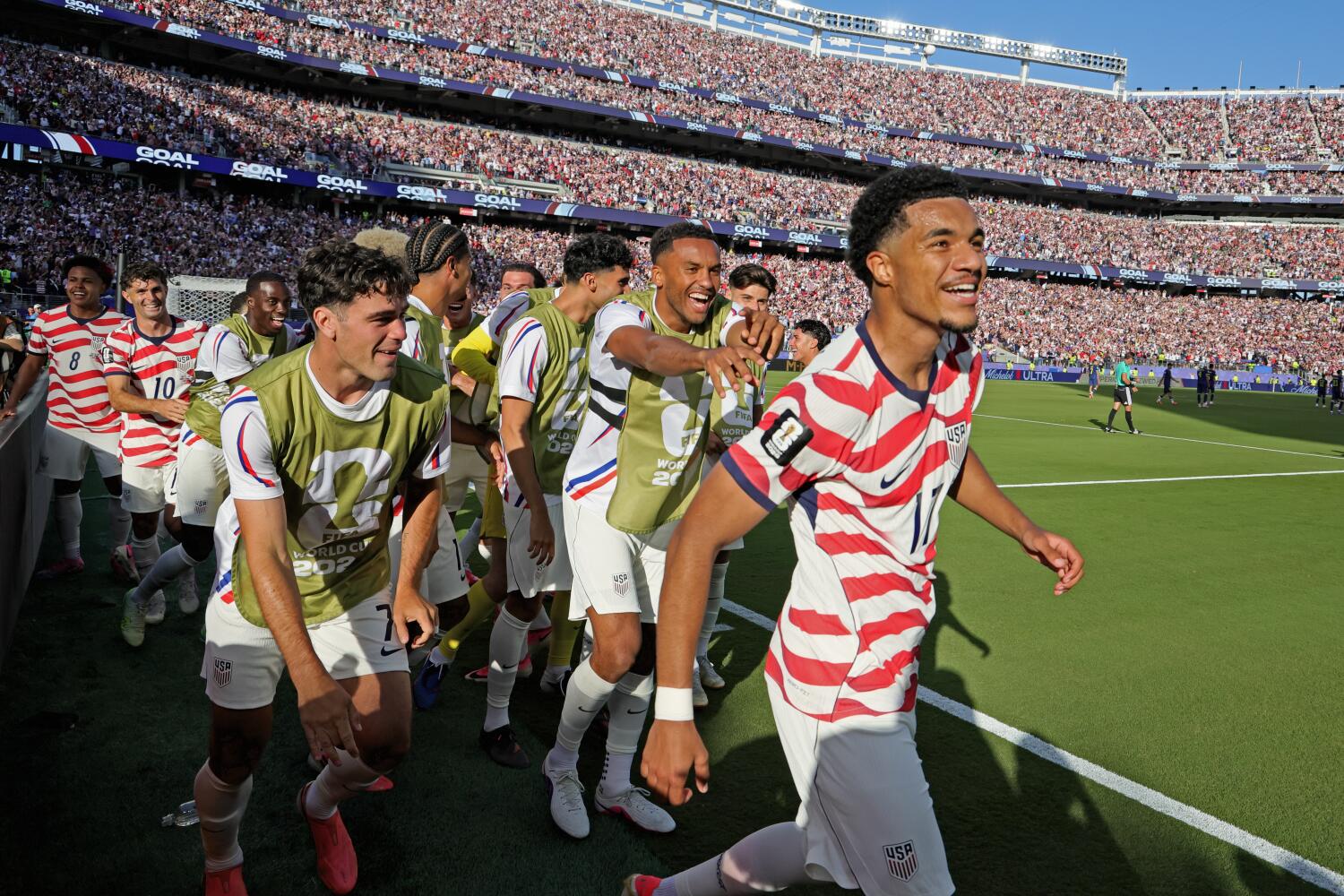
The soccer establishment is obsessed with moral victories. Every time the U.S. Men’s National Team steps onto a World Cup pitch, the media manufactures a narrative around "historic milestones" and "laying the groundwork for tomorrow." We are told to marvel at the sheer youth of the squad. We are instructed to applaud a hard-fought draw against a European powerhouse. We are fed a steady diet of optimism wrapped in the comforting blanket of the "here and now."
It is a comfortable lie. And it is holding the sport back. For a more detailed analysis into this area, we suggest: this related article.
The lazy consensus among soccer pundits is that incremental progress is enough. They look at a round of 16 exit and call it a stepping stone. They see a young midfielder signing with a mid-table Bundesliga club and claim the system is working.
It isn't. The obsession with individual historic moments is a coping mechanism for a federation that refuses to address its structural rot. We don't need more milestones. We need a complete overhaul of how we measure success. For further context on this development, extensive coverage can also be found at Bleacher Report.
The Myth of the Stepping Stone
Look at the data from the last three decades of American soccer. Every major tournament cycle follows the exact same script.
- A young, hyped squad encounters a tactical buzzsaw in the knockout rounds.
- The team exits with a dignified, narrow loss.
- The media hypes up the "valuable experience" gained by the core players.
- Fans are told to wait four years for the real payoff.
This is a loop. It is not progress.
When you look at countries that actually transition from outsiders to elite contenders—think Spain in the late 2000s or Belgium’s golden generation—their breakthrough wasn't built on celebrating close losses. It was built on tactical identity and a ruthless refusal to accept mediocrity.
The U.S. soccer media treats World Cup group stage survival like a lifetime achievement award. In reality, escaping a group is the bare minimum for a nation with the financial resources, infrastructure, and athletic pool of the United States. By constantly shifting the goalposts to focus on the "here and now," we excuse tactical naivety and managerial stagnation.
The Pay-to-Play Stranglehold
You cannot build a world-class soccer nation when the sport is treated as a country club luxury. I have watched youth clubs charge thousands of dollars a year for elite coaching, effectively pricing out the very communities where soccer is a religion.
The current system relies on suburban wealth to fund the talent pipeline. This is a statistical anomaly on the global stage. The greatest players in world history did not develop on pristine, private suburban complexes paid for by corporate executives. They developed in hyper-competitive, unstructured urban environments.
By centering the narrative on the current national team's abstract "focus," the establishment avoids answering the brutal question: Why are we still excluding millions of potential world-class athletes because their parents can't write a five-figure check to a youth academy?
Dismantling the "Young Squad" Excuse
Every time the tactical setup fails, the default defense is the age of the roster. "They are young. They will learn."
This argument falls apart under basic scrutiny.
World Cup Winners vs. Average Roster Age (Key Eras)
===================================================
1970 Brazil:         24.4 years old
2010 Spain:          25.9 years old
2018 France:         25.6 years old
Kylian Mbappé didn't need a developmental cycle to win a World Cup at 19. Pelé didn't need to focus on the "here and now" to lift the trophy at 17. The best players in the world are elite because they possess tactical maturity early, not because they were granted an exemption for their age.
When we celebrate a 22-year-old American player merely for starting a match in a top European league, we lower the bar. We are praising participation rather than demanding dominance. This soft bigotry of low expectations bleeds into the national team's performance. They play like a team happy to be there, because the culture back home rewards them just for showing up.
The Tactical Vacuum
The real crisis in American soccer is not a lack of talent. It is a lack of sophisticated coaching.
The domestic coaching infrastructure is fundamentally broken. It prioritizes athleticism over intelligence. National team managers routinely deploy rigid, outdated tactical systems that rely on outrunning the opposition rather than outthinking them.
When faced with a disciplined, low-block defense, the U.S. team regularly looks entirely devoid of ideas. They pass horizontally. They send hopeful crosses into an empty box. They hope for a moment of individual magic from a star winger.
This isn't tactical nuance; it's a hope strategy. And a hope strategy gets exposed the second you face a manager who knows how to manipulate space.
The True Cost of Comfort
The contrarian truth is that the current model is highly profitable for the stakeholders involved. Sponsors love the clean-cut, youthful image of the team. Broadcasters love the easy-to-digest narratives of historic milestones. The federation loves the guaranteed revenue from sold-out friendly matches against secondary squads.
There is zero financial incentive to burn the system down and start over.
If we genuinely want to compete for a trophy, we have to stop accepting the narrative that a close loss to a traditional powerhouse is a victory. It is a failure. Until the fanbase, the media, and the federation treat a round of 16 exit as an unmitigated disaster rather than a "historic moment," the United States will remain a second-tier soccer nation.
Stop looking at the horizon. Stop praising the bare minimum. Demand tactical competence, crush the pay-to-play model, and treat every moral victory with the contempt it deserves.