Washington is popping champagne over a bloodbath.
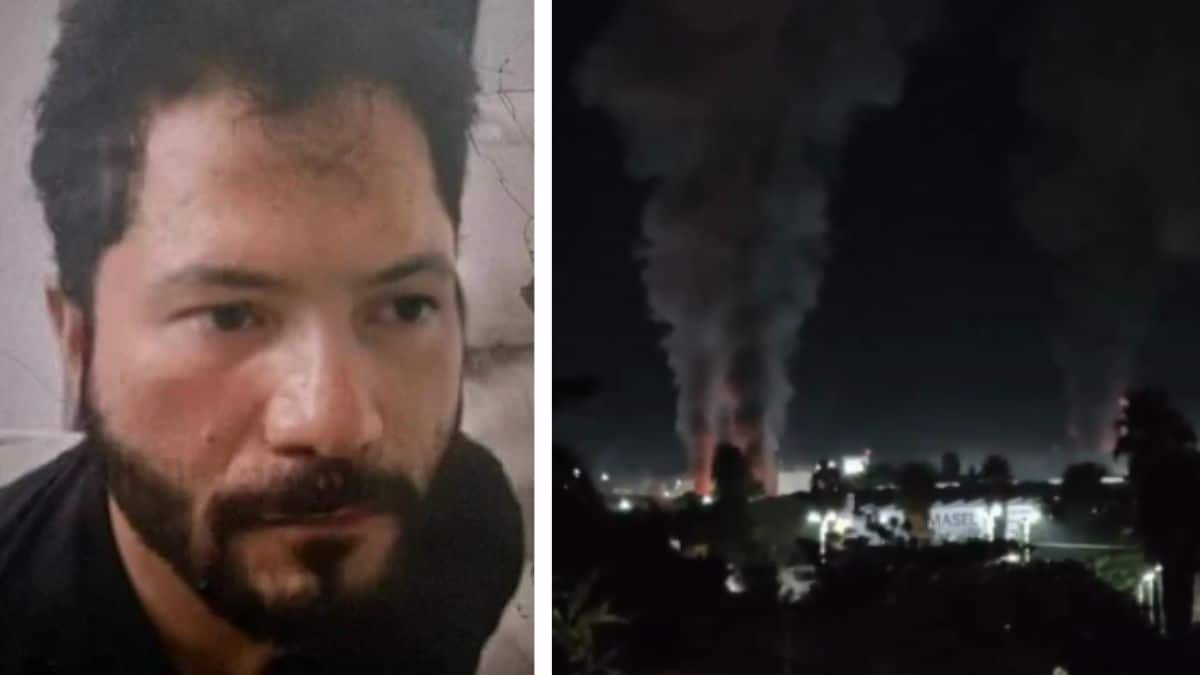
On November 20, 2026, elite Mexican special forces backed by U.S. drone surveillance raided Guasave, Sinaloa, and captured Fausto Isidro Meza Flores—the ghost known as "El Chapo Isidro". Four Mexican soldiers died. Ten more took shrapnel and bullets. Sixteen suspected gunmen were killed in a three-hour urban firefight that forced professional baseball players at Kuroda Park to dive for cover while civilians fled burning vehicles. Read more on a connected issue: this related article.
Mainstream coverage frames this as a massive victory. They point to the $5 million FBI Most Wanted bounty. They quote U.S. Ambassador Ronald Johnson praising "sustained cooperation and trust". They treat the arrest of a 44-year-old cartel boss like the final scene of a crime thriller where the credits roll and the streets magically clear.
That narrative is dangerously naive. More reporting by The New York Times delves into similar views on the subject.
If you have spent any real time studying cross-border security, illicit supply chains, or the twenty-year graveyard of the Mexican drug war, you know the truth. Operación Centella was not a knockout blow to organized crime. It was a live grenade tossed straight into the middle of an already raging civil war in northern Mexico. By removing Isidro from the board without dismantling his financial architecture or political protection, the U.S. and Mexico just handed the most ruthless faction of the Sinaloa Cartel a golden invitation to burn Guasave to the ground.
The Myth of the Kingpin Strategy
For nearly two decades, security analysts and former DEA operators have watched governments burn billions of dollars chasing the same broken delusion. It is called the kingpin strategy—the belief that if you decapitate a criminal organization by arresting or killing its top leader, the syndicate will collapse into confusion and wither away.
It never works. Not once.
Think about the actual mechanics of a modern transnational trafficking network. It is not a rigid military hierarchy where a general dies and the army surrenders. It is a decentralized, franchise-style logistics business. When you remove the CEO of a cartel, the fentanyl precursors still arrive at Pacific ports. The clandestine labs in the Sierra Madre still cook methamphetamine. The corrupted municipal police commanders still collect their weekly envelopes. The distribution cells in Phoenix, Los Angeles, and Chicago still have customers waiting on street corners.
All the kingpin strategy actually accomplishes is violent market consolidation.
Look at the history. When Mexican marines captured Joaquín "El Chapo" Guzmán in 2016, homicides in Mexico did not drop—they skyrocketed to historic records over the next four years. When U.S. authorities took Ismael "El Mayo" Zambada into custody in 2024, it did not end the Sinaloa Cartel. It shattered a decades-old peace treaty and ignited a brutal fratricidal war between the Mayiza (Zambada loyalists) and Los Chapitos (Guzmán’s sons).
Isidro’s capture in Guasave is the exact same movie playing on repeat, except the stakes in northern Sinaloa are infinitely more volatile.
Who El Chapo Isidro Actually Was (And Why He Mattered)
Most reporters covering the Guasave raid lazily label Meza Flores as just another "Sinaloa Cartel leader". That basic factual error exposes how little they understand the terrain.
Isidro was not a subordinate of the Sinaloa Cartel. For over fifteen years, he was their fiercest survivalist rival. Operating out of Guasave and Los Mochis, Meza Flores built the Meza Flores Organization (often called the Guasave Cartel) out of the ashes of the Beltrán Leyva Organization after Arturo Beltrán Leyva was killed by Mexican marines in 2009.
While flashier narcos posted photos of gold-plated rifles on social media, Isidro operated like an intelligence officer. He avoided the press. He kept his family out of the spotlight. He survived assassination attempts by El Chapo’s hit squads in the early 2010s by turning northern Sinaloa into an impenetrable fortress of local informants, corrupt transit police, and heavily armed regional cells.
More importantly, Isidro was a strategic buffer.
When the Sinaloa Cartel fractured into open war between Los Chapitos and the Mayiza faction, Isidro aligned himself with the Mayiza. His territory in Guasave sits directly astride Highway 15—the critical Pacific coastal artery connecting Culiacán to the U.S. border crossings in Sonora and Baja California. As long as Isidro held Guasave, Los Chapitos were boxed in from the north. They could not freely move troops, weapons, or synthetic drugs up the coast without bleeding men in Isidro’s backyard.
By pulling Isidro, his cousin Germán ("El Serafín"), and his financial operator José Luis out of Guasave in a single night, Mexican special forces didn't liberate northern Sinaloa. They punched a massive hole in the defensive line holding back the most aggressive, unstable faction in Mexican organized crime.
The Questions Nobody in Washington Is Asking
When a high-profile arrest hits the front page, readers naturally ask predictable questions. Let’s look at the real answers behind the official press releases.
Will El Chapo Isidro’s arrest stop fentanyl and meth from reaching the U.S.?
No. Not even for forty-eight hours.
The Department of Justice press release boasts that Isidro had been indicted for trafficking cocaine, heroin, methamphetamine, and marijuana since the 1990s. That sounds impressive until you realize how synthetic drug manufacturing works in 2026. Fentanyl and methamphetamine are not agricultural crops tied to specific ancestral farmlands controlled by one bloodline. They are chemical commodities produced in cheap, disposable super-labs using dual-use precursors shipped from Asia.
If Isidro’s network loses a smuggling corridor tomorrow, rival brokers in Sonora, Jalisco, or Culiacán will absorb his exact customer base by Friday. Supply chains in the illicit economy operate like water—block one pipe, and the pressure immediately redirects through three others.
Why did the Guasave operation turn into a three-hour urban war zone?
Because U.S. intelligence and Mexican military planners underestimated the depth of Isidro’s local infrastructure.
Defense Secretary Ricardo Trevilla revealed that U.S. drones tracked Meza Flores and analysts intercepted his communications to map his daily routines. On paper, the intelligence was surgical. On the ground, Guasave is a company town where Isidro’s payroll reached deep into the local social fabric. The moment elite troops breached his compound using stealth and surprise, an entire urban early-warning network mobilized. Gunmen arrived with heavy weapons and explosives. They hijacked trucks and torched vehicles across highways near Los Mochis to block military reinforcements.
Sixteen cartel gunmen died in that firefight, alongside four Mexican soldiers. That is not a clean law enforcement arrest. That is counterinsurgency warfare fought in the middle of a Friday night baseball game.
What happens to the Guasave Cartel now?
It fractures into smaller, hyper-violent splinter cells—or gets swallowed whole in a bloody hostile takeover.
Unlike traditional family businesses, criminal empires rarely have clean succession plans when the founder and his top two lieutenants are arrested simultaneously. Mid-level plaza bosses who only answered to Isidro because they feared him now have zero incentive to cooperate with each other. Meanwhile, Los Chapitos commanders in Culiacán are looking at the map of Guasave and seeing an unguarded highway to the border.
What Actually Works (And Why Politicians Hate It)
If arresting top bosses just triggers turf wars and replaces older, predictable criminals with younger, more erratic ones, what is the alternative?
Security experts who study illicit markets—from researchers at InSight Crime to veteran financial investigators—have pointed to the real pressure points for years. Governments avoid them because they don't produce dramatic Friday night helicopter footage for cable news.
- Target the money launderers, not the trigger men. You can replace a twenty-year-old cartel gunman in Guasave in forty-eight hours for five hundred dollars a week. You cannot easily replace a sophisticated financial architect who knows how to wash fifty million dollars through Chinese underground banking networks, shell real estate firms in Guadalajara, and trade-based agricultural exports in Sinaloa. Arresting Isidro’s brother-in-law José Luis was actually the smartest move of the entire raid—yet he barely got a footnote in the headlines.
- Dismantle political protection networks. Cartels do not survive for twenty years in cities like Guasave without institutional oxygen. They need municipal police chiefs who look the other way, state prosecutors who bury case files, and local mayors who award public works contracts to cartel-linked construction companies. Until federal authorities start handcuffing the politicians and judges who sell state sovereignty, arresting a drug lord is just pruning a weed while watering its roots.
- Focus on middle-management logistics. When you systematically arrest mid-level chemical brokers, customs officials, and transport coordinators, you create genuine operational friction. A cartel can survive losing its figurehead. It chokes when nobody knows which port official at Manzanillo or Mazatlán is safe to bribe.
The Uncomfortable Trade-Off Nobody Admits
Let’s be brutally honest about the downside of abandoning the kingpin strategy.
Refusing to hunt high-value targets like El Chapo Isidro carries massive political and moral costs. When a man sits on the FBI’s Ten Most Wanted list with a $5 million bounty and a trail of bodies stretching back to the 1990s, letting him walk free in Guasave signals total state impunity. Victims’ families deserve justice. U.S. prosecutors need extraditions to prove that cross-border alliances carry real teeth. And President Claudia Sheinbaum’s administration faces relentless pressure from Washington to deliver visible, quantifiable wins against designated terrorist cartels.
Tactical raids like Operación Centella satisfy that political hunger. They prove that Mexican special forces and U.S. intelligence can reach anyone, anywhere, no matter how carefully they hide.
But tactical brilliance cannot rescue a bankrupt strategy.
The Real Cost of the Victory Lap
Walk through the streets of Guasave. Look at the charred hulks of commercial trucks blocking the highway to Los Mochis. Count the four flag-draped coffins of the Mexican soldiers who gave their lives to pull one 44-year-old fugitive out of a safe house.
Isidro will be extradited to the United States. He will sit in a federal courtroom in New York or D.C., take a plea deal or get sentenced to life in a supermax prison, and fade into obscurity. Politicians in both capitals will issue statements congratulating themselves on making both nations safer.
Meanwhile, the people living in northern Sinaloa are bracing for the inevitable invasion as rival cartel factions rush to carve up Isidro’s unclaimed territory. The fentanyl will keep crossing at Nogales and San Ysidro. The extortion rackets will keep bleeding local farmers dry.
Stop measuring success in the drug war by the body count on the tarmac or the mugshot on the FBI website. Until governments stop celebrating the arrest of the kingpin while leaving his empire intact, every victory parade is just the opening act of the next massacre.