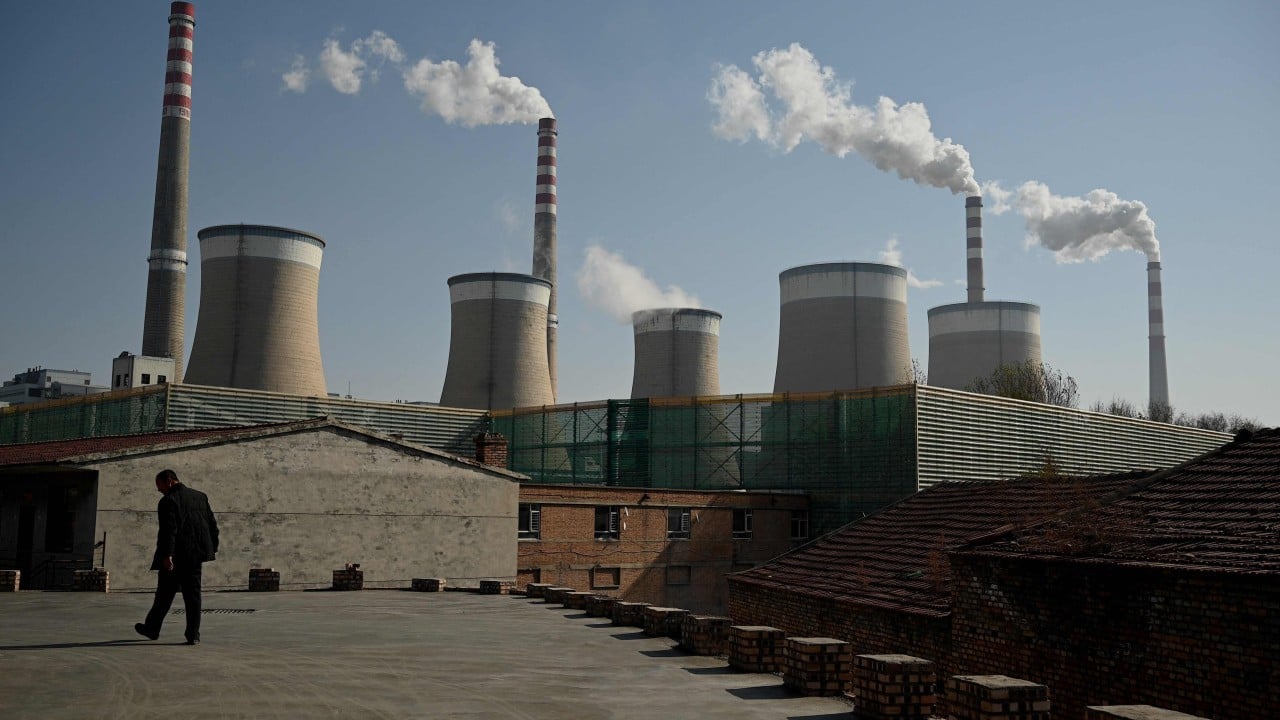
The media is currently swooning over a classic techno-optimist trap: turning coal power plant exhaust into cheap, effective fertilizer. It sounds like the ultimate corporate alchemy. You take sulfur dioxide ($SO_2$) and nitrogen oxides ($NO_x$), slap a chemical scrubber on the flue gas, and presto—you have ammonium sulfate to feed the fields. The public swallows the narrative because it satisfies a primal urge to see industrial sins washed away by circular economics.
It is a beautiful story. It is also a thermodynamic and economic delusion.
Industrial processes do not become efficient just because you found a secondary use for their waste. I have spent years auditing industrial supply chains and watching executives blow tens of millions of dollars on "zero-waste" pilot programs that bleed cash the moment the government subsidies dry up. The reality of converting coal emissions into agricultural inputs is a lesson in misplaced engineering priorities. We are creating complex, capital-intensive life support systems for dying legacy assets under the guise of green innovation.
The Chemistry They Do Not Want You to Calculate
The mainstream narrative treats power plant emissions as a pure, untapped source of plant nutrients. Let us strip away the public relations fluff and look at the actual mass balance.
Flue gas desulfurization (FGD) systems that produce agricultural-grade ammonium sulfate are not new. The basic chemical pathway is straightforward:
$$SO_2 + 2NH_3 + H_2O + \frac{1}{2}O_2 \rightarrow (NH_4)_2SO_4$$
On paper, you neutralize harmful acid rain precursors with ammonia ($NH_3$) to create a usable synthetic fertilizer. But the narrative completely glosses over the upstream reality of that ammonia.
Ammonia does not grow on trees. It is manufactured via the Haber-Bosch process, which requires massive amounts of energy and utilizes natural gas ($CH_4$) as a hydrogen source. When a coal plant brags about creating "cheap fertilizer" from its exhaust, it is omitting the fact that it must purchase and import massive volumes of energy-intensive ammonia to make the reaction happen.
You are not magically creating fertilizer from waste. You are taking an expensive, fossil-fuel-derived chemical asset (ammonia), trucking it to a coal plant, mixing it with highly contaminated flue gas, and spending more energy to crystallize a low-margin byproduct.
The Heavy Metal Hangover
Coal is a dirty fuel. It is a geological sponge that contains a significant portion of the periodic table, including trace amounts of mercury, lead, arsenic, and cadmium.
When you scrub flue gas to capture sulfur and nitrogen, you do not get a pristine stream of agricultural nutrients. You get a toxic slurry. To make this slurry safe for commercial agriculture, the material must undergo extensive, multi-stage purification.
- Fly Ash Contamination: Fine particulate matter escapes electrostatic precipitators and mixes into the scrubber liquid.
- Heavy Metal Partitioning: Volatile elements like mercury evaporate and condense directly within the wet scrubbing zones.
- Acid Neutralization Byproducts: Managing the pH requires chemical additives that introduce unwanted chlorides and fluorides into the final crystalline mix.
If a plant cuts corners on the purification phase to keep the fertilizer "cheap," they risk accumulating heavy metals in topsoil over decades of continuous application. If they build the world-class chemical treatment infrastructure required to guarantee absolute purity, the capital expenditure skyrockets. The "cheap" fertilizer suddenly costs more per ton than traditionally manufactured options. You cannot engineer your way out of this trade-off.
Dismantling the False Premise of Circularity
The most dangerous lie in corporate sustainability is that every waste stream should be circular. Some waste streams are simply low-energy, highly scattered thermodynamic sinks. Trying to upgrade them into high-value products is a fools errand.
"True sustainability is about minimizing inputs, not inventing expensive chemistry experiments to justify bloated outputs."
Imagine a scenario where a state-of-the-art coal plant installs an advanced ammonia scrubbing system. They successfully produce thousands of tons of ammonium sulfate. They sell it to local cooperatives at a discount. The media cheers.
Now look at the macroeconomics. The power plant is now locked into a dual-commodity business model. It must run its turbines to fulfill its fertilizer delivery contracts, regardless of grid demand or the availability of cheaper wind and solar power. It has essentially anchored itself to the grid, using agricultural commitments to justify its continued carbon footprint.
Furthermore, ammonium sulfate is a highly specific fertilizer. It is highly acidic. While it works wonders on alkaline soils, continuous application on neutral or acidic soils destroys the pH balance, requiring farmers to purchase massive amounts of agricultural lime (calcium carbonate) to counteract the damage.
The system creates a cascading loop of interventions:
- Burn coal, producing polluted air.
- Spend energy and ammonia to trap the pollution.
- Apply the acidic byproduct to fields.
- Mine and crush limestone to fix the soil acidity caused by the byproduct.
This is not a circular economy. This is a linear consumption train crash with a few extra loops thrown in to confuse the accountants.
The Industrial Reality of Scale and Logistics
Let us address the "People Also Ask" questions that inevitably arise when these projects get greenlit: Can this scale globally, and can it replace traditional fertilizer manufacturing?
The short answer is no. The long answer requires looking at a map.
[Traditional Fertilizer Plant] ----> Direct to Agricultural Hubs

[Coal Plant + Scrubber] --------> Heavily Contaminated Industrial Zone ----> Expensive Logistics to Farms
Traditional fertilizer plants are strategically located near raw material inputs (natural gas pipelines or phosphate mines) and major shipping corridors like river deltas and deepwater ports. They are optimized for bulk logistics.
Coal-fired power plants are located based on grid stability, cooling water availability, and proximity to coal fields. They are rarely positioned next to major agricultural belts. Moving thousands of tons of low-density crystalline fertilizer from an industrial powerhouse zone to distant farmlands eats up any marginal cost savings in diesel fuel and rail tariffs.
The economics break down completely when compared to traditional, dedicated fertilizer manufacturing:
| Metric | Dedicated Fertilizer Plant | Coal Plant Co-Production |
|---|---|---|
| Product Purity | Consistently High (>99%) | Variable (Depends on coal batch) |
| Primary Driver | Market Demand for Nutrients | Grid Demand for Electricity |
| Capex Efficiency | High (Single-purpose design) | Low (Retrofitted onto legacy asset) |
| Logistics | Optimized for farm distribution | Optimized for grid distribution |
When you force a power plant to become a chemical factory, you get an asset that is mediocre at both tasks. It produces electricity with a higher capital charge, and it produces fertilizer with a compromised logistical profile.
Stop subsidizing the chimney, invest in the soil
If the goal is truly to secure affordable fertilizer while reducing environmental impact, upgrading coal exhaust is the wrong place to start. We are spending hundreds of millions of dollars customizing scrubbers for a power generation technology that is fundamentally obsolete.
We must shift capital away from end-of-pipe mitigation strategies and focus on decentralized, decoupled production technologies.
Instead of routing ammonia through a coal stack, current venture capital should be directed toward small-scale, localized Haber-Bosch systems powered by dedicated off-grid solar or wind installations. These "green ammonia" micro-plants can be placed directly within agricultural communities. They eliminate the transport costs, eliminate the heavy metal contamination risks, and do not require burning a single lump of coal to function.
The fixation on making coal clean through agricultural byproducts is an intellectual dead end. It keeps engineers working on the wrong problems and gives legacy utility executives a free pass to delay decommissioning their most carbon-intensive assets.
Stop trying to fix the coal plant. Stop buying into the fairy tale of cheap, emission-derived fertilizer. The future of agriculture belongs to clean, modular synthesis at the point of use, not toxic scrubbing at the point of combustion.