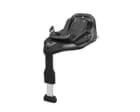
The corporate press wants you to panic about a specific plastic mold shipped from China between September 2025 and March 2026. They are running standard, copy-pasted alerts about the Office for Product Safety and Standards (OPSS) recalling the Maxi-Cosi FamilyFix Slide Pro Base. The headlines point to a glitch where a little visual indicator turned green even when the seat wasn’t fully locked into place. They call it a rare manufacturing defect.
They are wrong. This isn't an isolated manufacturing mistake. It is the predictable failure of a fundamentally flawed design philosophy.
The parenting industry has spent the last decade replacing basic physical literacy with cheap electronic reassurance. By training parents to trust a green plastic window or a digital beep instead of physically testing a mechanical connection, manufacturers have introduced a catastrophic single point of failure into child safety. The Maxi-Cosi recall isn’t an anomaly; it is a warning that our obsession with "idiot-proof" automation has made us incompetent at protecting our own children.
The Fraud of the Green Light
For generations, securing a child in a vehicle required mechanical awareness. You threaded a seatbelt, you locked a clip, you yanked the frame until the entire chassis of the car shook, and you knew—by the transfer of raw kinetic force—that the seat was secure.
Then came ISOFIX and the subsequent wave of click-and-go bases.
To sell these premium-priced bases, the marketing machine manufactured a narrative that traditional installations were too complex for the average parent. The solution? Build a consumer electronics wrapper around a mechanical latch. Now, parents look for a green plastic tab or listen for a chime.
Imagine a scenario where a commercial airline pilot relies entirely on a single cockpit light to confirm the landing gear is locked, ignoring the fact that the plane is dragging its belly across the tarmac. That is exactly what parents do every day with modern car seat bases.
The core vulnerability of the FamilyFix Slide Pro Base—and every competitor product like it—is that the indicator is decoupled from the actual load-bearing security of the mechanism. The micro-switch or plastic slider that triggers the "green" signal is a secondary, fragile component. If dust enters the housing, if a plastic spring warps during a heatwave, or if a tolerances error occurs by a fraction of a millimeter on a factory floor in China, the system lies to you.
When a purely mechanical system fails, you usually feel it. The latch doesn't click. The seat wobbles. The physical feedback is immediate. But when an electronic or automated indicator fails, it fails silently while giving you a false sense of absolute security. It optimizes for convenience over verification.
The Blind Reliance Epidemic
I have spent years auditing consumer product testing and watching how real people interact with hardware. Put a "smart" or "assisted" feature on a safety device, and human behavior shifts instantly. Total cognitive outsourcing takes over.
Parents stopped checking the actual physical connection the moment the green light appeared. They drop the heavy capsule onto the base, glance down while holding a coffee and a diaper bag, see the green bar, and slam the car door shut.
The OPSS recall report notes that the malfunctioning indicator could cause the seat to move or detach during a collision. But the real hazard is the psychological conditioning that preceded the malfunction. Maxi-Cosi's own emergency advice on retail sites like Boots betrays this reality. They told parents that while waiting for a replacement, they could still use the base if they manually checked that the seat was attached at the front and back.
Think about that. The manufacturer's official backup safety protocol is just... doing what parents should have been doing manually every single time anyway. They admitted that the entire expensive value proposition of their indicator base is entirely secondary to basic human oversight.
High-Tech Complexity is a Safety Downgrade
The child safety industry is trapped in a tech-fetish loop. Brands cannot justify charging hundreds of pounds for a molded piece of plastic unless they pack it with indicators, sliding mechanisms, and electronic sensors. They treat a car seat like a smartphone accessory.
But in safety engineering, complexity is the enemy of reliability. Every moving part, every spring-loaded visual slider, and every sensor is a brand-new failure mode.
Consider the mechanics of a basic, old-school car seat installed with a three-point seatbelt. It has no batteries. It has no color-changing windows. It relies on the seatbelt mechanism of the car—a system tested to survive thousands of pounds of deceleration force and built to automotive-grade tolerances.
When you bypass that system to use an over-engineered base with built-in slide tracks and indicator windows, you are substituting robust automotive engineering for cheap consumer-goods engineering. You are trading a mechanism that rarely fails for a plastic housing that can be undone by a stray regular-sized crumb from a toddler’s biscuit.
How to Actually Protect Your Child
The lazy consensus tells you to check your serial number, ship your defective base back to the manufacturer, wait for a replacement with a working green light, and go right back to sleep.
If you want to actually keep your child safe, reject that passive consumer mindset entirely.
- Enforce the Two-Second Tug Test: Never look at the indicator light. Cover it with tape if you have to. Every single time you click a car seat into a base, grab the frame at the belt path or the connection points and pull up and forward with force. If the base moves more than an inch in any direction, it is not installed correctly, no matter what color the plastic window is showing.
- Ditch the Illusion of Convenience: If an infant carrier base requires a complex sequence of visual confirmations to ensure it won't eject your child during an accident, the engineering is inherently fragile. Re-learn how to install a car seat using the vehicle’s physical seatbelts. It takes an extra sixty seconds, but it eliminates the risk of an unmanifested mechanical failure hiding behind a faulty plastic sensor.
- Stop Buying the Automation Premium: Stop paying extra money for features designed to reduce your active participation in safety. The premium you pay for "smart" or "assisted" child safety gear is an insurance premium paid directly to corporate marketing departments to alleviate parental anxiety. It buys peace of mind, not actual safety.
The Maxi-Cosi recall is a symptom of a design philosophy that treats parents as passive users rather than active operators. A green light is an opinion generated by a piece of plastic. A violent physical yank on the seat frame is a fact. Trust the physics, not the dashboard.