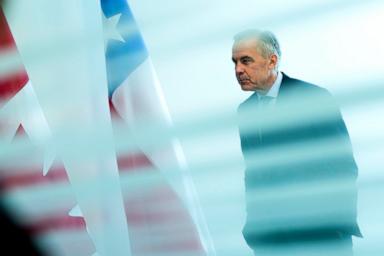
When a middle-ranking nation suddenly finds itself drowning in standing ovations at the United Nations General Assembly, champagne corks pop in editorial offices across Ottawa. Pundits dust off adjectives like "resurgent" and "indispensable." They look at Prime Minister Mark Carney commanding microphones in Manhattan and declare that a new diplomatic titan has awakened, ready to fill the vacuum of a fractured international order and lead the free world through turbulent geopolitical tides.
It is a comforting delusion. It is also completely backwards.
In international relations, stepping into the UN spotlight while your hard power erodes is not a promotion. It is a distress signal. When your economy stalls, your military equipment is functionally antique, and your borders are strained to breaking point, the only currency left to spend is speech-making. Talking on the world stage is cheap. Building submarines, funding functional deterrence, and driving domestic productivity growth are expensive.
For decades, Canadian foreign policy has suffered from a chronic addiction to applause-chasing. Whenever domestic friction mounts—whether through stagnant living standards, persistent healthcare bottlenecks, or structural economic underperformance—politicians instinctively pivot toward New York. They trade domestic competence for international performance art. They mistake a crowded press gallery in Turtle Bay for actual geopolitical agency, wrapping themselves in blue-and-white flags to mask the gray reality of domestic decline.
The Vanity Metric of Multilateralism
Let us dismantle the core premise peddled by establishment commentators. The narrative claims that shifting political winds in Washington and across fractured global capitals have cleared a runway for Canada to lead a coalition of the willing. The argument treats UN prominence as an active strategic asset, suggesting that moral clarity in a speech translates directly into bargaining power on the ground.
It is nothing of the sort. The United Nations is a forum designed for sovereign states to talk when they cannot act. It is a diplomatic safety valve, not a command center. When a state begins measuring its success by how many foreign ministers nod politely during its general debate speeches, it has abandoned the pursuit of hard national interest in favor of emotional validation.
Think about how international power actually operates. Superpowers do not build global order by drafting non-binding resolutions or organizing high-minded panel discussions on pandemic preparedness. They project force, secure critical supply chains, protect proprietary technology, and compel compliance through economic and military weight. When a nation lacks these tools, it retreats into the comforting theater of procedural multilateralism. It champions "variable geometry" and "values-based realism"—phrases that sound sophisticated while masking a complete absence of strategic coercion.
Canada is currently the sixth-largest donor to the UN budget, paying its mandatory dues like clockwork while its own domestic infrastructure creaks under chronic underinvestment. We are told to view this as a badge of honor. But ask any taxpayer in Calgary or Halifax staring down potholed highways, strained emergency rooms, and a cratering per-capita GDP why billions are being routed into international bureaucratic scaffolding while domestic productivity crawls. The answer is obvious: performative global citizenship is an evasion tactic. It allows political elites to feel statesmanlike on international television while dodging the grueling, unglamorous work of fixing a broken domestic economy.
The Great Defense Bluff
You cannot talk about Canadian foreign policy without addressing the elephant in the room—or rather, the empty room where a functional military should be. For years, successive federal administrations have treated NATO spending targets and northern sovereignty like optional subscription services.
Canada operates patrol aircraft past their expiration dates, relies on patched-together naval vessels, and struggles perpetually to meet the benchmark of two percent of GDP allocated to defense. Yet, whenever September rolls around, Ottawa deploys its finest rhetoric about defending the rules-based international order.
This juxtaposition is breathtakingly hypocritical. How can a nation preach about global stability when it refuses to buy the basic insurance policy required to secure its own vast territory? The Arctic is melting, rival powers are charting polar shipping lanes, and Moscow and Beijing eye North America's northern flank with predatory interest. Meanwhile, Canadian diplomats lecture the world on climate resilience and human rights from the air-conditioned comfort of East River conference rooms.
Real security precedes diplomacy. Without teeth, moral posturing is just noise. When a state lacks the military capacity to defend its own sovereignty or project credible deterrence, its voice in international security councils carries about as much weight as a strongly worded petition. The global south and rising regional hegemons see right through this routine. They know that Canadian diplomacy is backed by polite requests rather than hard trade barriers or military muscle.
Domestic Decay Masked by New York Microphone Time
Look closer at the domestic reality back home. Canada is mired in a severe productivity crisis. Business investment per worker has stagnated for a decade. Housing has transformed from a fundamental human necessity into an unaffordable financial asset class that suffocates young families and drains capital away from productive enterprise. Healthcare systems across multiple provinces teeter on the edge of permanent triage.
Yet, turn on the television during General Assembly week, and the national conversation pivots instantly to high-altitude debates on global governance architecture and multilateral institutional reform.
This is not an accident. It is a deliberate displacement strategy. When governance fails at home, governments export their attention abroad. It is infinitely easier for a prime minister to deliver a soaring address on reforming international financial institutions than it is to streamline inter-provincial trade barriers, overhaul tax codes, or incentivize domestic venture capital.
The coffee shops in downtown Toronto swapping out drink names to mock American politics, or suburban lawn signs encouraging absentee voting for foreign elections, point to a bizarre cultural phenomenon: an identity increasingly defined in opposition to, or derivative of, American dysfunction. Instead of building a dynamic, competitive domestic economy that stands on its own merits, Canadian political culture has devolved into a spectator sport centered on watching the messy theater of its southern neighbor while offering unsolicited moral commentary.
The Middle Power Trap
The term "middle power" has long served as Canada’s favorite diplomatic security blanket. It implies a noble, constructive role—acting as a bridge builder, a peacekeeper, and an honest broker between polarized giants.
That romanticized era is dead. Today, middle powers are caught in a brutal economic and geopolitical squeeze between a protectionist United States, an aggressive China, and a fragmented multipolar environment where transactional zero-sum bargaining rules the day. In this harsh environment, polite mediation gets you nowhere. If you do not bring capital, advanced proprietary technology, or unassailable military power to the table, nobody cares what your foreign minister thinks about institutional reform.
The delusion that Canada can punch above its weight through pure charm and moral persuasion ignores the raw math of modern statecraft. Weight is determined by mass, not enthusiasm. When Canada attempts to insert itself into every global crisis without the resources to back up its commitments, it ends up spreading its diplomatic corps paper-thin, achieving zero meaningful outcomes while burning taxpayer dollars on endless international junkets.
Consider the obsession with signing high-profile multilateral declarations on artificial intelligence governance or pandemic response frameworks. While Canadian bureaucrats spend months negotiating communique phrasing in Geneva or Strasbourg, domestic tech entrepreneurs pack their bags for Austin or Silicon Valley because Canada's regulatory overhead and capital deserts make scaling impossible at home. We are attempting to regulate the future of global technology while our own domestic innovation ecosystem starves for lack of risk capital. It is the diplomatic equivalent of rearranging deck chairs on a sinking productivity cruise liner.
Stop Applaud-Chasing and Fix the Ledger
If Canada genuinely wants influence, it must abandon the narcotic of UN applause and undergo a brutal, introspective reality check.
First, stop treating defense spending as an arbitrary tax to appease foreign allies. Treat it as an absolute existential prerequisite for sovereign survival, particularly in an era where Arctic sovereignty is up for grabs. Build the ships, buy the planes, and pay the personnel.
Second, refocus diplomatic energy where Canada actually possesses economic and geographic weight. Stop trying to act as the world's guidance counselor on every geopolitical dispute from Eastern Europe to the South China Sea. Concentrate diplomatic capital on bilateral economic corridors, resource security, and supply chain resilience with partners who matter to our actual bottom line.
Third, fix the domestic engine. A country with declining per-capita output, crumbling infrastructure, and a paralyzed internal market cannot project strength abroad, no matter how eloquent its prime minister sounds at a UN podium. Economic sovereignty is the bedrock of diplomatic credibility. If your currency is soft, your productivity is lagging, and your citizens are crushed by the cost of living, your international pronouncements are dismissed as empty noise by hard-headed realists in Beijing, Moscow, and Washington alike.
The applause inside the United Nations General Assembly hall is ephemeral. It fades the second the cameras switch off and delegates head to cocktail receptions. What remains is the cold, unyielding reality of a country that traded its domestic prosperity for a seat at the children's table of global diplomacy, mistaking a polite round of applause for actual power.


