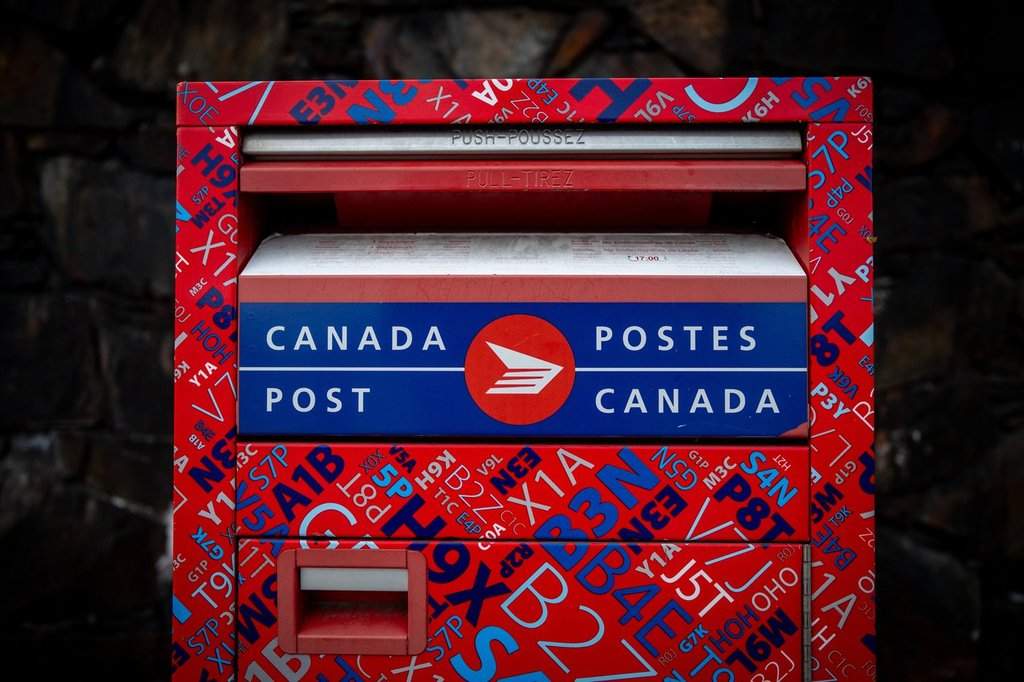
Raising stamp prices to save a postal monopoly is like raising ticket prices on the Titanic after it hit the iceberg. You might squeeze a few extra dollars out of the passengers still standing on the deck, but you have done nothing to stop the water rushing into the hull.
Yet here we are again. Canada Post recently rolled out another round of rate hikes—this time targeting U.S. and international mail—under the tired banner of "financial sustainability." The mainstream business press dutifully echoed the press release. They nod along to the lazy consensus: costs are up, letter volume is down, therefore higher prices must equal survival.
That logic is completely broken. It relies on an economic fantasy where customers have nowhere else to go and demand remains static while prices climb. In the real world of logistics, pricing yourself out of the market isn't a rescue strategy. It is assisted suicide.
If you run an e-commerce brand, manage supply chains, or simply care about how national infrastructure survives the twenty-first century, you need to stop buying the narrative that rate hikes fix structural insolvency. They don't. They accelerate it.
The Death Spiral of Monopolistic Pricing
To understand why Canada Post's international rate hikes are a trap, you have to look at the mechanics of price elasticity of demand in a shrinking market.
When a product is a necessity with zero alternatives, demand is inelastic. You can raise prices, and people will pay because they have no choice. Twenty years ago, physical mail had high inelasticity. If you needed to send an invoice to Chicago or a birthday card to London, you bought a stamp.
Today, physical mail is almost entirely discretionary or easily digitized. When Canada Post jacks up the cost of sending a letter or a small packet across the border, they aren't capturing extra margin from a captive audience. They are actively pushing the remaining holdouts toward digital alternatives or private consolidators.
I have watched legacy logistics firms and mid-market retailers make this exact mistake for fifteen years. A division sees its top-line revenue dip by ten percent. Instead of cutting fixed overhead or re-engineering the delivery network, the finance team pushes through a twelve percent price increase to "make up the gap." For one quarter, the spreadsheet looks great. By quarter three, volume drops another twenty percent because customers found a cheaper workaround. Now you have the exact same massive fixed costs spread across an even smaller pool of transactions.
Economists call this the utility death spiral. Raising rates to cover fixed infrastructure costs shrinks the customer base, which forces even higher rates on the remaining customers, until the entire network collapses under its own weight. Canada Post isn't breaking out of this cycle. They are stepping on the gas.
What the Universal Service Obligation Actually Means
Every time someone criticizes Canada Post's pricing or financial losses, defenders trot out the Universal Service Obligation (USO). They argue that because the Crown corporation is legally mandated to deliver mail to every remote corner of the second-largest country on Earth at a uniform rate, it deserves a pass on basic unit economics.
Let’s dismantle that excuse right now.
The USO is a domestic mandate. It requires Canada Post to get a letter from Toronto to Tuktoyaktuk without charging a bush-pilot surcharge. It has nothing to do with subsidizing inefficient cross-border handoffs or charging exorbitant fees for lightweight U.S. bound mail.
More importantly, the USO is not a license to ignore route density. In logistics, profit is made or lost on drop density—how many packages or letters a driver delivers per mile driven. Private carriers like UPS, FedEx, and regional upstarts like Chit Chats or Stallion Express thrive because they cherry-pick high-density urban corridors and hand off the unprofitable rural "last mile" back to the national postal service.
When Canada Post raises international rates, they aren't fixing their rural drop density problem. They are simply making themselves uncompetitive in the exact cross-border e-commerce segment where small Canadian businesses desperately need affordable shipping to reach the massive American consumer market.
The Cross-Border Arbitrage Secret Nobody Talks About
If you want to see how badly Canada Post misunderstands the market, look at what happens every single day along the U.S.-Canada border.
Thousands of savvy Canadian e-commerce merchants no longer use Canada Post to ship small parcels or heavy flats to the United States. Instead, they use cross-border consolidators. These companies collect packages in Toronto, Vancouver, or Montreal, load them onto a line-haul truck, drive them across the border into Buffalo, Blaine, or Champlain, and inject them directly into the United States Postal Service (USPS) network as domestic mail.
Think about the absurdity of that supply chain. It is cheaper, faster, and offers better end-to-end tracking for a Canadian merchant to pay a private middleman to physically truck a box across an international border and hand it to the American government than it is to hand that same box to Canada Post down the street.
Why? Because Canada Post's international pricing structure is built on outdated Universal Postal Union (UPU) terminal dues negotiations and bloated domestic handling fees. When Canada Post announces higher U.S. and international rates to "sustain the company," they are effectively acting as the best customer acquisition channel their private competitors could ever dream of. Every press release announcing a rate hike sends another wave of Canadian merchants straight into the arms of cross-border consolidators.
Why Higher Rates Won't Fix a Labor and Legacy Problem
Let’s look at the numbers that actually matter—the ones buried beneath the shiny talk of "sustainable pricing."
Canada Post’s core financial crisis has almost nothing to do with the price of an international stamp. It is driven by two massive, structural anchors:
- Labor Cost Rigidity: Over two-thirds of Canada Post’s total operating expenses are tied up in wages, benefits, and pension obligations. While competitors rely heavily on flexible, non-unionized gig networks, automated sorting hubs, and dynamic routing, Canada Post is locked into collective bargaining agreements designed for an era when letter carriers carried leather satchels full of utility bills.
- The Letter-to-Parcel Cannibalization: In 2006, Canadian households received an average of seven pieces of mail per week. Today, that number has plummeted to roughly two. Meanwhile, parcel delivery—the supposed savior of the postal service—has become a brutal, low-margin commodity war dominated by Amazon’s internal logistics network (Dragonfly/Intelcom) and hyper-efficient regional carriers.
You cannot solve a 70% fixed-labor-cost problem by adding fifteen cents to an international postage stamp. The math simply isn't there. International lettermail represents a tiny fraction of total revenue. Raising prices on a shrinking niche product to plug a billion-dollar structural deficit is pure financial theater. It gives executives something to point to during parliamentary committee hearings so it looks like they are pulling levers, even when those levers aren't connected to the engine.
Stop Asking How to Save Canada Post
When business owners or taxpayers search for news about postal rate hikes, they usually ask the wrong questions: "Will higher postage rates keep Canada Post profitable?" or "How much more will my business have to pay to ship internationally?"
Both questions accept a flawed premise. The first assumes profitability is achievable through pricing power. The second assumes you are forced to pay retail postal rates.
Here is the real question you should be asking: Why are we still treating a 19th-century communications utility like a self-funding parcel courier?
Let’s be brutally honest about the trade-offs here. There is no painless way out of this mess, and anyone claiming a few rate adjustments will stabilize the balance sheet is selling snake oil. If Canada wants to preserve its national postal operator, there are only three real paths forward, and every single one of them carries massive political or financial pain:
- Path 1: Direct Taxpayer Subsidization. Admit that universal rural delivery is a public good, like highways or public libraries, and fund the structural deficit directly through federal appropriations rather than pretending it can break even on stamp sales.
- Path 2: Radical Service Contraction. End daily door-to-door delivery entirely. Move every single Canadian address to community mailboxes, cut delivery frequency to two or three days a week for non-expedited mail, and slash the workforce through attrition and buyouts.
- Path 3: Spin Off the Parcel Network. Separate the legacy lettermail monopoly from the commercial parcel business. Let the parcel division operate with modern, flexible labor models and market-driven pricing without carrying the dead weight of the legacy pension and letter-sorting infrastructure.
Notice what isn't on that list? Raising the price of sending a letter to New York or London.
What Smart Operators Are Doing Right Now
If you run a business that relies on shipping physical goods, documents, or marketing materials across borders, waiting for Crown corporations to magically fix their cost structures is a losing strategy. You have to treat national postal services as just one node in a decentralized logistics stack—and rarely the best one.
Here is how sharp operators are insulating themselves from postal rate inflation:
1. Audit Your Zone-Skipping Opportunities
Stop handing international packages to a single carrier at your warehouse door. If you ship more than fifty parcels a week to the U.S., Europe, or Asia, look into zone-skipping and commercial mail consolidators. By batching your shipments and using a carrier that injects directly into the destination country's domestic network (like USPS, Royal Mail, or Deutsche Post), you bypass international terminal dues and typically cut shipping costs by 30% to 50% while shaving three days off transit times.
2. Re-Evaluate Physical Mail ROI
If you are still sending physical invoices, statements, or direct mail internationally, run a ruthless audit on your customer acquisition cost (CAC) and collection velocity. Every rate hike erodes the unit economics of physical correspondence. Unless a physical piece of mail generates a measurable, high-margin conversion that digital channels cannot replicate, kill it immediately.
3. Negotiate Hybrid Last-Mile Contracts
The smartest shippers never marry a single carrier. Use multi-carrier shipping software to dynamically rate-shop every single label in real time. Let private regional carriers handle your high-density metro deliveries where they are faster and cheaper, and use the national postal service strictly for the remote rural addresses where private carriers tack on $15 residential and extended-area surcharges. Use the postal monopoly for what it is actually good at—subsidized rural reach—and route everything else around it.
The Downside of Abandoning the National Carrier
Let’s acknowledge the risk in walking away from the legacy postal network. When businesses abandon national carriers for private consolidators and regional couriers, they actively contribute to the exact volume decline that weakens public infrastructure.
If the private sector strips away every profitable urban and cross-border route, the national postal service is left holding nothing but the most expensive, money-losing deliveries in the country. Eventually, that leads to either massive taxpayer bailouts or the total collapse of affordable rural shipping—which hurts small-town consumers and remote communities the hardest.
As a business operator, however, it is not your job to subsidize a broken Crown corporation's balance sheet at the expense of your own margins. Your responsibility is to build a resilient supply chain.
The Verdict
Canada Post’s executives can keep tweaking rate tables, issuing press releases about "financial sustainability," and pretending that charging more for worse service is a viable turnaround plan. The market doesn't care about press releases. It cares about speed, reliability, and unit cost.
Every time a monopoly raises prices to cover its own operational bloat, it signs another page of its own obsolescence. Stop treating postal rate hikes as an unavoidable cost of doing business. Route around them, diversify your carriers, and let the legacy operators figure out their own math.