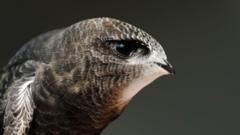
Cambridge colleges love nothing more than a photo opportunity involving historical masonry and a sudden, highly publicized burst of environmental conscience. The latest craze sweeping through the university's governing bodies is the installation of swift boxes. From Gonville & Caius to St John’s, academic institutions are rushing to retro-fit old belfries, erect woodstone bricks, and blast digital bird calls into the morning air. The narrative is comforting, neat, and profoundly deceptive: modern architecture destroyed the nesting nooks of Apus apus, so a few dozen synthetic boxes bolted to a medieval chapel tower will fix it.
This is an illusion. The collective celebration surrounding the first swifts nesting in these collegiate installations ignores the systemic realities of avian decline. It trades structural ecological reform for a cheap, highly visible tokenism that functions primarily as public relations. Installing a £40 box while ignoring the broader drivers of biodiversity collapse is not conservation. It is an administrative sedative designed to make institutions feel green without requiring them to change how they actually operate.
The Flawed Logic of Token Habitat Creation
The foundational error of the swift box movement lies in its diagnosis of the problem. Activists and college environmental committees argue that the primary driver of swift population crashes is the lack of urban nesting sites. Because modern renovations seal up the eaves, holes, and crevices where birds historically raised their young, the solution seems obvious: provide artificial cavities.
This architectural reductionism falls apart under basic ecological scrutiny. Habitat is not merely a box; it is an interlocking system of food availability, climate stability, and migratory safety. Swifts spend up to ten months of the year entirely on the wing, migrating thousands of miles between Europe and Southern Africa. They only land to breed. When they return to the UK in late April, their survival depends entirely on an abundant, uninterrupted aerial supply of insects and spiders.
By focusing almost exclusively on nesting boxes, institutions choose the easiest, cheapest component of the lifecycle to replicate. It requires zero systemic change to hire a stonemason, buy a few pre-cast cement-bonded wood-fibre blocks, and stick them on a wall. It allows an institution to check a biodiversity box on a planning application while ignoring the far more uncomfortable realities of environmental destruction happening right outside the city limits.
The Invisible Starvation Machine
The real crisis facing swifts is not a housing shortage. It is a catastrophic, ongoing collapse in food supply. Decades of intensive industrial agriculture, chemical pesticide saturation, and systematic hedgerow destruction across the British countryside have decimated insect biomass.
Data from long-term monitoring schemes, including the systemic insect sampling conducted by the Rothamsted Insect Survey, shows a terrifying trajectory. Flying insect populations in parts of Western Europe have plunged by over 75% in the last few decades. Swifts are obligate aerial insectivores; they feed their chicks a compressed ball of thousands of tiny insects gathered mid-air. When the insect biomass drops off a cliff, the number of successful fledglings plummets, regardless of how many pristine, insulated boxes are bolted to the side of a university library.
[Insect Biomass Decline] ---> [Reduced Chick Fledging Rates]
                                        ^
                                        |
                 (Swift boxes completely fail to address this link)
I have reviewed institutional sustainability strategies where organizations spend thousands on cosmetic wildlife audits, boasting about their new bird boxes while their endowment funds remain tied to global supply chains that drive deforestation and chemical pollution. To celebrate a handful of birds utilizing a box in Cambridge while the surrounding agricultural county of Cambridgeshire remains dominated by insect-depleted monoculture farms is a severe disconnect. It treats the university campus as an isolated bubble, completely separate from the wider ecosystem.
The High Failure Rate Nobody Talks About
The promotional literature surrounding commercial swift bricks promises a "fit and forget" solution to biodiversity loss. The reality on the ground is far more frustrating, expensive, and prone to failure.
Swifts are intensely conservative, colonial nesters. They return to the exact same nesting sites year after year. Attracting them to an entirely new, artificial site requires playing continuous digital recordings of swift calls from small, weather-proof speakers to trick passing birds into thinking a colony already exists.
This acoustic deception is hit-or-miss. At the David Attenborough Building in central Cambridge, conservationists spent multiple seasons playing looping digital screams before a single pair finally accepted a box. In many cases, these boxes remain completely empty for years, serving as nothing more than expensive, high-altitude wall ornaments. When they are occupied, they are frequently commandeered by more aggressive, non-threatened urban species like starlings or house sparrows. While those birds also need habitat, it completely defeats the specific, targeted conservation goals used to justify the initial expenditure.
Furthermore, the long-term maintenance of these installations is routinely ignored. While internal swift bricks built into new masonry are relatively stable, external wooden or composite boxes bolted to high eaves degrade. They are exposed to intense thermal stress, wind shear, and moisture ingress. Without regular maintenance—which is dangerous and requires specialist scaffolding at heights of five meters or more—these boxes can quickly become death traps, overheating in the intense summer heat waves driven by shifting global temperatures or rotting out and exposing chicks to predators.
Redefining the Conservation Narrative
If you ask an environmental officer how to help urban wildlife, they will almost always hand you a blueprint for a bird box or a packet of wildflower seeds. They are asking the wrong question. The question shouldn't be "How do we build a synthetic home for a displaced bird?" The question must be "How do we halt the economic and agricultural practices that are making the wider environment unlivable?"
True ecological restoration requires a complete rejection of these localized, cosmetic interventions. Instead of spending administrative energy on localized token projects, institutions and land managers must leverage their significant economic power to demand systemic change.
- Supply Chain Reform: Institutions must enforce strict ecological standards across their entire procurement network, refusing to buy food or materials from agricultural systems that rely on neonicotinoids and other insect-killing pesticides.
- Landscape Re-wilding: True biodiversity gains require the large-scale restoration of natural wetlands, diverse hedgerows, and uncultivated meadows across entire regions, creating the massive insect reservoirs needed to sustain aerial predators.
- Architectural Mandates: Rather than treating bird accommodation as a voluntary, retrofitted charity project, building regulations must legally mandate that all new structural designs incorporate integrated, permanent nesting cavities as standard, non-negotiable infrastructure, eliminating the need for performative PR campaigns.
Admitting the limitations of local interventions is uncomfortable. It forces us to acknowledge that saving a species requires a fundamental restructuring of our relationship with land, agriculture, and economic growth. A plastic box on a stone wall is an easy escape hatch from that realization. It gives the appearance of action while everything else continues to burn.
Stop buying the marketing hype of the quick-fix biodiversity brick. Stop treating a single nesting pair as a triumph over a systemic crisis. Until we confront the agricultural and chemical destruction of our insect populations, these collegiate swift boxes are nothing more than a monument to our own refusal to fix the real problem.