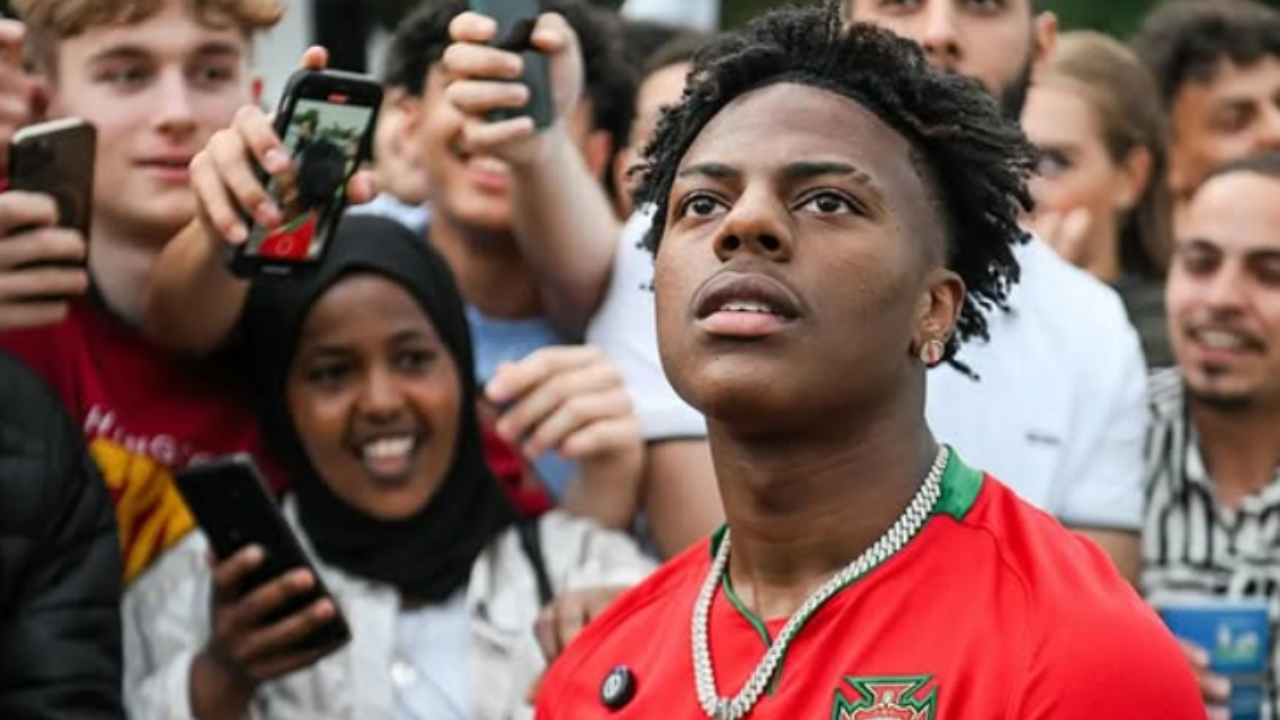
Félix "xQc" Lengyel recently triggered a massive digital firestorm after questioning the physical capabilities of female police officers during a high-stakes livestream. While his comments were framed as a critique of "real-world" physics and safety, they actually expose a much deeper fracture in how massive online personalities influence public perception of essential services. This isn't just about a streamer having a controversial opinion; it is about the collision of high-engagement entertainment and the complex, often misunderstood realities of modern law enforcement.
The controversy began when Lengyel, a man who commands an audience of millions, reacted to footage involving female officers. He argued that biological differences in size and strength make certain personnel choices inherently dangerous for the officers and the public. His take was blunt. It was aggressive. Most importantly, it was designed to maximize engagement in an ecosystem that rewards conflict over nuance.
The High Cost of the Hot Take Economy
In the current streaming market, nuance is a dead asset. Lengyel operates at the top of a pyramid where every word is analyzed by thousands of viewers in real-time. When he tackles a topic as sensitive as gender dynamics in policing, he isn't just sharing a thought. He is feeding an algorithm that thrives on polarized debate.
The problem with his assessment lies in a fundamental misunderstanding of how modern policing works. Law enforcement is rarely a 1980s action movie where every problem is solved through a bench press competition. The industry has shifted toward de-escalation, psychological intervention, and technical proficiency. By reducing the entire profession to a question of "can you overpower a suspect," xQc ignores the reality that most officers—regardless of gender—will tell you that if you have to rely purely on physical strength, several other tactical layers have already failed.
Veteran officers often point out that the most dangerous person on the force isn't the smallest one, but the one who lacks the emotional intelligence to talk a situation down before it turns violent. Lengyel’s audience, largely composed of younger males, consumes these "common sense" takes without the context of the training manuals or the 95% of the job that involves paperwork, community mediation, and forensic investigation.
Breaking Down the Biology Argument
The core of the argument presented by xQc rests on the idea of physical liability. It is a surface-level observation that masks a lack of insight into how units actually function. Policing is a team sport. No officer is expected to be a solo superhero.
In any tactical situation, different roles require different attributes. While a 230-pound officer might be the preferred choice for breaching a door, a smaller officer might be far more effective at building rapport with a victim or navigating a tight space. To suggest that one body type is the only valid option for the badge is to suggest that a toolkit should only contain hammers.
Furthermore, the data on officer safety does not support the "liability" narrative. Studies on police use of force consistently show that female officers are statistically less likely to use their firearms and less likely to be involved in excessive force complaints. They often achieve the same or better outcomes through communication. When a streamer with no tactical background dismisses an entire demographic based on a 30-second clip, he creates a warped reality for his followers that devalues these essential skills.
The Echo Chamber Effect
We are seeing the rise of the "Streamer Expert." This is a phenomenon where a personality gains so much trust in one area—usually gaming or general entertainment—that their audience begins to treat their opinions on sociology, law, and politics as gospel.
Lengyel’s influence is massive. When he scoffs at the idea of a female officer handling a violent suspect, he validates the biases of millions. This creates a feedback loop. His viewers then take these opinions into the comments sections of news reports and social media, creating a wall of noise that drowns out actual professional standards and practices.
The danger here is the erosion of respect for the profession. If a generation grows up believing that half the police force is "unfit" because a guy in a gaming chair said so, the recruitment crisis currently facing law enforcement will only deepen. We are already seeing a decline in applications across the board. Discouraging capable, intelligent, and driven women from joining the force based on "vibes" and "streamer logic" is a direct threat to the long-term health of public safety.
The Reality of Training vs The Myth of Size
Police academies across the globe have rigorous physical standards. While these standards are often debated, they exist to ensure a baseline of capability. If an officer has passed the academy, they have met the legal and professional requirements to do the job.
xQc’s critique often ignores the existence of tools that equalize physical disparities. Tazers, pepper spray, and firearms are the ultimate equalizers in a physical confrontation. More importantly, the radio is the most powerful tool an officer carries. The ability to call for backup and coordinate a response is what keeps officers alive, not the size of their biceps.
There is also the "adrenaline factor." In high-stress environments, training takes over. An officer who has drilled thousands of hours in Brazilian Jiu-Jitsu or defensive tactics is a more formidable opponent than a larger person with no training. Lengyel’s focus on raw size is a primitive metric in a world defined by specialized training and technology.
Why the Controversy Won't Die
Lengyel knows exactly what he is doing. He is a master of the "controversy-correction" cycle. He says something inflammatory, waits for the backlash, and then "clarifies" his position in a follow-up stream that generates even more views.
This cycle is profitable. It keeps him in the headlines and keeps his "clips" channels active. However, the collateral damage is the public's understanding of a vital institution. By turning gender dynamics in policing into a spectator sport, he simplifies a life-and-death profession into a "W or L" take.
The industry needs to stop treating these outbursts as isolated incidents of "gamer rage." They are symptoms of a media environment where the loudest voice is mistaken for the most informed one. If we want to understand the future of policing, we should be looking at the data coming out of departments and the testimonials of the people in the uniform, not the reactionary clips of a millionaire in a bedroom.
The Accountability Gap
There is no oversight for the information distributed on these platforms. A journalist who publishes a factually incorrect piece on police tactics faces retractions, lawsuits, or termination. A streamer faces a spike in their concurrent viewer count.
This lack of accountability allows for the spread of "pseudo-expertise." When xQc analyzes a police video, he isn't looking at the legal justification for the stop, the department's policy on foot pursuits, or the tactical positioning of the backup units. He is looking for a moment to make a joke or a "bold" claim that will get his chat moving.
The audience, mostly young and impressionable, doesn't see the missing context. They see their favorite creator "telling it like it is." This creates a culture where the truth is whatever feels right in the moment, regardless of the evidence.
Redefining Strength in Public Service
The conversation needs to move away from the binary of "big vs small." We need to talk about the diversification of skill sets. The most successful police departments are those that reflect the communities they serve. This includes having women who can relate to female victims of domestic violence or sexual assault in ways that male officers often cannot.
Strength in policing is the ability to maintain order in chaos. It is the stamina to work a 12-hour shift and still make a sound legal decision in the final ten minutes. It is the courage to walk into a situation where you are outnumbered and use your mind to gain control.
By mocking these officers, Lengyel is mocking the very concept of professional excellence in favor of a narrow, outdated version of physical dominance. He is selling a version of the world that doesn't exist, and his audience is buying it.
The next time a clip of a streamer "igniting a storm" goes viral, we should look past the personality and look at the profession they are critiquing. Law enforcement is too important to be used as content for a reaction video. The men and women on the front lines deserve better than to have their careers debated by people who have never had to make a split-second decision in the dark.
Instead of arguing about whether a woman can hold a line, we should be asking why we allow the most influential voices in our culture to be those with the least amount of skin in the game. The "brutal truth" isn't about gender; it’s about the fact that we have traded expertise for engagement, and the cost is our collective grip on reality.