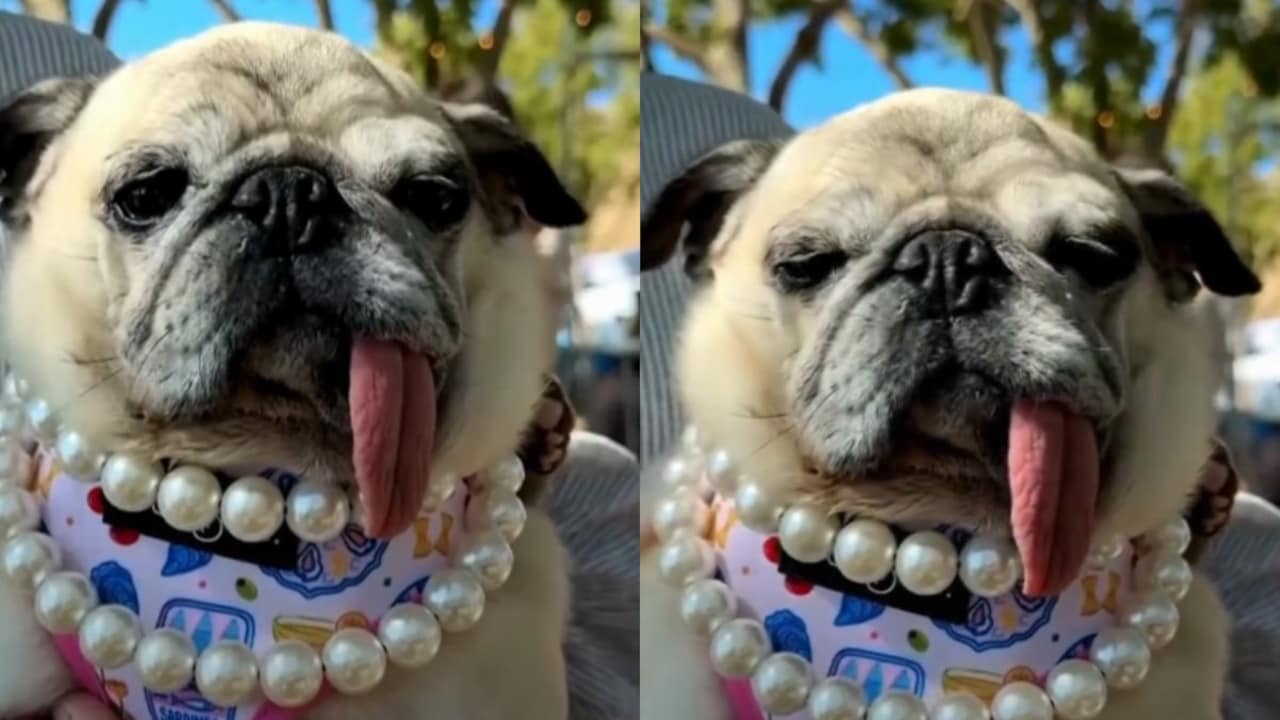
Jinny Lu, a six-year-old pug, captured the 2026 World's Ugliest Dog Contest crown in Petaluma, California, beating out a crowded field of eccentric canines. Millions saw the headlines flash across social media feeds. A triumphant photo of a bulbous snout, bulging eyes, and a tongue that stubbornly refuses to stay inside its mouth.
People laughed. People shared. Then, the collective attention span shifted to the next piece of digital detritus.
Most coverage treats this annual spectacle as a harmless, quirky weekend rodeo. A charming break from hard news. A chance to celebrate the misfits of the animal kingdom with a ribbon and a giant novelty check.
That perspective misses the entire point.
Underneath the red-carpet flashbulbs and the carnival barker microphones lies a billion-dollar subculture of pet humanization, aesthetic engineering, and the commodification of biological anomaly. We need to talk about why humanity is so obsessed with crowning the unconventional, and what this specific contest reveals about our deep-seated relationship with domesticated animals in the modern era.
The Industrial Complex of Oddity
Walk backstage at the Sonoma-Marin Fairgrounds before the judges take their seats. You will not find a dusty local pet show run by well-meaning volunteers with folding tables. You will find public relations handlers, specialized groomers, custom-tailored travel itineraries, and corporate sponsors eyeing return on investment.
Winning this specific title changes a dog's life overnight. It also changes the owner's bank account.
Media tours follow. Brand partnerships materialize out of thin air. Talk show appearances book up months in advance. Jinny Lu is no longer just a companion sleeping on an old cushion; she is an intellectual property asset in a four-legged chassis.
We have turned genetic misfortune into a lucrative media market. For decades, society bred dogs toward hyper-specific, often punishing conformation standards. We engineered German Shepherds with sloping backs, French Bulldogs that cannot breathe without surgical intervention, and Pugs with respiratory systems that fight for oxygen with every stride.
Then, we hold a contest to celebrate the ones where the blueprint went spectacularly sideways.
There is a profound irony here. The same human ego that demands pristine, symmetrical perfection from purebred puppies also creates a secondary market for the broken, the warped, and the asymmetrical. We break them through selective breeding, and then we applaud the wreckage under the guise of inclusivity.
Beyond the Laugh Track
When the media covers Jinny Lu or past winners like Wild Thang or Happy Face, the framing is almost exclusively comedic. Broadcasters giggle. Pundits make low-effort puns about bad hair days and unfortunate angles.
This lazy framing insults the animals and misunderstands their owners.
The people who enter these contests do not view their pets as punchlines. Spend five minutes talking to an owner behind the scenes and you will hear a different story entirely. You will hear about rescue operations from high-kill shelters. You will hear about thousands of dollars spent on veterinary oncology, physical therapy, and specialized diets.
These owners are not exploiting their pets for a laugh. They are fiercely protective advocates. They use the absurdity of the competition as a Trojan horse to deliver a serious message about rescue culture and the beauty found outside traditional aesthetic boxes.
The public wants a joke. The owners are staging a silent protest against superficial pet ownership.
Millions of normal, healthy, slightly plain-looking dogs sit in municipal shelters waiting for a home that never comes, passed over because they lack viral potential. Meanwhile, an asymmetrical pug with a protruding jaw becomes a global superstar. The contrast is jarring. It forces us to confront our superficiality. We do not value animals for who they are; we value them for how they perform on a screen.
The Biology of the Grotesque
Why do we look?
Evolutionary psychology gives us a clue, though not the comfortable one people prefer to hear. Humans are hardwired to protect infantile features. Big eyes, rounded skulls, and clumsy movements trigger our parental instincts.
Yet, extreme brachycephalic traits—shortened snouts, bulging eyes, and deformed jaws—short-circuit that ancient wiring. They trigger a psychological dissonance. The brain registers the creature as both wrong and vulnerable at the same time. That cognitive friction creates a strange form of affection.
We love what puzzles us.
Jinny Lu succeeds not despite her physical abnormalities, but because of them. In a visual culture saturated with filtered perfection on Instagram and TikTok, raw ugliness acts as an authenticity hack. It breaks through the noise. It feels real precisely because it is unmarketable by traditional standards.
Except now, it is entirely marketable.
The corporate world learned how to monetize authenticity long ago. Once an anti-aesthetic becomes a trend, it ceases to be a rebellion and becomes just another product category. The World's Ugliest Dog Contest sits at this exact cultural intersection. It masquerades as a celebration of underdogs while operating as an efficient engine for viral marketing.
The Cost of the Crown
Let us address the uncomfortable medical reality that most mainstream journalism glosses over in favor of a cute headline.
Many of the dogs competing in these events carry heavy genetic burdens. Severe overbites lead to dental decay and chronic pain. Exposed eyeballs dry out and require constant lubricating drops. Joint malformations make walking a daily exercise in discomfort.
When we celebrate the extreme end of anatomical deviation, we risk normalizing animal suffering for entertainment value.
To be clear, the caretakers of contest winners generally provide stellar, round-the-clock medical attention. Jinny Lu lives a life of pampered luxury that most shelter dogs could only dream of. The owners love their animals with a fierce, uncompromising devotion.
The danger lies downstream, in how the broader public interprets the spectacle.
When backyard breeders see an asymmetrical, health-compromised dog achieving international fame and lucrative brand deals, perverse incentives take root. The market notices what trends. If extreme physical deformity becomes a ticket to fame, irresponsible breeding practices will follow the demand curve. We have seen this movie before with flat-faced breeds, and the ending was a disaster for canine respiratory health.
Redefining the Standard
Despite the commercialization and the ethical gray areas, the contest does one vital thing correctly. It challenges the tyranny of the kennel club standard.
For over a century, organizations like the American Kennel Club dictated strict rules about what a purebred dog should look like. Ears must tilt at a specific angle. Tails must curl with precise geometry. Coats must match rigid color charts. This obsession with pedigree purity decimated gene pools and produced generations of animals plagued by hereditary diseases.
By turning the entire concept of a standard on its head, the World's Ugliest Dog Contest offers a subversive critique of pedigree culture.
It tells the audience that perfection is boring. It suggests that value does not reside in a lineage certificate or a symmetrical face. Jinny Lu winning the 2026 crown is a victory for every mismatched rescue, every senior dog missing teeth, and every creature that failed to meet the impossible demands of human vanity.
We just have to be honest about the machine driving the spectacle.
The next time a photograph of a bulging-eyed, tongue-wagging champion crosses your screen, enjoy the humor of it. Share the post. Smile at the absurdity of nature's rough drafts. But remember the machinery humming in the background. Behind every viral meme of an unconventional pet is a complex web of human projection, medical management, and our eternal, contradictory desire to find beauty in the things we broke.