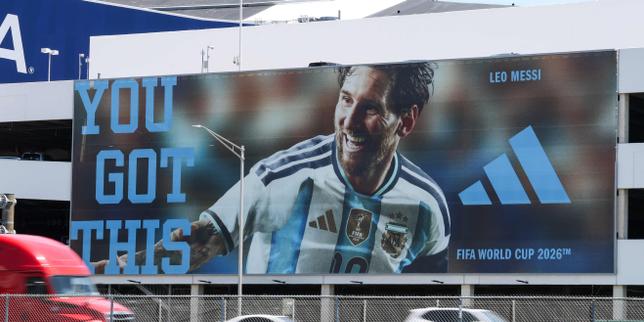
Lionel Messi did not come to America to grow the game. He came to dominate an economy.
With North America hosting the 2026 World Cup, the narrative surrounding the Argentine maestro centers on his status as a cultural ambassador. This perspective misses the cold, corporate reality. The transaction between Messi, Inter Miami, and Major League Soccer is a calculated commercial experiment that has successfully fundamentally restructured the financial architecture of domestic soccer. You might also find this related story useful: Stop Worshiping The Lakers Schedule Because Primetime TV Is Breaking Basketball.
The strategy succeeded, but it exposed an uncomfortable reality for the rest of the league.
The Billion Dollar Expansion
Before July 2023, Inter Miami was a struggling franchise with a fragmented identity and an annual revenue of just $56 million. By the close of the 2025 season, a campaign culminating in an MLS Cup victory, that revenue figure skyrocketed to $200 million. As extensively documented in detailed coverage by Sky Sports, the implications are widespread.
The club valuation now sits at a historic $1.35 billion according to Forbes, catapulting it past traditional heavyweights like LAFC and the LA Galaxy.
The Financial Chasm in MLS
This growth is entirely unprecedented in North American sports. Yet, it highlights a stark divide. While Inter Miami enjoys a valuation surge of over 13% year-over-year, clubs at the bottom of the table, such as CF Montréal at $440 million, see stagnation with less than 2% growth.
The league is splitting into two distinct financial tiers.
| Club | 2026 Valuation (Est.) | Revenue Trajectory |
|---|---|---|
| Inter Miami | $1.35 Billion | Quadrupled since 2022 |
| LAFC | $1.32 Billion | Steady growth via international stars |
| LA Galaxy | $1.08 Billion | Legacy commercial baseline |
| CF Montréal | $440 Million | Stagnant domestic market |
This table illustrates that the economic impact is concentrated at the top. The underlying mechanism driving this disparity is a collection of unique revenue-sharing agreements involving Apple TV, Adidas, and direct equity options built into the player's contract.
Engineering the Corporate Athlete
Messi's compensation package is structured to bypass traditional salary caps. He receives an estimated annual total of $140 million, split evenly between his club salary and commercial income.
The crucial detail is how his contract converts global viewership into personal wealth.
The Apple and Adidas Mechanisms
Every international subscription to the MLS Season Pass on Apple TV directly feeds his bank account. Every jersey sold with his iconic number 10 yields a percentage payout from Adidas.
This model shifts the traditional dynamic of a sports contract. The athlete is no longer an employee of the franchise; he is a joint-venture partner with the league's primary corporate sponsors.
"Messi's total compensation includes unprecedented Apple revenue-sharing and Inter Miami equity arrangements, creating a blueprint for future superstar acquisitions."
Ownership capitalized on this momentum during the 2026 winter transfer window, executing a $38 million squad-building spending spree. The front office secured permanent deals for Rodrigo De Paul for $15 million and Mexican international Germán Berterame for another $15 million.
These high-profile moves were funded entirely by the commercial windfall generated by their captain.
The World Cup Cash Machine
The financial windfall extends well beyond domestic league matches. During the 2026 World Cup, FIFA utilizes a $355 million Club Benefits Programme fund designed to compensate domestic teams for releasing their players for international duty.
Inter Miami secures a daily payout of approximately $5,000 for every day their talisman remains with the Argentina national football team during the tournament.
Direct Tournament Windfalls
If Argentina achieves a deep run into the final stages, the South Florida club will pocket close to $285,000 from a single player's participation.
When combined with club teammates like De Paul and Canadian goalkeeper Dayne St. Clair, Inter Miami's baseline tournament payout approaches half a million dollars.
- Daily FIFA Payout: ~$5,000 per player.
- Maximum Projected Revenue: $475,000 if Argentina and Canada both reach the final stages.
- Commercial Split: 50% of his gross annual earnings derive directly from external global endorsements.
This means a global tournament functions as a direct subsidization mechanism for a domestic American club.
The Cliff Beyond 2028
The primary concern among league executives involves sustainability. Skeptics note that the current business model relies entirely on a single 38-year-old individual.
A contract extension secured his presence through December 2028, and the upcoming opening of the 25,000-seat stadium at Miami Freedom Park will provide a permanent revenue foundation.
Yet, the media rights structure remains a vulnerabilities. MLS nets only $5 million in revenue after production costs from its flagship Apple partnership.
Without individual star power to draw international viewers to the streaming platform, the economic model faces structural risks.
The league gambled that a massive initial investment would permanently elevate its global profile. The real test arrives when the icon departs, leaving American soccer to discover if it bought a sustainable infrastructure or simply leased a circus.