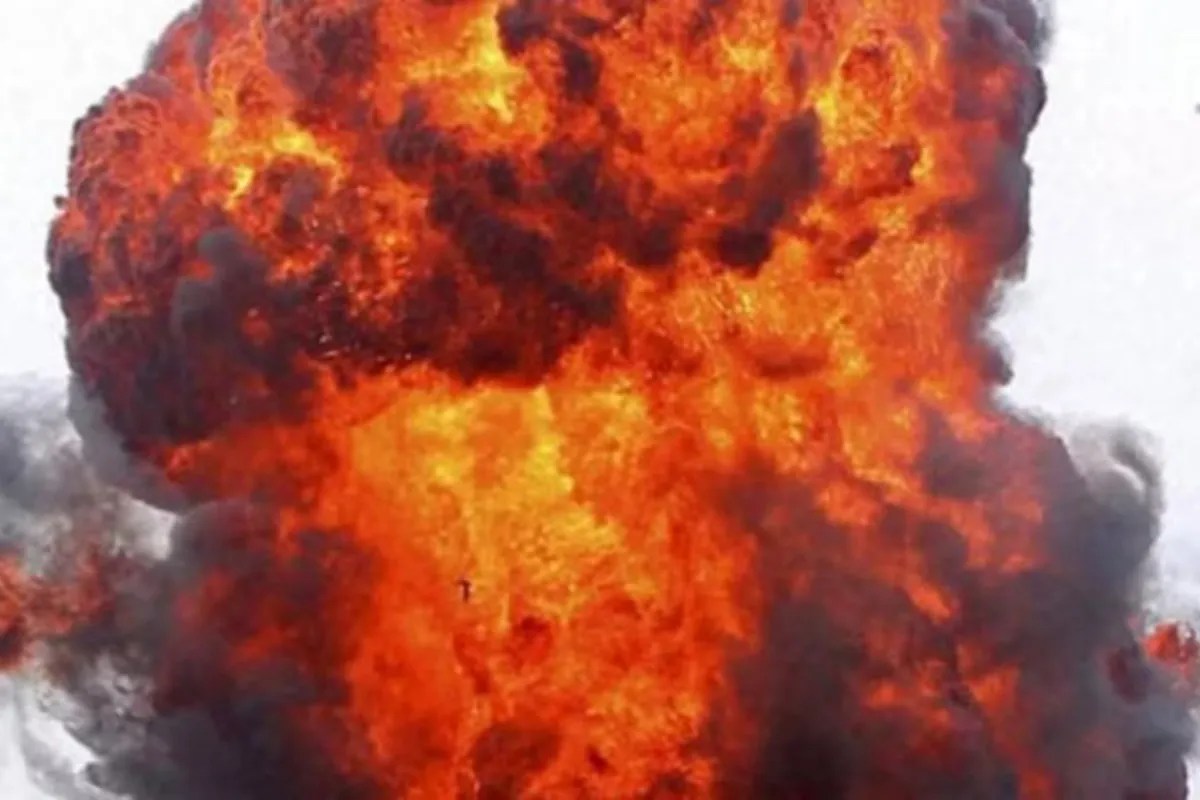
Eleven soldiers. A sudden flash of heat and destruction in the Syrian desert. Silence followed.
An explosion ripped through a military site in the western sector of Deir ez-Zor province, ending eleven lives in a single devastating moment. The Syrian Ministry of Defense confirmed the casualties following the Friday blast in the Ayyash area, leaving behind an investigation shrouded in official ambiguity. Official statements offered little clarity regarding the precise origin or mechanism of the blast, leaving military analysts and regional observers to piece together a hazardous puzzle of decaying infrastructure, unstable ordnance, and systemic operational risks.
This incident is not an isolated anomaly. It is part of a recurring pattern of lethal munitions accidents plaguing military installations across the country. Earlier in the same month, a separate explosion tore through an arms depot in northwestern Syria, killing fourteen people. When munitions dumps detonate without warning miles away from active combat lines, the underlying causes point toward severe material degradation, poor storage protocols, and the immense strain placed on exhausted armed units operating in a fractured state.
To understand why eleven men perished inside a secured military zone, one must examine the physical realities of post-conflict military logistics. Decades of continuous warfare have stretched supply lines to breaking point. Facilities that were never designed for long-term storage of unstable propellants, aging artillery shells, and war-surplus ordnance now serve as makeshift armories. Chemical stabilizers inside old explosives degrade over time, particularly under extreme desert temperatures. Without climate-controlled storage bunkers or specialized explosive safety technicians, ammunition depots become ticking time bombs.
The Ayyash area near Deir ez-Zor has long served as a vital strategic hub for government forces trying to secure eastern supply routes. Securing territory requires garrisons, and garrisons require ammunition caches. Yet, storing thousands of tons of heavy weaponry close to troop barracks creates an unacceptable concentration of risk. When a single spark or minor combustion occurs inside a poorly ventilated bunker, the chain reaction is catastrophic.
State media reports and official military communiques often default to attributing such events to causes of undetermined origin while investigations remain pending. This institutional hesitation to release comprehensive technical findings feeds public skepticism. Families of the fallen soldiers receive condolences and state funerals, but few answers regarding accountability or preventative reforms.
The Logistics of Decay
Weapons rot. Gunpowder loses its chemical stability. Fuses corrode. These are cold, unyielding laws of physics that apply regardless of geopolitical loyalties.
In military science, stockpile management requires rigorous maintenance protocols, regular testing of propellant lots, and strict physical separation of explosive components. In areas heavily affected by years of sanctions, economic collapse, and institutional fragmentation, those protocols are frequently abandoned out of sheer necessity. Ammunition is moved where transport is available, stacked where space permits, and ignored until an emergency arises.
Consider the sheer volume of ordnance moving through temporary facilities. When units rotate or redeploy, munitions are hastily consolidated. Safety clearances between storage sheds are ignored to maximize compound security against external threats, ironically increasing internal vulnerability. A single electrical short circuit, a discarded cigarette, or friction caused by shifting unstable crates can trigger total annihilation.
Military analysts tracking these incidents note a distinct correlation between seasonal heat spikes and depot explosions. High ambient temperatures accelerate the degradation of nitrocellulose-based propellants. When these materials break down, they release heat and gases. Without active cooling systems or continuous temperature monitoring, spontaneous ignition becomes a terrifying statistical probability.
The military leadership in Damascus faces an intractable dilemma. Relocating vast stockpiles to modern, subterranean, or heavily reinforced bunkers requires immense financial capital, engineering expertise, and uninterrupted transport networks—resources that remain scarce. Consequently, troops continue to live and work alongside volatile hazards.
Human Cost on the Frontlines
Statistics sanitize tragedy. Eleven men represented sons, brothers, fathers, and experienced soldiers who survived years of frontline combat only to be claimed by an internal disaster within their own lines.
Military service in eastern Syria demands constant vigilance against multiple asymmetric threats, ranging from lingering insurgent cells to hostile drone activity. Expecting personnel to maintain peak operational readiness while sleeping meters away from deteriorating ammunition supplies creates a psychological burden that erodes discipline and morale.
When a base blows up from the inside, the psychological shock ripples through the entire military apparatus. Soldiers begin to fear their own armories more than enemy fire. Trust in command structures deteriorates when safety standards are visibly compromised. The absence of transparent post-incident safety reports leaves rank-and-file personnel feeling expendable, abandoned to manage hazardous materials without proper protective gear, modern handling equipment, or specialized training.
Structural Vulnerabilities Across the Region
The broader Syrian military structure is grappling with a profound structural transition. Moving from an active, multi-front war footing toward internal security and territorial pacification requires an entirely different administrative mindset.
During active combat, speed and volume take precedence over safety and protocol. Ammunition is dumped wherever cover is found. Makeshift workshops repair damaged rockets and mortars directly inside populated bases. Makeshift ordnance disposal is handled by general infantry rather than dedicated explosive ordnance disposal units because qualified specialists are overstretched or casualties of war themselves.
As these improvised practices become institutionalized habits, disasters multiply. The explosion in Deir ez-Zor and the earlier disaster in the northwest share identical operational DNA. Both involved secondary storage sites packed with mixed ordnance, operating under minimal technical supervision, exposed to environmental extremes.
International arms control monitors and independent military observers have repeatedly warned that large quantities of unsecured or poorly stored conventional weapons pose long-term humanitarian and security risks. While international attention frequently fixes on active combat engagements or diplomatic stalemates, the silent threat of decomposing stockpiles claims lives with ruthless efficiency.
Addressing this crisis requires more than expressions of national mourning. It demands a root-and-branch overhaul of how military supplies are inventoried, transported, and stored. It requires establishing independent technical boards to investigate industrial accidents without political interference. It requires investing in modern munitions management infrastructure, even when budgets are constrained and the state faces overwhelming economic pressures.
Until structural reforms take root in military supply chains, the desert will continue to swallow its defenders in sudden, silent bursts of fire. The soldiers stationed in Deir ez-Zor woke up to an ordinary duty day, unaware that the real danger rested not outside the perimeter fence, but inside their own walls