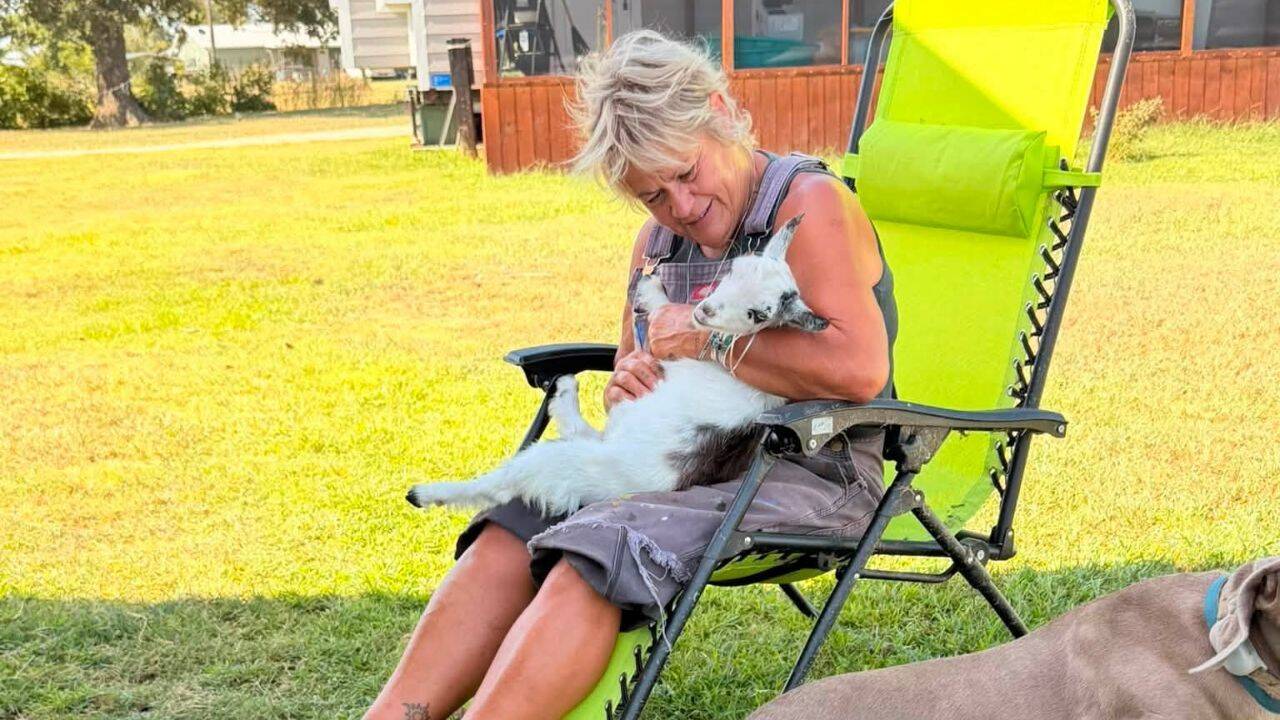
When Robyn Yerian liquidated a chunk of her 401(k) to drop $150,000 on five raw acres in Cumby, Texas, she wasn't trying to spark a national housing movement. She was simply staring down the barrel of late-life insolvency and refusing to blink. Today, her creation—The Bird’s Nest—houses a fraction of the hundreds of women desperately clawing for a spot on its waiting list. Rent sits at a modest $450 a month for concrete pads where residents dock their tiny homes or RVs, a stark departure from the predatory rates defining modern American real estate. Yet behind the heartwarming headlines of golden-year sisterhood lies an indictment of a failing social safety net, zoning hostility, and the sheer desperation required for seniors to survive the twenty-first-century economy.
Traditional retirement planning assumes a tidy path: decades of corporate labor, a maxed-out pension or IRA, a paid-off suburban fortress, and finally, quiet obsolescence in an assisted living facility that costs more than a mortgage on a coastal estate. Reality is much uglier. Millions of aging single women face a compounding crisis of longevity, lower lifetime earnings, career gaps from caregiving, and the financial shock of widowhood or divorce. When a traditional housing market prices out anyone without a dual-income portfolio or corporate backing, grassroots survivalism becomes the only option left on the table.
The Economics of Exclusion
Building an alternative community is deceptively difficult. Yerian’s initial capital injection covered the heavy lifting: clearing scrubland, running utilities, installing roads, and pouring fourteen concrete pads. That breaks down to roughly $10,700 per pad before factoring in land acquisition costs. Try securing a commercial small business loan for a non-traditional, all-women collective housing project from a regional bank. Traditional lenders view cooperative senior housing through a lens of strict risk aversion. They want subdivisions, HOAs, and predictable single-family cookie-cutter footprints.
Financing this venture required burning through personal retirement funds because institutional capital routinely ignores the demographic most vulnerable to housing precarity. Older single women are systematically marginalized by a financial ecosystem built for nuclear families. When a woman reaches her seventies without a partner's income, her purchasing power plummets. Renting a standard one-bedroom apartment in a metropolitan area consumes the entirety of an average monthly Social Security check. The math simply stops working.
+-------------------------------------------------------+
|              THE COST DISCONNECT (MONTHLY)            |
+---------------------------+---------------------------+
| Traditional Dallas Rent   | $1,400 - $2,200           |
+---------------------------+---------------------------+
| Average Social Security   | ~$1,600 - $1,900          |
+---------------------------+---------------------------+
| The Bird's Nest Pad Rent  | $450                      |
+---------------------------+---------------------------+
Regulatory Minefields and Zoning Walls
Communities like The Bird’s Nest do not scale easily because local municipal codes actively outlaw them. Rural and suburban zoning laws across the American Sunbelt are saturated with archaic restrictions designed to preserve property values by banning alternative dwellings. Minimum square footage mandates, prohibitions against placing multiple independent units on a single parcel, and strict rules regarding RV residency turn micro-villages into administrative battlegrounds.
Cumby sits roughly an hour northeast of Dallas, small enough to offer a reprieve from aggressive municipal code enforcement, but rural expansion brings its own infrastructural hazards. Water rights, septic capacity, and electrical grid access for rural acreage require constant maintenance and localized engineering. If a municipality decides to alter its land-use definitions or if a neighbor files a persistent nuisance complaint over non-standard housing, alternative setups face sudden legal extinction. Informal micro-villages operate on borrowed time unless municipal codes evolve to recognize shared-equity models.
Beyond the Aesthetic of Tiny Living
Media coverage loves to frame tiny home villages through a lens of minimalist whimsy. Pastel doors, potted geraniums, and tidy porches make for viral social media clips. Strip away the charm, and you find a pragmatic triage unit. Residents at The Bird's Nest rely on one another for physical security, medical emergencies, transportation, and emotional ballast. When chronic isolation becomes a public health epidemic with mortality rates comparable to smoking cigarettes, communal living ceases to be a cute lifestyle choice and becomes a vital intervention.
Isolation kills. Traditional elder care models isolate seniors inside sterile room-and-board facilities or force them into complete isolation behind closed suburban doors, cut off from immediate human contact. Sharing five acres with peers provides an organic safety net. If a resident fails to pull back her kitchen curtain in the morning, her neighbor notices. That level of hyper-local accountability cannot be automated by a corporate medical alert button.
The Scalability Trap
More than 500 women populate the active waiting list for fourteen potential spots. That staggering ratio exposes the systemic failure of modern housing policy. One retiree spending her life savings to rescue fourteen people is a testament to individual grit, but it is also a policy failure of monumental proportions. Relying on aging pioneers to self-fund grassroots communes cannot solve a nationwide crisis affecting millions of elderly citizens.
Scaling this model requires sweeping legislative reform, including relaxed accessory dwelling unit (ADU) restrictions, state-level backing for community land trusts, and specialized micro-loan programs for cooperative senior housing. Without structural changes, alternative villages will remain rare anomalies—outliers protected by luck, stubbornness, and a single individual's willingness to risk total financial ruin. The market will not fix this on its own, because corporate real estate developers cannot extract high enough margins from affordable, self-built communities.
The future of aging for those without immense wealth will look less like a gilded retirement village and more like a patchwork of reclaimed dirt roads, shared utility poles, and fiercely independent networks of people refusing to fade away quietly in the dark.
At 70, She Spent $150,000 to Build a Tiny Home Village for Older Women
This video provides an on-the-ground look at the daily layout and philosophy behind the tiny home community featured in the discussion.