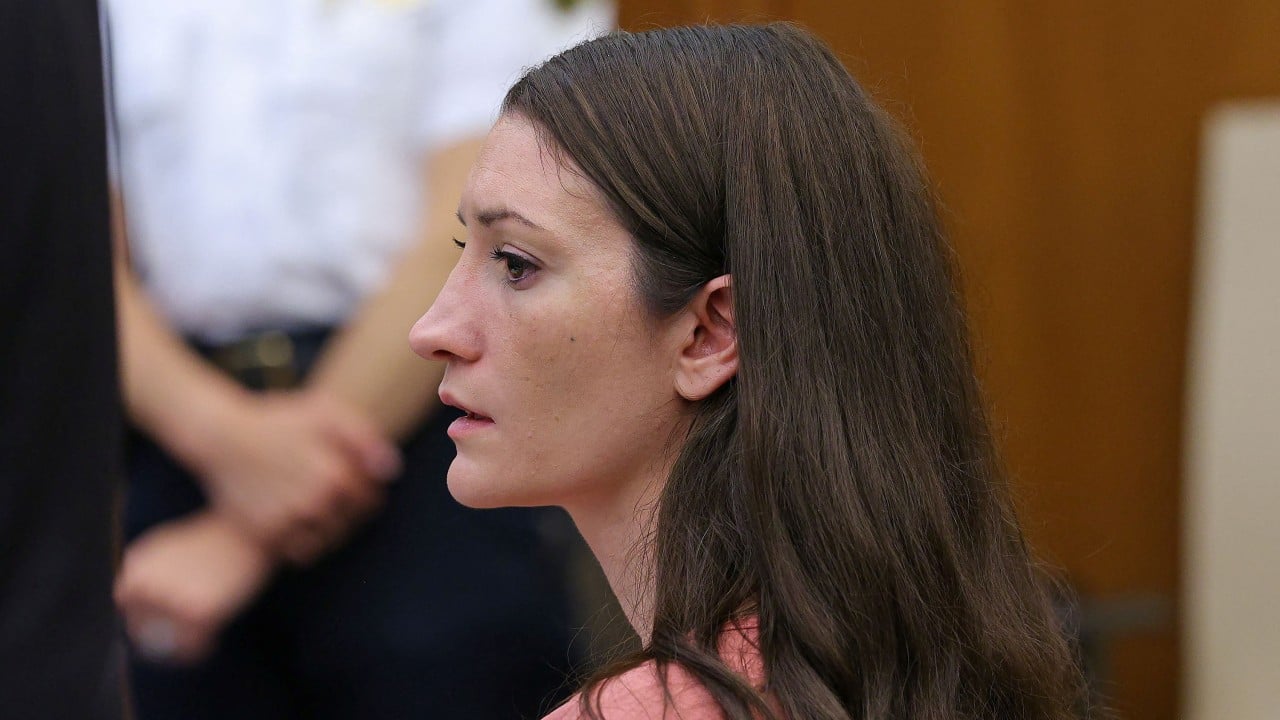
The courtroom in Plymouth, Massachusetts, smells of old paper, anxiety, and institutional floor wax. Inside, the legal battle over the actions of Lindsay Clancy has exposed the fragile architecture of American outpatient mental health care.
When defense attorney Kevin Reddington took aim at psychiatrist Dr. Jennifer Tufts on the witness stand, he was not merely cross-examining a witness. He was interrogating an entire system built on twenty-five-minute video check-ins, algorithmic box-checking, and a shifting cocktail of pharmaceutical prescriptions dispensed to a rapidly destabilizing mother.
Clancy stands accused of first-degree murder for the January 2023 strangulation deaths of her three young children—Cora, Dawson, and Callan—in their Duxbury home before she jumped from a second-story window, an act that left her paralyzed. The core dispute before the jury is not whether she committed the physical acts, but whether a catastrophic descent into postpartum psychosis and unmanaged medical side effects rendered her legally unaccountable.
The Mechanics of a Prescription Cascade
The evidentiary trail reveals a dizzying sequence of medical interventions. In the final months before the tragedy, multiple clinicians prescribed a continuous rotation of psychiatric drugs. Antidepressants, sleep aids, and mood-altering agents were adjusted, swapped, and increased as Clancy reported debilitating insomnia, severe anxiety, and a terrifying cognitive fog.
Reddington’s strategy hinges on a harsh critique of these treatment decisions. By characterizing outpatient care as mechanical and detached, the defense argues that the clinical establishment missed clear markers of a severe psychiatric break.
The friction centers on whether standard outpatient telehealth protocols are fundamentally unequipped to handle acute postpartum deterioration. Twenty-five-minute virtual appointments leave little room for deep exploratory observation. When a patient reports feeling numb, hopeless, or disconnected, an adjustment to a virtual prescription pad is a dangerous substitute for comprehensive inpatient observation.
The Divergent Narratives in the Courtroom
Prosecutors present a starkly different framework to the jury. State attorneys maintain that Clancy acted with calculated intent. They point to her actions prior to the tragedy—such as asking her husband to run errands—as evidence of premeditation. Prosecutors have leaned heavily on journal entries and clinical notes where Clancy denied immediate plans to harm her children or take her own life, arguing that she maintained a rational understanding of her choices.
Yet, medical experts testifying for various sides have painted a picture of a health care network fragmented by communication gaps. Testimony revealed that inpatient facilities treating Clancy in early January 2023 did not secure her full prior outpatient history before formulating diagnoses.
This institutional disconnect highlights a systemic vulnerability. When medical records fail to follow a patient seamlessly between providers, crucial warning signs vanish into administrative blind spots. A mother pleading for relief from intrusive thoughts and sleepless nights becomes subjected to trial-and-error pharmacology, where every failed medication deepens the psychological freefall.
The Realities of Postpartum Psychosis
True postpartum psychosis affects a small fraction of postpartum women, yet its presentation is frequently misunderstood by the public and clinical practitioners alike. It is distinct from routine postpartum depression. It involves a severe break from reality, hallucinations, and command delusions that compel sufferers to commit acts entirely alien to their normal character.
The defense argues that Clancy experienced precisely this kind of unmooring, exacerbated by a medication regimen that failed to stabilize her underlying, unaddressed bipolar symptoms. Toxicology reports presented at trial confirmed the presence of multiple psychiatric drugs in her system at the time of the incident, though experts noted concentrations were generally within prescribed therapeutic limits rather than indicative of a deliberate overdose.
The trial forces a reckoning with how medicine treats maternal mental health crises. When a patient actively seeks help, visits hospitals, logs her despair in private journals, and communicates desperation to multiple practitioners, a system that still results in such devastation demands radical scrutiny.
The courtroom arguments will eventually yield a legal verdict, but the underlying failures laid bare on the witness stand will echo far beyond the confines of Plymouth County.