The Democratic Republic of the Congo (DRC) is currently grappling with a resurgence of Ebola virus disease, a reality recently confirmed by African public health officials following a spike in unexplained deaths and laboratory-verified cases. While the immediate focus remains on ring vaccination and contact tracing, the deeper crisis lies in a systemic failure to bridge the gap between international medical intervention and the local trust required to make those interventions work. This is not merely a biological outbreak. It is a recurring nightmare fueled by geopolitical instability, fractured supply chains, and a growing skepticism toward centralized health authorities.
Public health agencies are sounding the alarm because the current cluster appears in regions already destabilized by militia violence. This makes the standard protocol of "detect and isolate" nearly impossible to execute. When health workers cannot reach a village without an armed escort, the virus wins. When local populations view those escorts as oppressors, the medical mission is compromised before a single vial of vaccine is even opened.
The Geography of Contagion
The Congo Basin is a perfect incubator for zoonotic spillover. Dense forests provide ample contact between human populations and reservoir species, primarily fruit bats. However, the transformation of a single spillover event into a regional epidemic is a human-made phenomenon. Deforestation and mining have pushed communities deeper into these habitats, creating a permanent friction point between wildlife and civilization.
History shows that the DRC has managed more Ebola outbreaks than any other nation on earth. This should make them the world’s foremost experts in containment. On paper, they are. In practice, the institutional memory of the Congolese health ministry is often sidelined by the rapid turnover of international NGOs and shifting donor priorities. Every time a new outbreak occurs, the world acts as if it is starting from zero, often ignoring the local networks that actually understand the terrain.
Why the Vaccines Aren’t Enough
We now possess highly effective vaccines, such as Ervebo. This is a scientific triumph. Yet, a vaccine in a freezer in Kinshasa does nothing for a family in a remote village in North Kivu. The "cold chain"—the necessity of keeping these biological products at ultra-low temperatures—remains a logistical bottleneck that billions of dollars in aid have failed to permanently fix.
The Last Mile Problem
The logistics of an Ebola response are brutal. You are transporting fragile glass vials over roads that are often nothing more than mud tracks, through territory held by various rebel factions. If a generator fails for four hours, the batch is ruined.
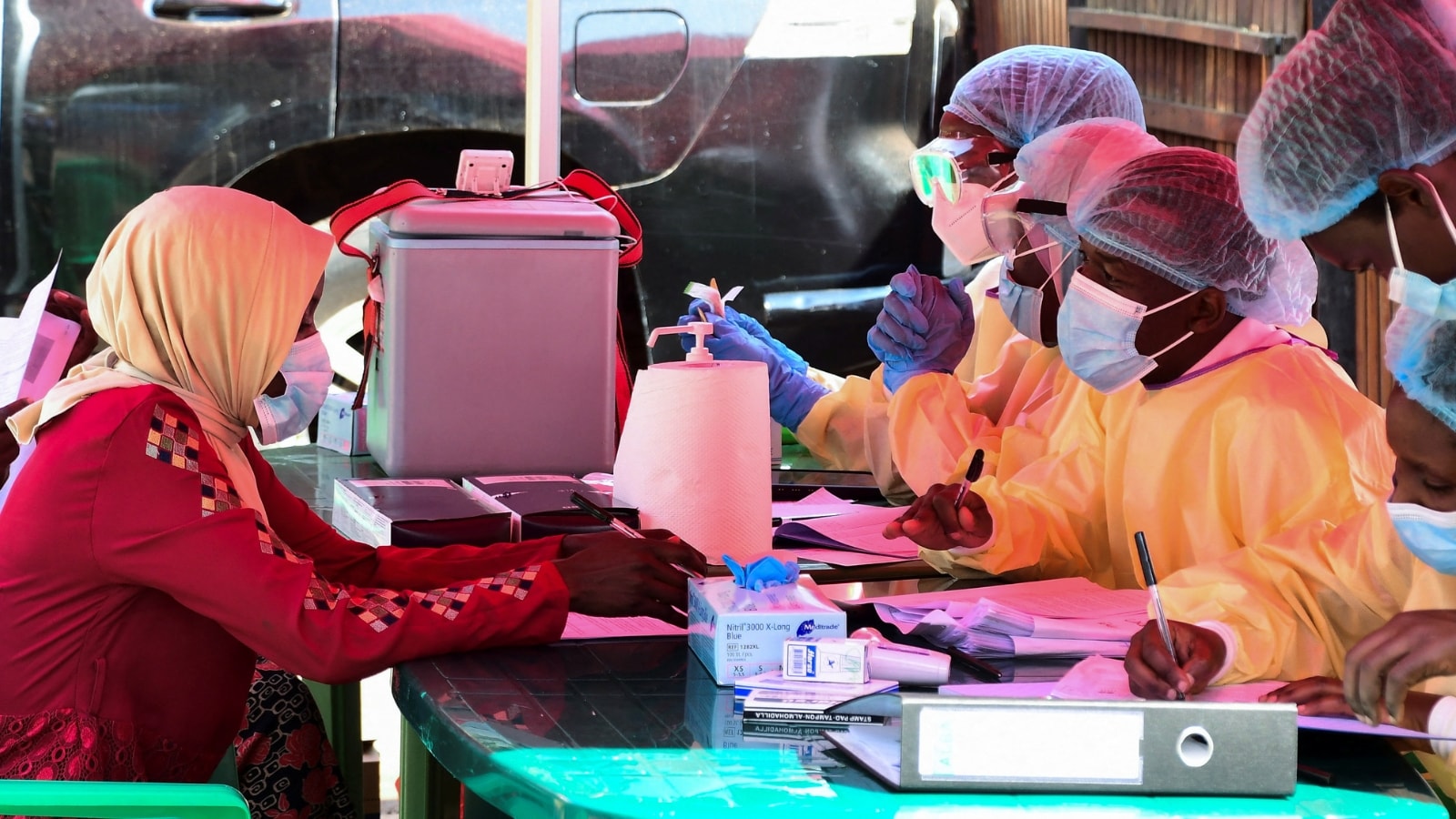
Moreover, there is the psychological barrier. In previous outbreaks, we saw the rise of "Ebola denialism." This isn't the same as the vaccine hesitancy seen in the West; it is rooted in a rational distrust of a state that fails to provide basic security or clean water but suddenly appears with expensive needles when a high-profile virus emerges. To a villager who has seen his family die of malaria or hunger for years without any outside help, the sudden arrival of high-tech medical teams in "spacesuits" is terrifying and suspicious.
The Economic Incentive of Silence
One of the most overlooked factors in these rising case numbers is the economic cost of being a "suspect." When a person is identified as a potential Ebola carrier, their life, and the lives of their family, are effectively put on hold. Markets are closed. Movement is restricted.
In a subsistence economy, an Ebola quarantine can be a death sentence of a different kind—one of starvation. This creates a massive incentive for families to hide their sick and bury their dead in secret, traditional ceremonies. These "secret burials" are the primary engines of super-spreader events, as the body of an Ebola victim is at its most contagious immediately after death.
The Surveillance Gap
While the Africa Centers for Disease Control and Prevention (Africa CDC) has improved its monitoring capabilities, the data is only as good as the reporting at the village level. Currently, there is a massive reliance on "passive surveillance," where we wait for people to show up at a clinic. By the time an Ebola patient reaches a clinic, they have usually been symptomatic for days, shedding the virus and infecting their immediate circle.
Active surveillance requires a massive footprint of community health workers who are paid a living wage. Too often, these frontline responders are volunteers or are paid sporadically, leading to high turnover and a loss of local intelligence. Without a permanent, well-funded infrastructure of local health watchers, we will continue to play a desperate game of catch-up.
The Mutation Myth and the Reality of Persistence
There is often a sensationalist fear that the virus will mutate into something even more airborne or lethal. While viruses do evolve, the real danger in the DRC isn't a "super-virus," but the persistence of the current strain in survivors. We now know that Ebola can linger in "immunologically privileged" sites in the body—such as the eyes or the reproductive system—long after the blood is clear.
This creates the risk of "flare-ups" months or even years after an outbreak is declared over. It means that the end of an outbreak isn't a hard stop; it’s a transition into a long-term monitoring phase that rarely receives the same level of funding as the initial emergency response. The world is great at writing checks when the headlines are screaming, but the money dries up the moment the curve flattens.
The Militarization of Medicine
A dangerous trend in recent Congolese outbreaks is the integration of medical teams with UN peacekeeping forces (MONUSCO) or the national army. While this is done for the safety of the doctors, it sends a disastrous message to the community. It frames the medical intervention as a security operation.
When a health worker arrives in a tank, they are no longer seen as a healer. They are seen as an agent of the state. In regions where the state is viewed as predatory, this leads to attacks on treatment centers. We have seen clinics burned to the ground and doctors assassinated. This isn't "senseless violence"—it is the predictable result of mixing healthcare with military force.
Rebuilding the Frontline
If the goal is to actually stop the rising case numbers rather than just manage the optics of a crisis, the strategy must pivot.
- Decentralize the Cold Chain: Investing in solar-powered refrigeration at the village level, rather than relying on massive hubs, is a technical necessity that has been delayed for too long.
- Community-Led Triage: Instead of forcing patients into centralized "Ebola Treatment Units" that look like prisons, we need to support community-based care models where families can remain involved in the process safely.
- Sustained Funding for Surveillance: Public health is not an emergency service; it is a utility. It needs to be funded like the power grid, not like a fire department.
The current rise in cases in the Congo is a reminder that the virus is patient. It waits for the moments when our attention wanders and our systems of trust break down. We have the tools to kill the virus. We just haven't yet built the society capable of delivering them.
The next few weeks will determine if this outbreak stays contained or spills across borders. The outcome won't be decided in a lab in Geneva, but in the trust established between a local health worker and a grieving family in a forest clearing. That trust is currently in short supply.